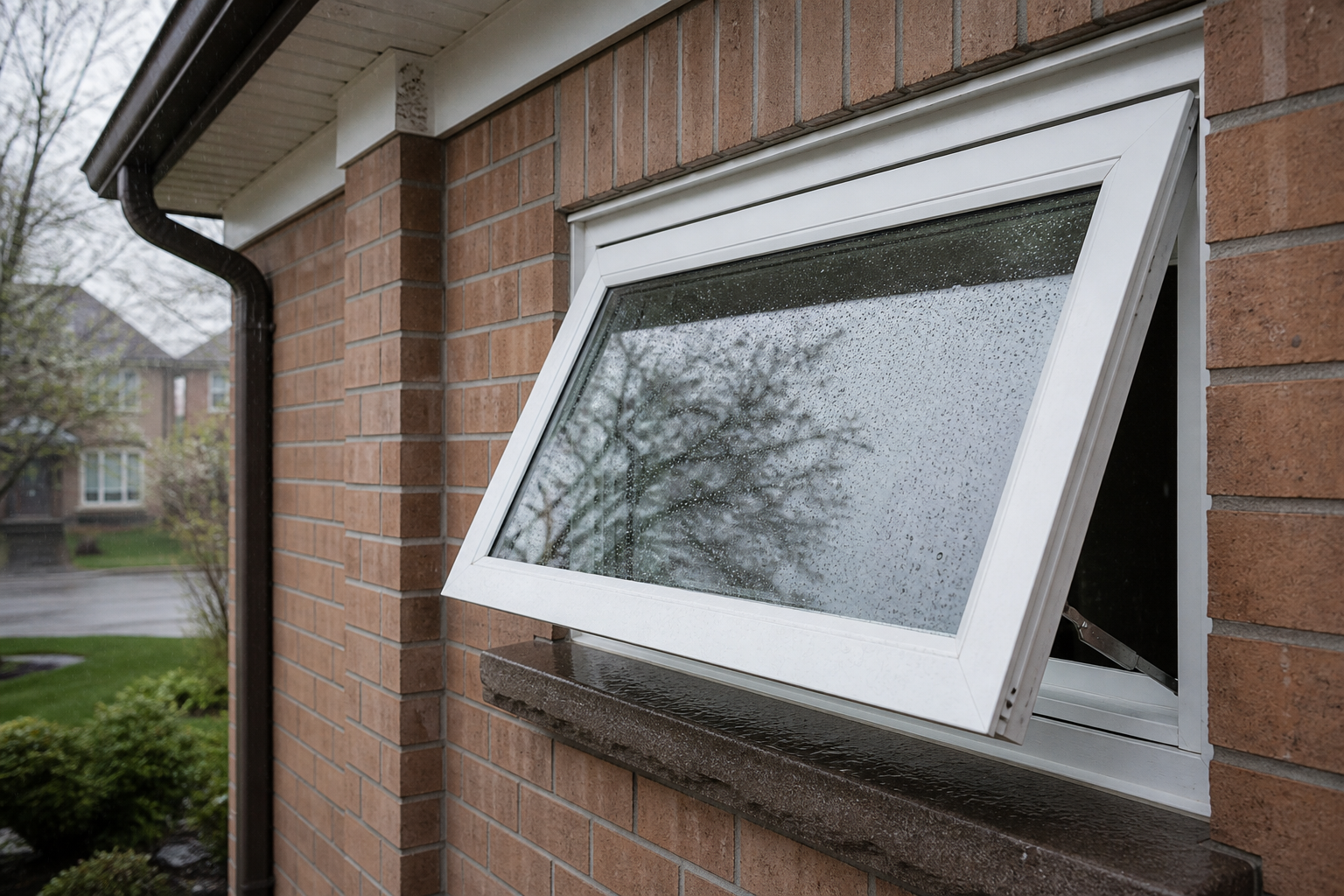
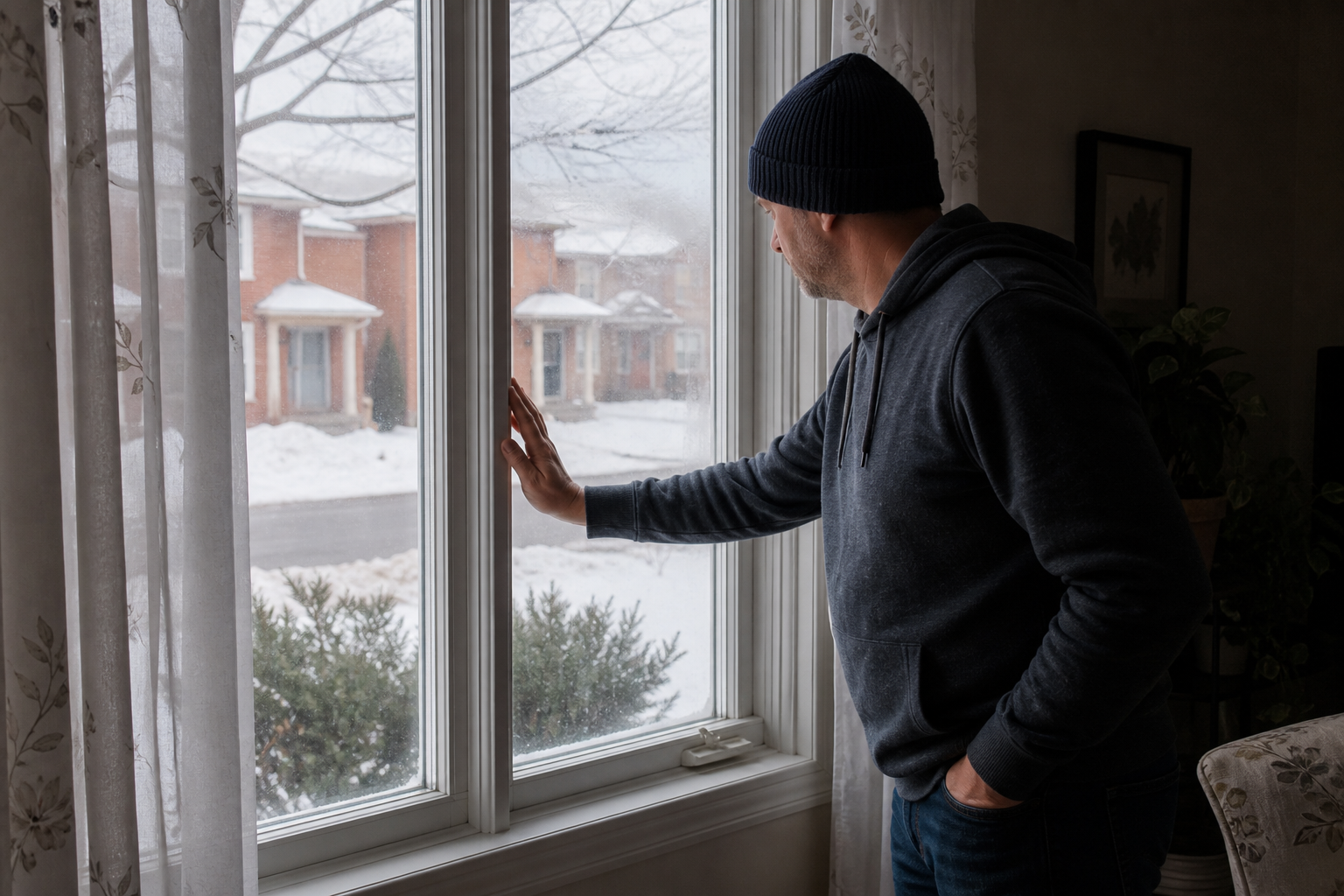
You know that spot by the window where the couch feels fine in October, then suddenly becomes the worst seat in the house by January? That little cold stripe of air is often one of the first signs you need new windows.
I see this all the time across Toronto, York Region, and up toward Barrie. People put up with drafts, foggy glass, hard-to-open sashes, and rising heating bills for years because the windows still technically close. But "still closes" is a pretty low bar for something that faces Ontario winters head-on.
Here’s the thing. Windows usually fail slowly, not all at once. So the warning signs are easy to ignore until you’re paying more for heat, dealing with water damage, or calling us after a January cold snap because one sash won’t budge.
1. You can feel drafts, even when the window is shut
This one sounds obvious, but people second-guess it. “Maybe it’s just the house.” Sometimes, sure. But if you stand near the window on a cold day and feel a steady chill on your hand, neck, or ankles, that’s not nothing.
A good window should not leak that kind of air. Over time, the weatherstripping wears out, the frame can shift a bit, and the moving parts stop sealing tightly. That air leakage has a proper industry name — infiltration — but all you really need to know is this: your furnace is paying for that draft.
Quick test: on a windy day, hold a damp hand or a thin tissue near the edges of the closed window. If you feel movement or the tissue flutters, pay attention. That’s one of the clearest signs you need new windows.
In older homes in East York, Aurora, and parts of Barrie, we often find this around bedroom windows first. People notice it at night because the room just never feels warm, no matter what the thermostat says.
2. The glass looks foggy between the panes
Not all condensation means the same thing. If you see moisture on the room side of the glass, that can be indoor humidity. But if the fog or haze is trapped between the panes, the sealed glass unit has likely failed.
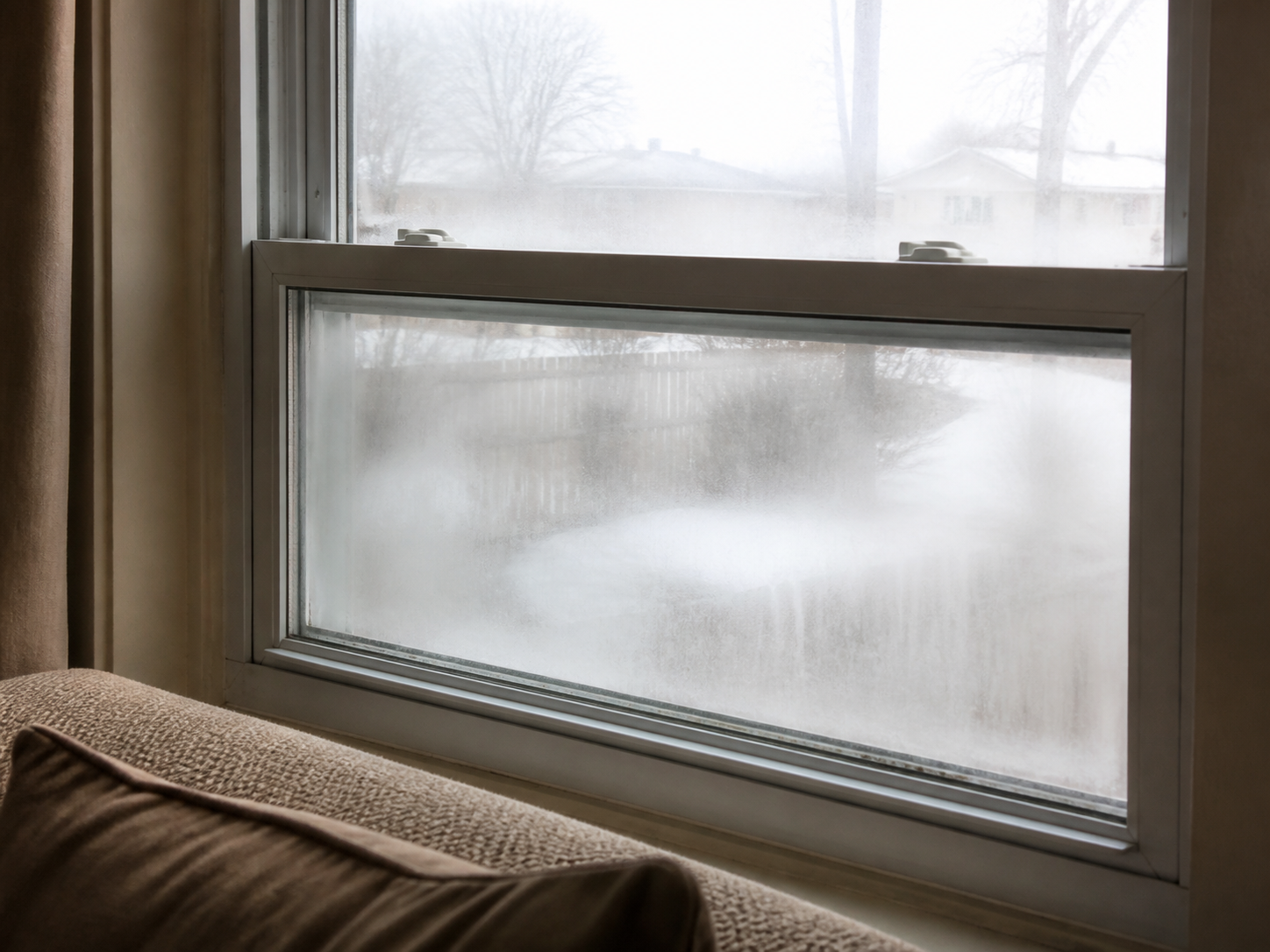
That sealed space holds insulating gas between the panes — usually argon — and once the seal goes, performance drops. You’ll see cloudy patches, streaks, or a milky look that never really wipes off because the problem is inside.
A homeowner in Richmond Hill called us last winter thinking her windows just needed a really good cleaning. They didn’t. Three south-facing units had broken seals, and the sun made the fog show up every afternoon like clockwork. Annoying to look at, yes. But also a sign the glass isn’t insulating like it should.
If that’s what you’re seeing, replacement usually makes more sense than trying to limp along. And if you’re already comparing operating styles, our page on casement windows gives a useful look at one option that seals tightly in our climate.
3. Your heating or cooling bills keep creeping up
Utility bills go up for lots of reasons. Rates change. Weather swings. Maybe you started working from home and the house is occupied all day. But if your bills keep climbing and the house still feels uneven, old windows may be part of the problem.
In Ontario, windows take a beating. We get humid summers, shoulder seasons that bounce from rain to frost, and those sharp January cold snaps that find every weak spot. Poor sealing, worn frames, and failed glass units all let heat move the wrong way.
- Bedrooms over the garage feel colder than the rest of the house
- The furnace runs a lot, but rooms near windows still feel cool
- The AC struggles on sunny west-facing rooms in July
- Bills are up, but comfort is not
I’m not going to pretend new windows magically fix every high bill. They don’t. Attic insulation, doors, and air sealing matter too. But if the windows are old and showing other symptoms on this list, they’re often a meaningful part of the problem.
4. The windows stick, jam, or won’t stay open properly
If you need two hands, a hip check, and a little optimism to open a window, something’s wrong.
This is common with older sliders, hung windows, and wood frames that have swollen, shifted, or simply worn out. Sometimes the balance system — the part that helps the sash stay up — is failing. Sometimes the frame is slightly out of square. Either way, windows should open without a wrestling match.
This one matters for more than convenience. In a bedroom, a stuck window can be a safety issue. It also means you’re less likely to open the window for fresh air in spring and fall, which kind of defeats the point.
For people replacing old horizontal sliders, it’s worth looking at modern slider windows to see what a smoother, better-sealed version looks like now. New units are not perfect forever, obviously, but they should feel easy and solid from day one.
5. You get a lot of condensation or even ice on the inside
A little moisture on very cold mornings can happen, especially if the house is humid. But heavy condensation, puddling on the sill, or ice buildup on the inside edge? That’s a warning sign.
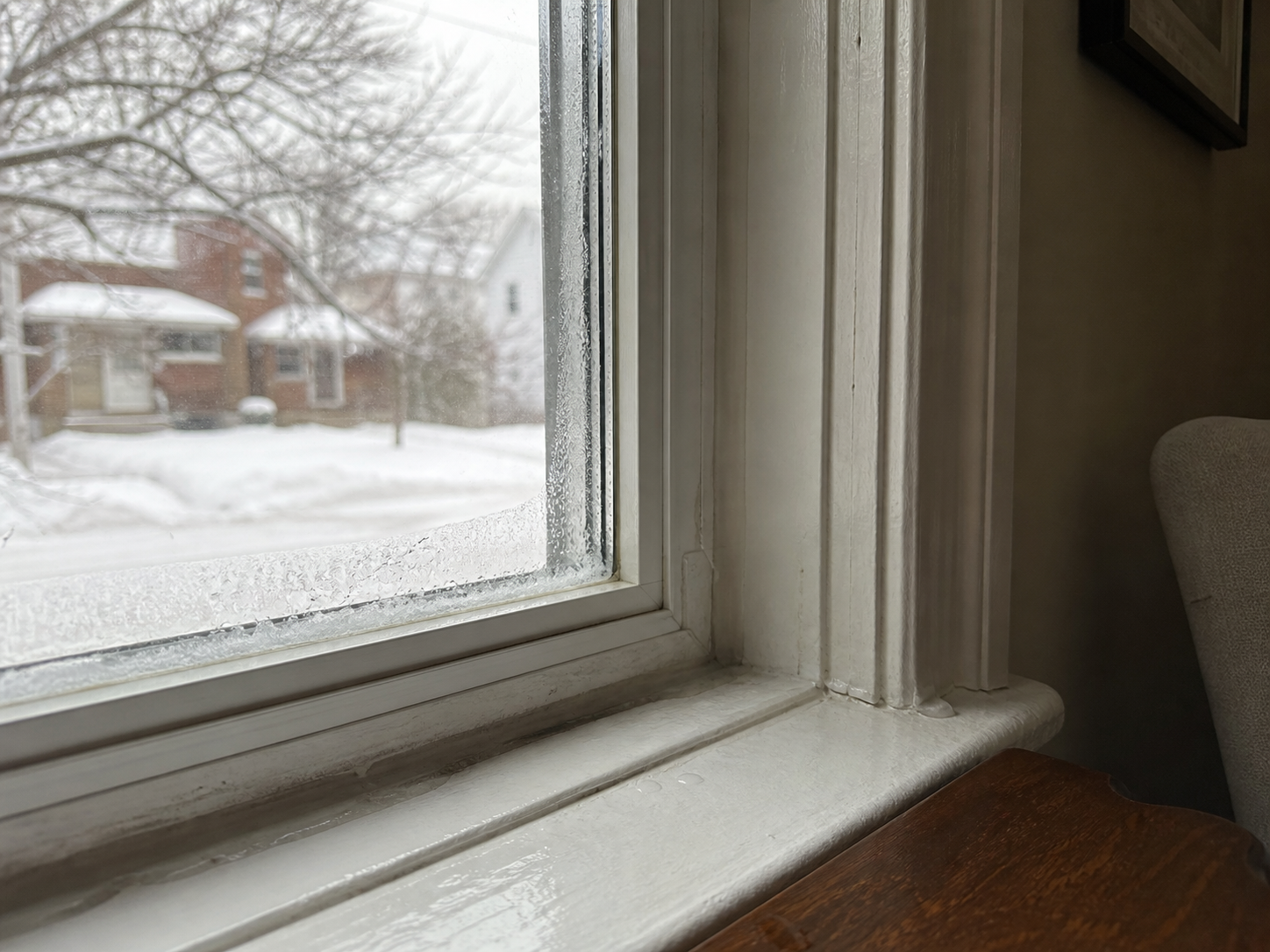
Sometimes the cause is indoor humidity alone. Bathrooms without proper fans, lots of cooking, or a humidifier set too high can do it. But older windows with colder interior glass surfaces make that moisture problem much worse.
And here’s where it gets expensive. Repeated moisture can stain trim, peel paint, damage drywall, and in the worst cases, start rot around the opening. We saw this in a 1980s home in Newmarket after an icy February stretch: the homeowner thought the little black marks on the casing were dirt. They were not dirt.
So yes, check your humidity levels first. But if the windows are old, drafty, and sweating constantly, that’s one of the more serious signs you need new windows.
6. Outside noise seems way too loud
You don’t need studio silence. This is the GTA, not a cabin in the woods. But if you hear every bus, every barking dog, every modified exhaust on a Friday night, your windows may not be doing much anymore.
Older windows often have weaker seals and less effective glass packages, so more sound gets through. New windows won’t erase traffic noise completely — I’d love to claim that, but no — yet they can make a noticeable difference, especially on busy roads in Toronto or near commuter routes in York Region.
This comes up a lot with front bedrooms and home offices. People start by asking about comfort, then halfway through the visit they say, “Honestly, if it also cuts the street noise, I’m in.” Fair enough.
7. The frames are cracked, soft, warped, or just plain tired
Sometimes the biggest sign is right in front of you. Cracked vinyl. Soft wood. Peeling paint that keeps coming back. Corners separating. Water staining on the trim. Hardware that’s loose or rusting.
At a certain point, you’re not deciding between “repair” and “replace.” You’re deciding how long to keep feeding money into something that’s already at the end of its run. I’m all for fixing what’s worth fixing, by the way. But we don’t do glass-only repairs, and honestly, some old windows are past the point where patching them makes financial sense.
If you’re seeing physical wear plus drafts, fogging, or sticking sashes, that combination usually answers the question. You probably don’t need another winter to prove it.
If you’re in Toronto and the GTA or farther north and want a straight answer on what’s worth replacing now versus later, you can always contact us. We’ll tell you honestly if a window is merely ugly, or actually failing.