
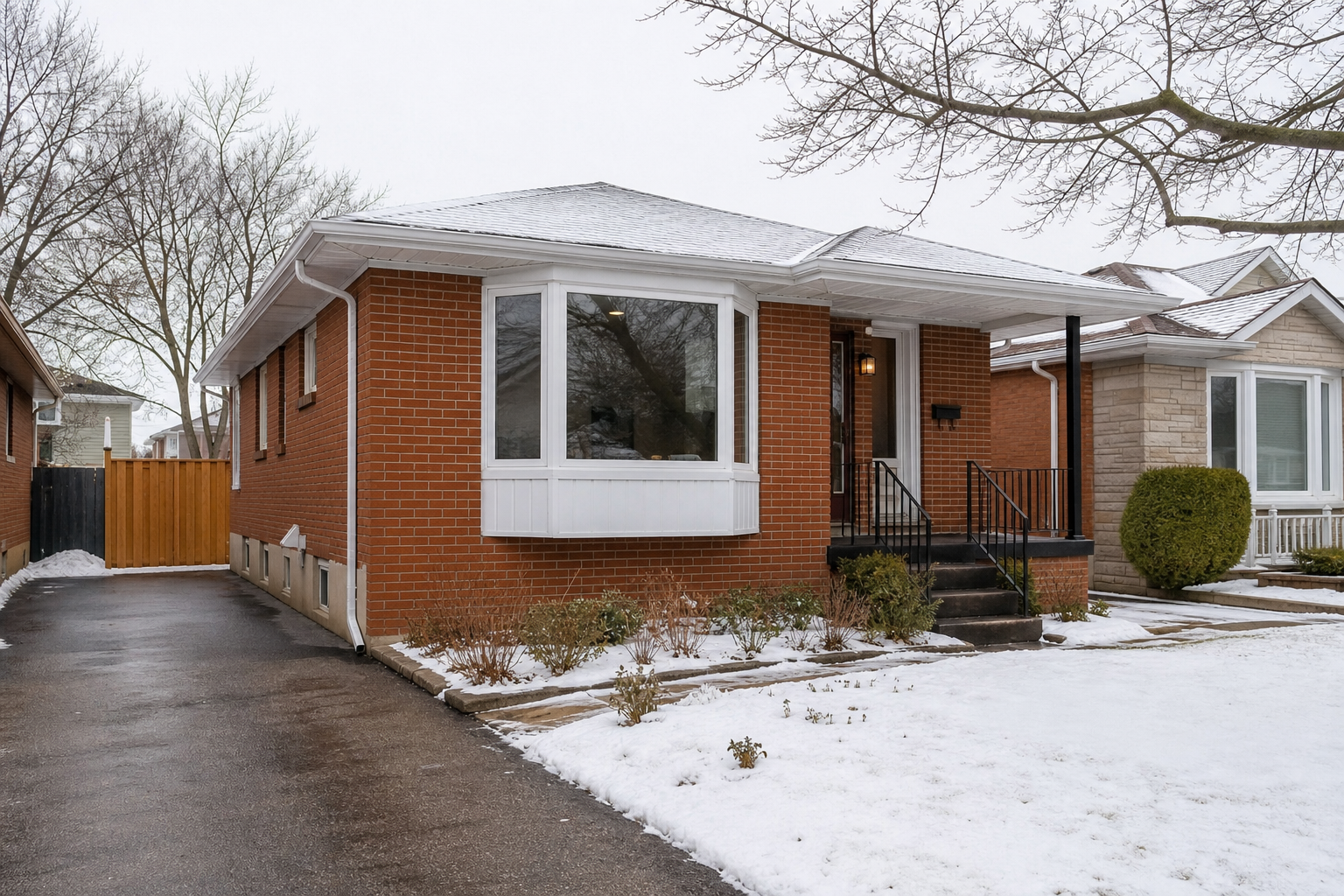
I’ve had more than one homeowner stand on the sidewalk, point at a curved window, and say, “We want one of those bay windows.” Fair question. The funny part is they were often looking at a bow window the whole time.
Bay and bow get mixed up all the time. And honestly, I get why. Both project out from the house. Both bring in more light. Both can make a room feel bigger than it is. But they’re built differently, they look different inside and out, and the price can land very differently too. If you’re comparing vinyl bow windows to bay windows for a home in Toronto, Aurora, Richmond Hill, Barrie, or anywhere in between, here’s the plain-English version I’d give you at the kitchen table.
Bay vs bow: the real difference
Here’s the simplest way to picture it. A bay window usually has 3 sections. One big middle window, then one on each side, set on angles. A bow window uses more sections — usually 4, 5, or 6 — to create a gentler curve.
So if you like sharper lines and a more defined bump-out, that’s usually a bay. If you want a softer, wrapped look, that’s where vinyl bow windows shine. They feel a bit more rounded and a little more classic, especially on older brick homes or wider front rooms.
There’s also a practical side. A bay often uses a fixed centre pane with operating side windows. A bow has more individual units tied together in a curve. That can mean more glass area, more frame sections, and more planning on the install side. If you want to browse the style itself, our bay & bow vinyl windows page shows the basic setup without getting too deep into the weeds.
- Bay window = usually 3 windows, stronger angles, more geometric look
- Bow window = usually 4 to 6 windows, smoother curve, softer look
- Bay often suits narrower walls better
- Bow usually needs more width to look right
How they change the room: more than just curb appeal
This is the part people notice right away. Both styles stick out past the outside wall, so inside, you gain a little nook. Not a full extra room, obviously. Let’s not get carried away. But enough space for a wider sill, a plant ledge, a reading chair nearby, or just less of that boxed-in feeling.
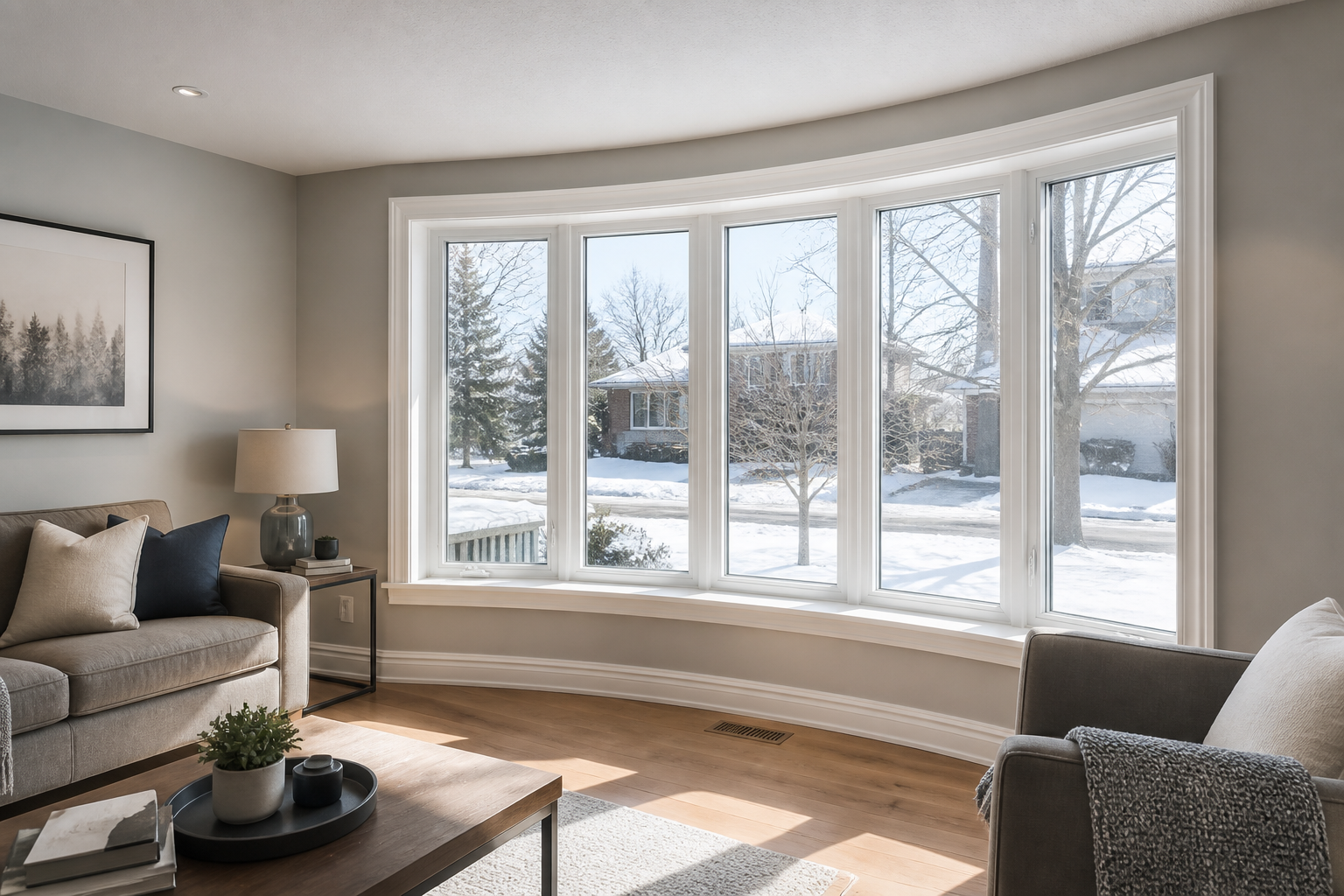
Light is the bigger win most of the time. Because the glass faces more than one direction, bay and bow windows catch sunlight from different angles through the day. On a gloomy February afternoon in the GTA, that matters. A front living room in Markham or a dining room in Barrie can go from dim to noticeably brighter without changing the whole wall.
Bow windows usually spread light more evenly because of that wider curve. Bay windows often give you a stronger view straight ahead with side light coming in from the angles. Neither is “better” in every case. It depends on what the room is missing now.
Useful tip: if your room already feels narrow, a bow window can make it feel wider and softer. If the room feels flat and you want a stronger focal point, a bay often does that better.
Inside the home, bow windows also feel less bulky from certain angles. That sounds minor, but it isn’t. In smaller front rooms, a sharp bay can feel more pronounced, while a bow can look more blended into the space.
Which one suits your room best?
This is where I usually slow people down a bit. The prettier option on Pinterest isn’t always the right one for your wall.
Bay windows work really well where you want a bold shape but don’t have a super wide opening. They’re common in front living rooms, breakfast areas, and some second-storey bedrooms where the original opening isn’t huge. The angled sides can also give you ventilation if those side units open.
Vinyl bow windows usually want a bit more width. On a wider wall, they look balanced. On a tight wall, they can feel crowded or forced. I remember a job in Newmarket where the homeowners were set on a bow for their front room. Nice house. 1980s brick, decent street presence. Once we measured the opening and looked at how close the inside wall returned to a fireplace, a bay made a lot more sense. They were disappointed for about ten minutes, then relieved when they saw the drawing.
A few room-by-room thoughts:
- Front living room: either can work; bow feels softer, bay feels bolder
- Dining room: bow can look elegant on wider walls and adds nice all-day light
- Bedroom: bay is often easier if you want ventilation and a compact footprint
- Older homes with character details: bows often suit the style really well
- Tighter suburban layouts: bays are often easier to fit cleanly
And don’t ignore what’s beside the window. Roof overhangs, porch roofs, walkways, shrubs, and even where you pile snow in winter all matter. We see this a lot in Toronto & the GTA, where every house seems to have one weird condition the plans never mention.
Budget: why bow windows usually cost more
Okay, but let’s talk money. In most cases, a bow window costs more than a bay. Not because one company is being clever with labels. Because there’s usually more going on.
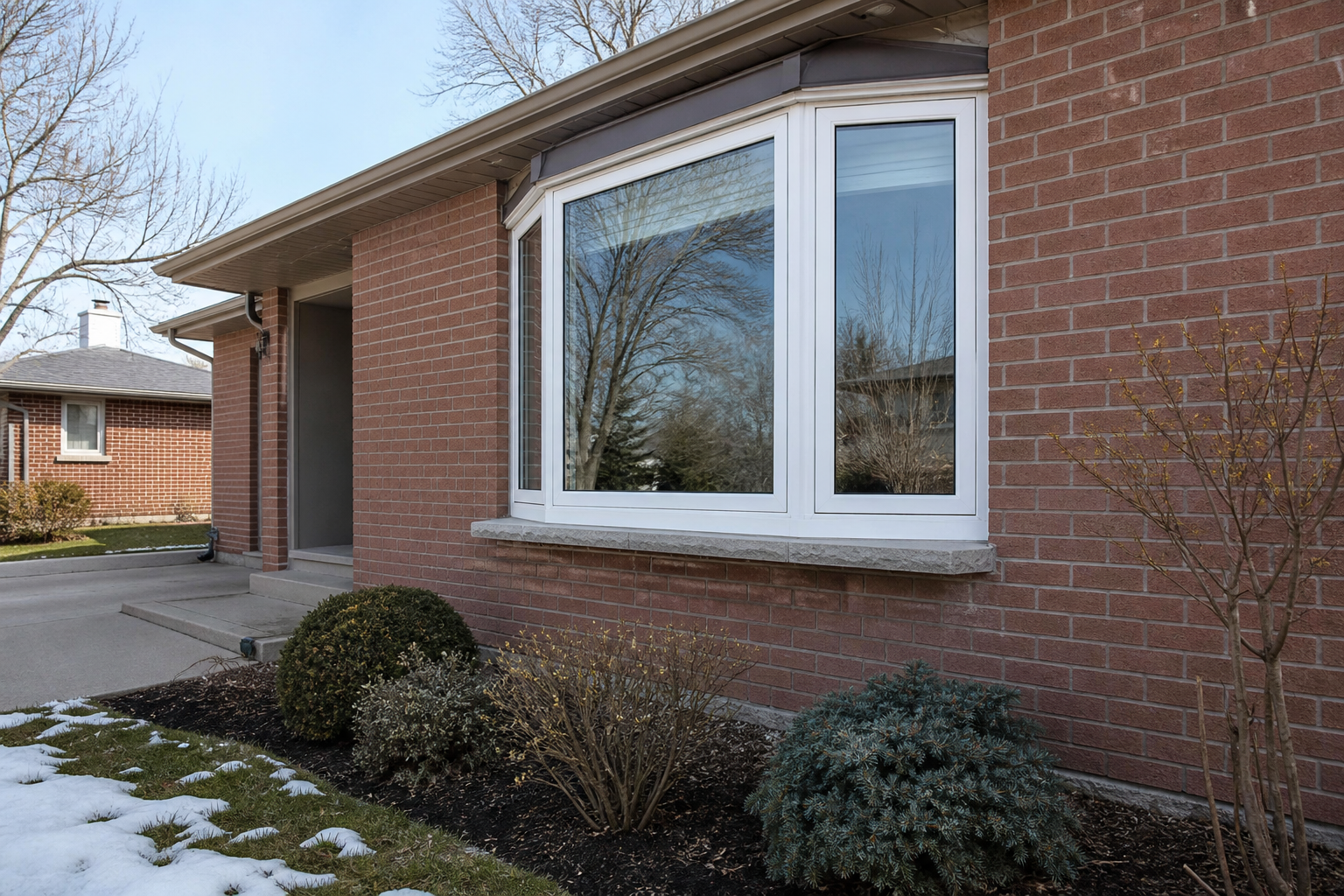
A bow often uses more separate window units, more framing, and more labour to get that smooth projection right. There can also be more trim work inside and out. With a bay, you’re often dealing with fewer pieces and a simpler shape.
What affects cost the most?
- Overall size of the opening
- How many window sections are in the unit
- Whether any of them open
- Interior finishing and trim work
- Structural support needed under or above the unit
- Access to the opening — first floor is easier than a tricky second-storey setup
Here’s the thing. The cheapest quote is not always the cheaper job. Bay and bow units need proper support. That can mean the seatboard, head, and cable support system are part of the plan — in plain English, the base, top, and support hardware that help carry the load and keep the unit sitting right over time. If that part is skimmed, you can end up with sagging, sticking operation, or drafts later. None of that is fun in a January cold snap.
If budget is tight, I’m usually pretty honest: a well-designed bay often gives you most of the “wow” for less money than a bow. A bow is worth it when the wall is wide enough and the look is exactly what the house wants.
How they handle Ontario weather
More glass can be beautiful. It can also be a weak spot if the window is poorly built or poorly installed. That matters here. We get humid summers, hard winter wind, freeze-thaw cycles, and the occasional sideways rain that seems personal.
Good vinyl bay or bow windows should be built with insulated glass units — that’s the sealed glass package — with the gas between the panes, usually argon, and the coating that reflects heat, called Low-E. You don’t need to memorize the terms. You just want a window that helps keep heat in during winter and knocks some solar heat back in summer.
For comfort, I pay close attention to two things: the glass package and the install details. A beautiful bow window with sloppy insulation around the frame is still a drafty bow window. We’ve replaced units where the homeowner thought the old glass was the only problem, but the rough opening around it was the real issue. (And just to be clear, we supply and install full windows; we don’t do glass-only repairs.)
Ventilation matters too. Some bow windows include fixed sections with one or more operating windows built in, often casement (crank-open) vinyl windows at the ends. Bay windows often do this as well. If you actually want fresh air in spring and fall, not just the look of glass, make sure the design includes operable sections where they’ll do some good.
How I’d help you choose between a bay and vinyl bow window
If you were standing in your living room with me, I’d ask four simple questions.
- How wide is the wall, really?
- Do you want a bold shape or a softer curve?
- Is the goal more light, more ventilation, more floor feel, or all three?
- What budget range feels comfortable without regrets later?
That last part matters. I never love seeing someone stretch for a bow window if a bay would suit the home better and leave room in the budget for better glass, better trim work, or another drafty window elsewhere in the house.
Honestly, the right answer is often obvious once the measurements are on paper. The house usually tells you. If you want a second set of eyes on it, that’s what we do every day at WindowFixers. You can contact us and we’ll tell you straight if your room wants a bay, a bow, or neither.
And if I had to give one small personal opinion? Don’t choose a bow window just because it sounds fancier. Choose it because it fits the house. Homes are a lot happier when we stop forcing them to be something they’re not.