
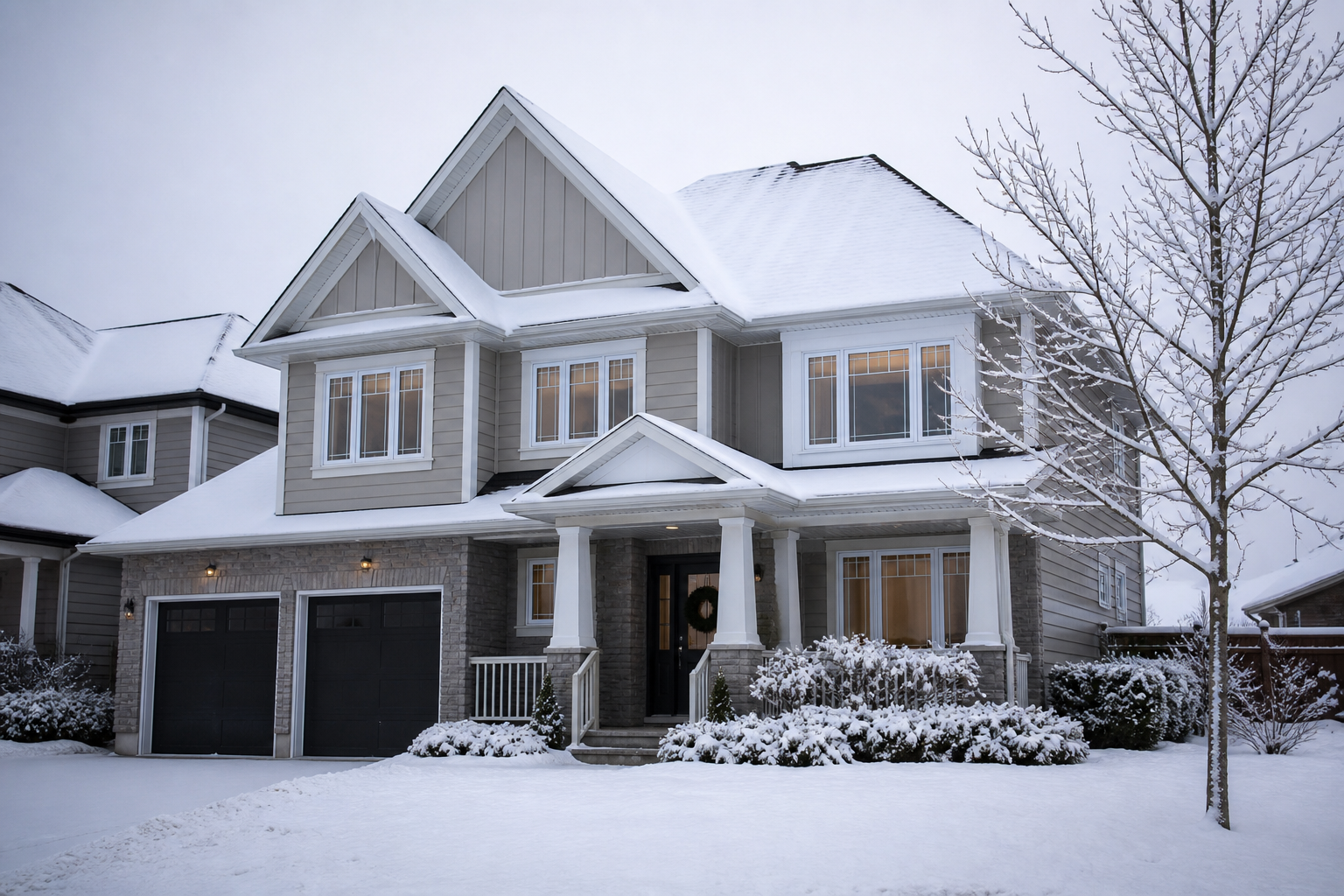
Barrie and Simcoe County homes see a different kind of winter than many parts of the GTA. Colder temperatures, lake-effect snow, windy days, and long heating seasons all put more pressure on your windows than homeowners often expect.
That does not mean you need anything flashy or complicated. It means choosing vinyl windows that are well built, properly sized for the opening, and installed with the local climate in mind. For homeowners in [Barrie & Simcoe County](/service-areas/barrie), the goal is simple: keep heat in, drafts out, and windows working smoothly even after a rough February.
Why windows in Barrie work harder
A window in Barrie is not just dealing with cold air. It may also face repeated freeze-thaw cycles, snow piled against lower walls, wind-driven moisture, and indoor humidity trying to escape toward colder glass. Over time, those conditions can expose weak seals, poor installation, or frames that were never a great match for Ontario winters.
This is where vinyl makes practical sense. Good vinyl frames do not rust, they do not need repainting, and they handle moisture far better than many older materials. For busy homeowners, that low-maintenance side matters almost as much as energy performance.
- Long heating seasons mean small efficiency gains add up
- Cold snaps make drafts feel worse, even if they seem minor
- Snow and ice can stress poorly sealed sills and frames
- Strong winds make air leakage more noticeable near seating areas and bedrooms
If a room feels chilly even when the heat is on, the problem is often air leakage around the window or an older glass unit losing heat too quickly.
What features matter most in a colder zone
Homeowners sometimes focus on one buzzword, but winter comfort usually comes from a combination of details. The frame, the glass package, the spacers, the weatherstripping, and the installation all need to work together.
Insulated glass that suits real winter conditions
Double-pane glass is common, but not all sealed units perform the same way. In colder parts of Ontario, the right low-emissivity coating and gas fill can make a noticeable difference in comfort near the window. You may not think about coatings much, but you will notice when the glass feels less cold beside the dining table or couch.
Tighter air sealing
A window can have decent glass and still feel drafty if the sash and frame do not seal tightly. This is one reason many homeowners like casement windows in exposed areas. Their crank-close design can create a firm seal, which is especially helpful on windy sides of the house.
Frames and hardware that stay dependable
In winter, homeowners quickly learn whether hardware is solid. Locks should engage smoothly. Sashes should operate without sticking. Frames should stay square and stable through temperature swings. A window that feels fine in October but fights you in January is not doing its job well.
- Low-E glass to reduce heat loss
- Gas-filled insulated glass units for better thermal performance
- Warm-edge spacers to help limit condensation around the glass edge
- Quality weatherstripping and locking systems
- Durable vinyl frames with multi-chamber design
Snow load, moisture, and winter durability
When people hear "snow load," they often think only about roofs. But heavy snow affects windows too, especially lower-level openings, basement windows, and any area where drifting snow or ice buildup sits against the home for long periods. Moisture management matters just as much as insulation.
A well-installed vinyl window should shed water properly, seal well at the perimeter, and avoid trapping moisture where it can cause hidden problems. If the outside caulking, flashing approach, or sill details are poorly handled, winter conditions can magnify those mistakes.
Good design choices for messy weather
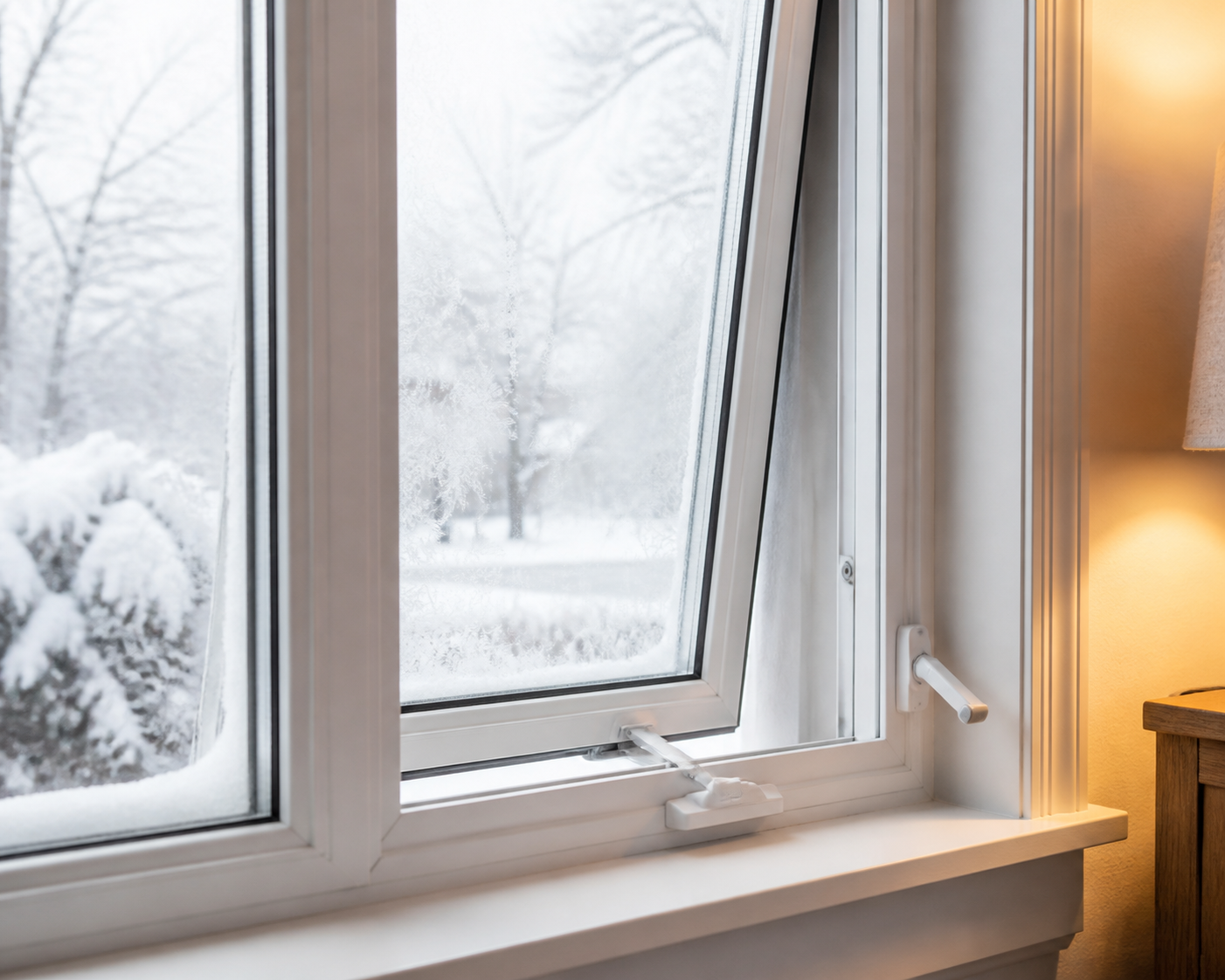
In some parts of a home, the style of window can help with weather exposure. For example, awning windows can be useful in spots where ventilation is still wanted during light rain or shoulder-season weather, because the sash opens outward from the bottom and creates a protective angle.
For homes near open fields, on corner lots, or closer to the lake where wind exposure is stronger, durability is not just about the frame material. It is about how the whole unit is secured and sealed into the opening.
If snow regularly piles high against certain windows, mention that during the quote stage. Exposure conditions can affect the best choice for style, hardware, and installation approach.
Energy savings that feel real in daily life
Energy savings are often discussed in numbers, but homeowners usually experience them in simpler ways. The furnace runs less often. That cold seat beside the window feels usable again. Bedrooms stay more even overnight. The house just feels less leaky.
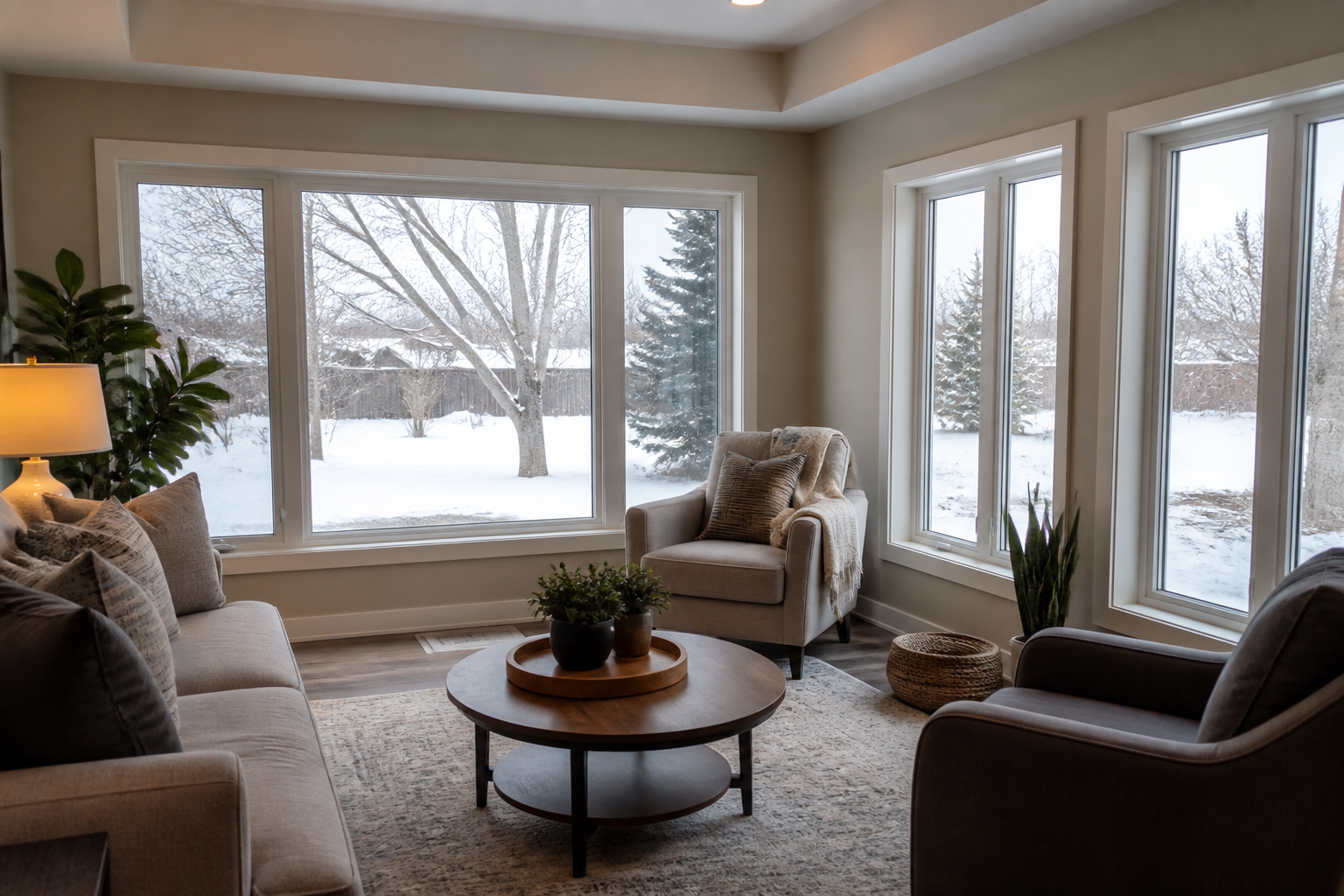
In Barrie, where winter can hang on for months, these practical gains matter. Replacing older drafty windows may help lower heating costs, but it can also improve comfort enough that you stop constantly adjusting the thermostat.
- Less heat loss on cold nights
- Fewer drafts near larger openings
- More stable room temperatures
- Potential reduction in furnace workload
- Better comfort in north-facing rooms
One important note: condensation on windows is not always a sign the window is bad. In winter, indoor humidity levels, airflow, blinds, and room use all play a role. Better windows can help, but so can balanced ventilation and humidity control.
Best window choices for common Barrie-area homes
Barrie and Simcoe County have a mix of housing styles: newer subdivisions, raised bungalows, older family homes, rural properties, and homes with finished basements. The best vinyl window choice depends on how each room is used and how exposed that side of the house is.
For windy sides of the home
Casement windows are often a strong fit because of their tighter closure. They are popular in bedrooms, living rooms, and other spots where homeowners want ventilation without giving up winter performance.
For easy operation over sinks or counters
Awning windows can be practical in kitchens, bathrooms, and basements. They are compact, easy to operate, and often useful where exterior space or interior reach is limited.
For larger views without extra air leakage points
Picture windows work well when you want daylight and a broader outdoor view but do not need that section to open. Fewer moving parts can mean a very clean, efficient solution in front living rooms or stairwells.
The right answer is rarely one style for the whole house. Most comfortable homes use a mix based on airflow, furniture layout, exposure, and how much winter sun each room gets.
A good window still needs proper installation
Even a strong vinyl window can underperform if it is installed poorly. Gaps around the frame, weak insulation at the perimeter, or sloppy finishing can all lead to drafts and moisture trouble. In a climate like Barrie's, those mistakes show up quickly.
That is why homeowners should look beyond the brochure. Ask how the old unit is removed, how the opening is checked, what insulation is used around the new frame, and how the exterior is sealed. Those details affect comfort for years.
If you are comparing options for your home, a local conversation is often the best place to start. You can contact WindowFixers for a quote and talk through exposure, room use, and which vinyl window styles make the most sense for your part of Barrie or Simcoe County.