
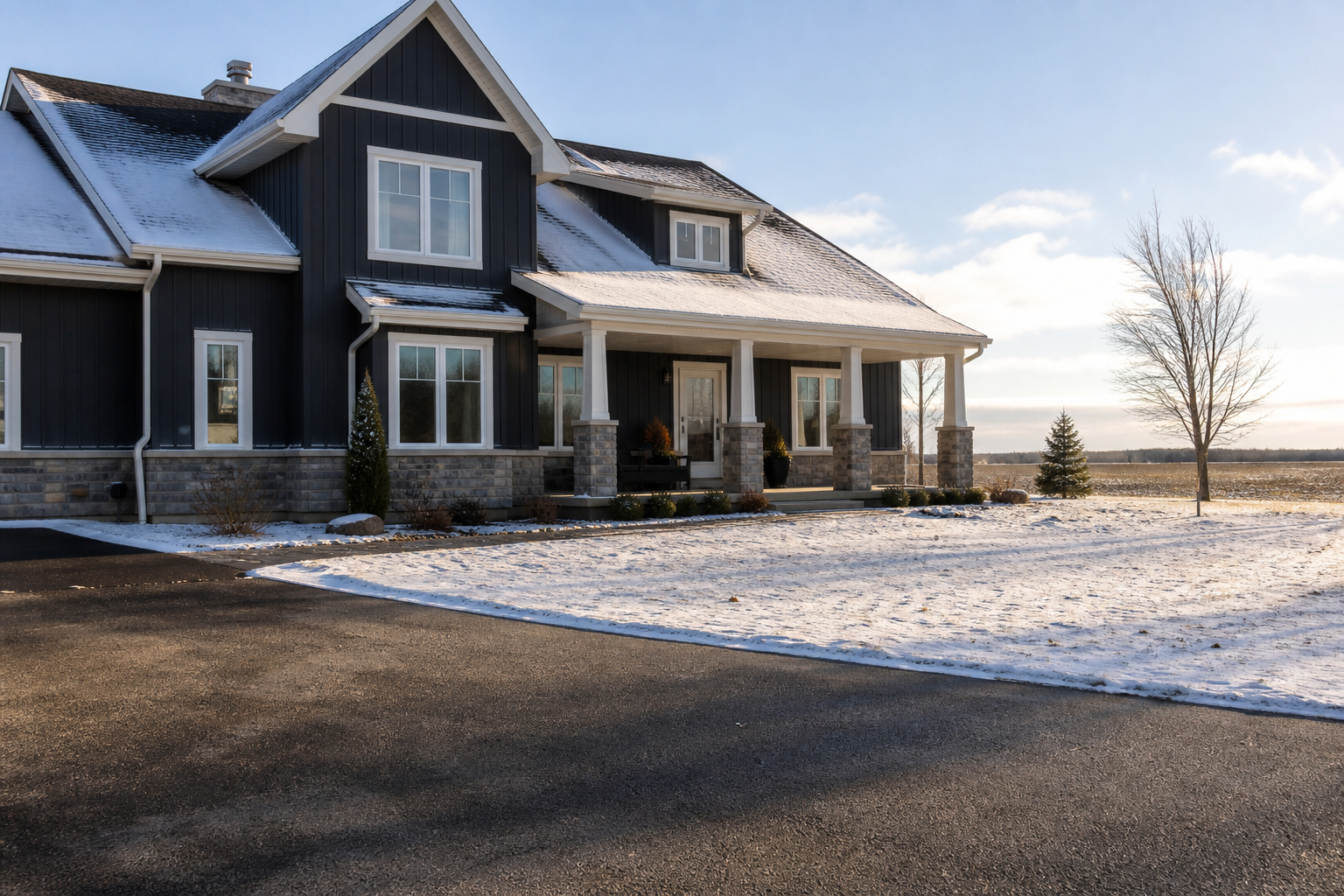
One of the biggest myths I hear from homeowners in East Gwillimbury is this: “A window is a window. Just get the cheapest decent one.” Then January shows up, the north wind cuts across an open field, and that bargain starts whistling like it has a personal grudge.
Vinyl windows East Gwillimbury homes need are often a little different from what works on a tight street in Toronto or even older parts of Newmarket. Out here, you’ve got more exposure, more temperature swings, more big-opening views, and often older homes with quirks that don’t show up until install day. We work across York Region all the time, and honestly, the rural properties are the ones that teach you not to assume anything.
Why rural East Gwillimbury homes ask more from a window
Drive around Mount Albert, Holt, Queensville, or the roads east of Sharon and you’ll see it fast. Some homes are newer estate builds. Some are older farmhouses. Some are side-splits from the 70s with wide front windows that were great in theory and drafty in practice. The point is, there isn’t one “East Gwillimbury house type,” so there shouldn’t be one default window package either.
Here’s the thing. A home with open land around it usually gets hit harder by wind than a house tucked into a dense subdivision. That matters. The frame has to stay solid. The seals have to hold. The moving parts have to keep working after freeze-thaw cycles, humid July days, and the kind of cold snap that makes you question living in Ontario for a few minutes.
I was at a place near Mount Albert last winter where the homeowner said, “The old windows weren’t that bad.” Then we stood beside the dining room unit and could feel the air movement with gloves off. Not a dramatic broken-glass problem. Just years of small leaks, failed seals, and a frame that had given up. That’s common. Rural homes don’t always fail loudly. They just slowly get uncomfortable.
What matters most in vinyl windows East Gwillimbury homeowners choose
If you’re comparing vinyl windows East Gwillimbury options, don’t start with the colour chart. Start with how the window will actually behave in your house.
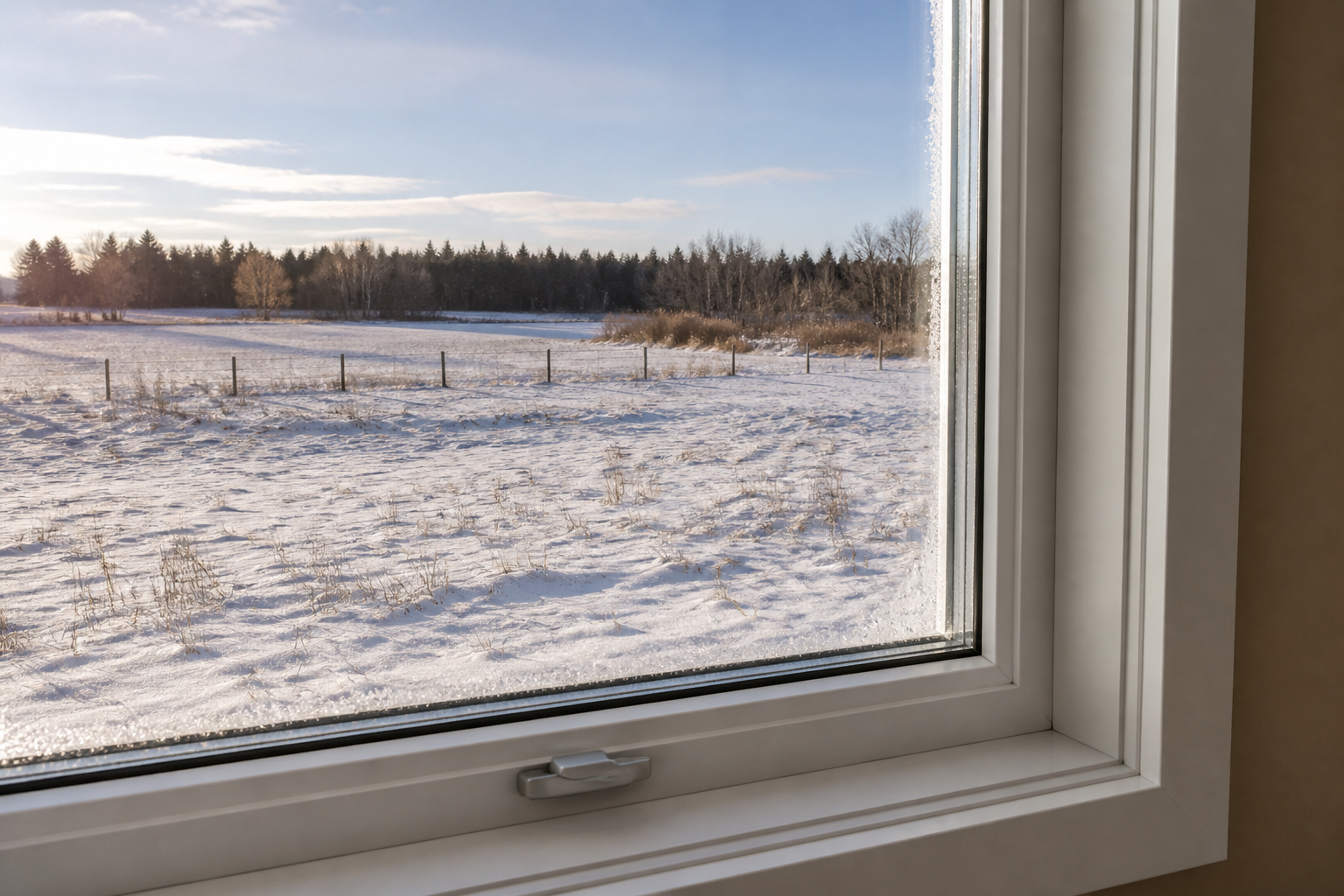
- Air leakage: This is the sneaky one. Even a decent-looking old window can leak air around the sash, which is the moving part, or around the frame.
- Glass package: The glass matters as much as the frame. The coating that reflects heat back where you want it is called Low-E, and the gas between the panes is usually argon. Both help in Ontario weather.
- Frame strength: Bigger openings need a frame that doesn’t feel flimsy. Rural homes often have larger views at the back of the house, and cheap frames can show their limits.
- Hardware quality: Cranks, locks, and tracks get tested hard here. Mud season, dust, freezing rain, then humidity. Good hardware isn’t glamorous, but you notice bad hardware very quickly.
- Installation detail: A good window installed badly is still a bad result. Level, square, insulated properly, sealed properly. Boring words. Very expensive if ignored.
Tip: If a room feels cold near the window but the glass doesn’t look broken, don’t assume you need “better furnace heat.” Often the real problem is air leakage and poor installation around the frame, not the heating system.
And no, more expensive isn’t always better. I’ll say that plainly. Some upgrades are worth it. Some are not. For a utility room on the side of a garage, you may not need to go fancy. For a big living room opening facing open land? Different story.
Best window styles for open lots, farmhouses, and estate homes
Style matters, but not just for looks. In rural York Region, I think function should lead and appearance should follow close behind.
For ventilation, I’m a big fan of casement windows on many East Gwillimbury homes. They crank open, seal tightly when closed, and they’re great in places where you actually want to catch a breeze across open property. They also tend to work well over sinks or in bedrooms where easy operation matters.
For smaller spaces, especially basements or spots where you still want airflow during light rain, awning windows make a lot of sense. They hinge at the top and open outward, which is simple but useful.
Then there are the big view windows. East Gwillimbury homes often back onto fields, trees, or decent-sized yards, and people want to keep that view. Fixed windows, often called picture windows, are great for that because they don’t have moving parts to leak air through. But they usually work best paired with operable windows nearby, unless you enjoy a beautiful room with no fresh air.
Sliders can still be the right choice in some rooms, especially where you want a simple, low-profile opening. But on very exposed walls, I usually talk through the pros and cons carefully. It depends on the opening, the budget, and how the room gets used.
Older rural homes can hide surprises. Good installers plan for that.
This is the part people don’t see in the showroom photos. Older homes around East Gwillimbury can be wonderfully solid, a little wonky, or both at once. We’ve opened up old trims and found framing that had settled, rough openings that weren’t square, and insulation gaps you could practically post a letter through.
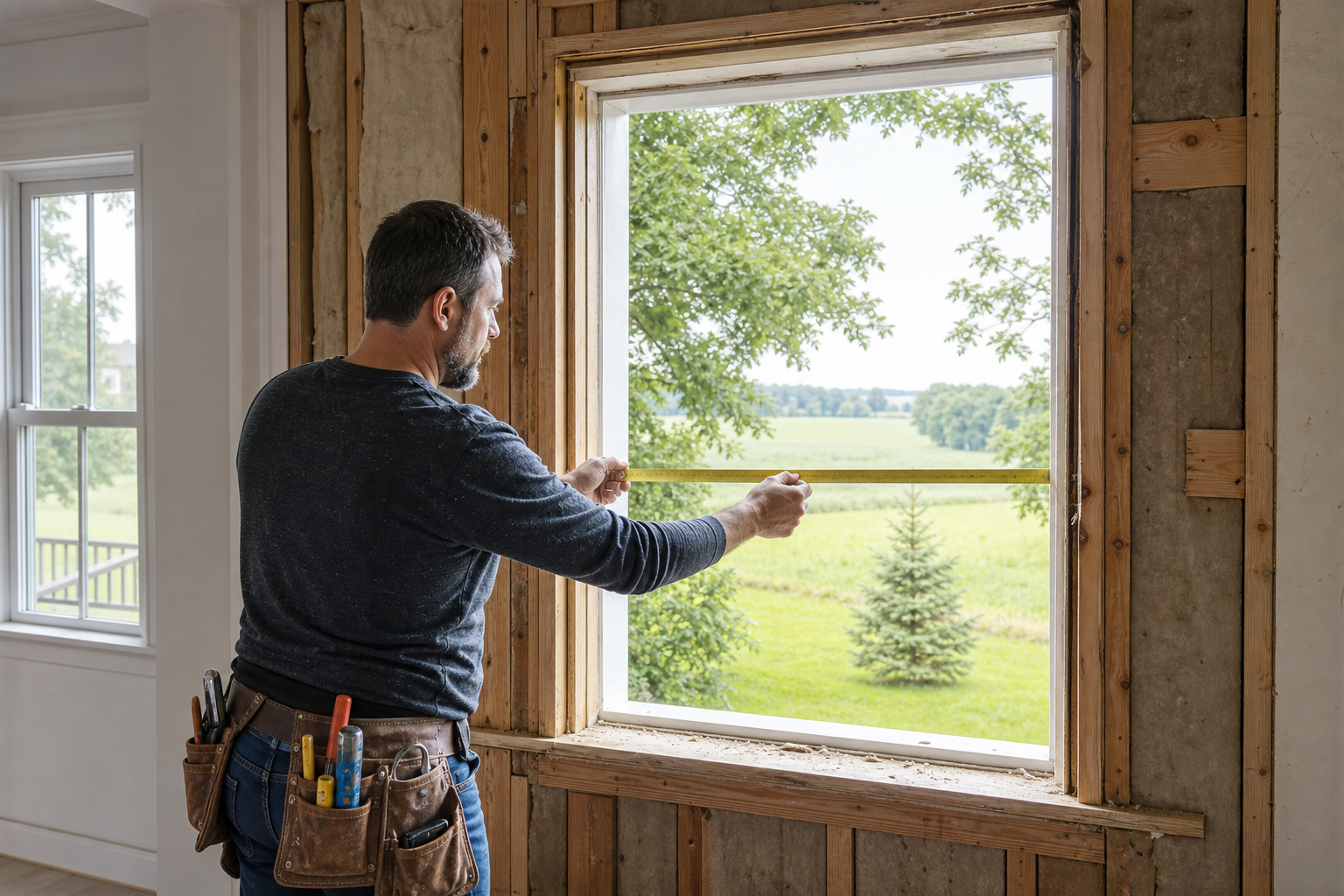
That’s why measuring properly matters so much. Not just width and height. We look at wall depth, trim condition, siding details, interior finish, and how the old unit is tied into the wall. On an older farmhouse or a mixed-renovation home, the install plan matters almost as much as the new window itself.
A homeowner in Queensville once told me another company said all twelve windows could be quoted “sight unseen” with one standard approach. Maybe. But that’s how you end up with surprises on install day and a change order nobody enjoys. We’d rather be realistic from the start. If you’re in the area, our York Region service page gives a better picture of where we regularly work.
Also worth saying: we supply and install full windows. We don’t do glass-only repair. So if the issue is just a cracked pane in an otherwise good unit, we’re probably not your crew for that. I’d rather say that upfront than waste your afternoon.
Local service matters more than people think
People sometimes focus so hard on the product that they forget the service side. But for rural homes, local service matters. A lot. If your house is outside the main dense routes and something needs a site visit, you want a company that actually works your area, not one that sounds interested until the map gets zoomed out.
East Gwillimbury isn’t downtown anywhere. That’s part of the appeal. But it also means scheduling, travel time, and site access are real things. Long driveways, winter snow, detached garages in the way, septic and landscaping to work around, custom sizes, older trim profiles — these are normal details for us, not annoying surprises.
And local knowledge helps with recommendations too. A west-facing room in an exposed area near open fields may need a different conversation than a sheltered side elevation in a subdivision near Holland Landing. Same town. Different conditions.
If you want us to take a look, the easiest next step is just to contact us. No dramatic sales pitch. We’ll tell you what looks worth doing now, what can wait, and what I honestly wouldn’t spend your money on yet.
How to think about value without getting lost in sales talk
Most homeowners aren’t shopping for windows because it’s fun. You’re trying to solve a problem and not overpay doing it. Fair enough.
So here’s my blunt version. The best value usually isn’t the cheapest quote, and it isn’t the most loaded quote either. It’s the one where the window quality, glass package, installation method, and service support all match the house. That’s it. Boring answer. True answer.
On a rural East Gwillimbury property, I’d usually tell people to spend where it affects comfort every day: better sealing, solid operation, and the right style for the opening. I’d be less excited about paying extra for cosmetic add-ons you’ll stop noticing after two weeks.
Ask simple questions. Will this window handle wind exposure? How will this style open with furniture there? Is this opening square? What trim work is included? Who’s doing the install? If someone gets annoyed by those questions, that tells you something.
And if your current windows aren’t failing yet, but you’re starting to feel drafts, see fogging between panes, or fight with locks every season, that’s usually the moment to start planning. Not panicking. Just planning. That tends to make for better decisions.