I’ve had more than one customer point at two windows that looked almost the same from the driveway and ask, “Why is one a few hundred bucks more?” Fair question. In a January cold snap in Ontario, that difference starts to make sense fast.
Here’s the short version of casement vs slider windows: casements usually seal tighter and feel better in winter, while sliders are simpler, cheaper, and handy in spots where you don’t want a window sticking out. The trick is picking the one that fits the room, not just the brochure photo.
Why this choice matters more than people think
A lot of window decisions get made on looks alone. I get it. But with casement vs slider windows, the bigger difference is how they open, how they seal, and how they behave after ten Ontario winters of wind, dust, pollen, driving rain, and that lovely black slush spray from the road.
My honest take? Generic advice online leans too hard toward “casement is always better.” It isn’t. If you put a crank-open window over a busy kitchen sink, or in a tight side yard where it can catch wind, you may end up annoyed by the thing every week. On the other hand, if you put a slider in a cold, exposed bedroom in Barrie or north Newmarket and expect the same seal as a compression-sealed casement, you may be disappointed.
Useful rule of thumb: if winter comfort and noise matter most, lean casement. If budget, simple operation, and easy access matter most, lean slider.
Casement windows: the better seal, with a few catches
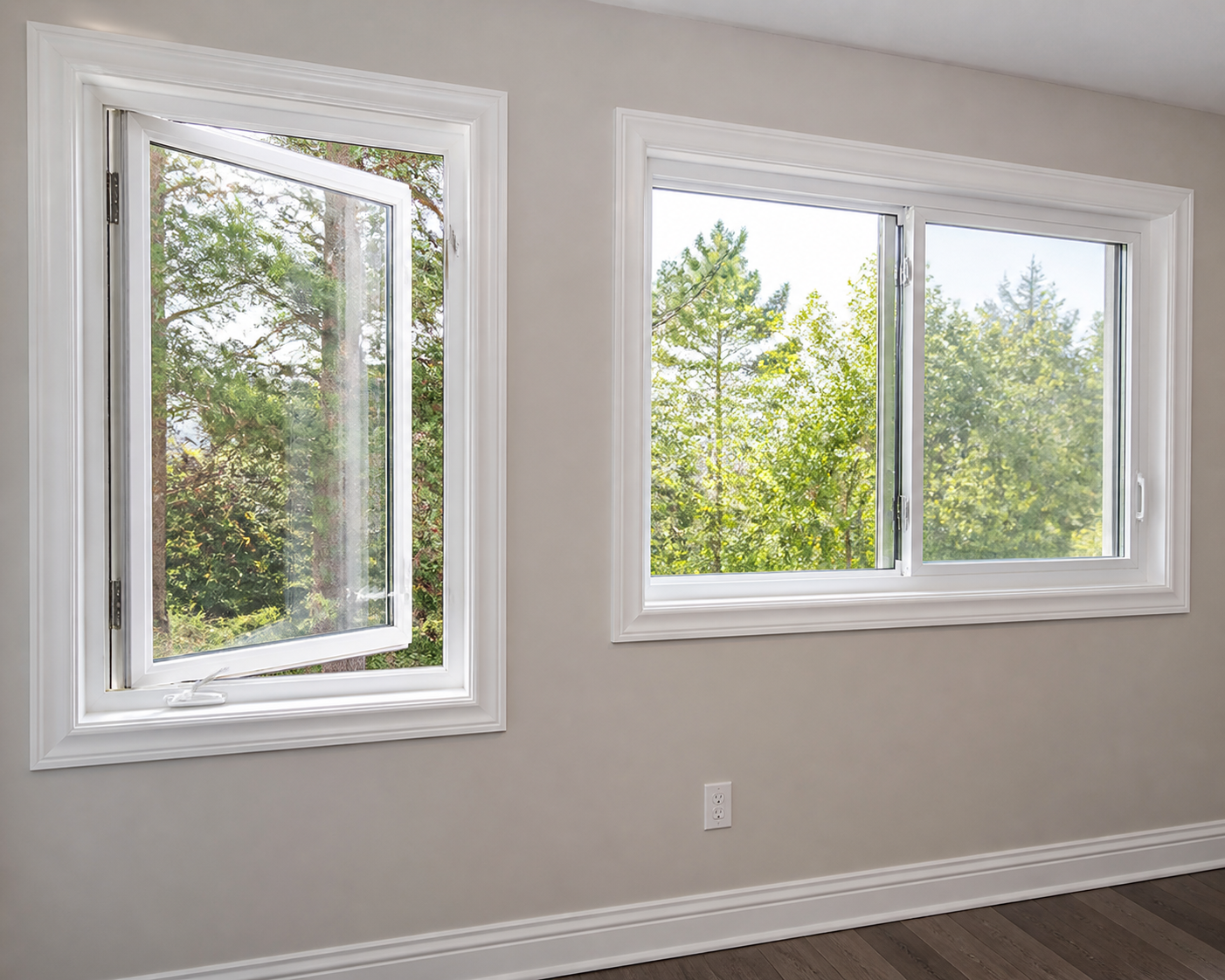
A casement window swings open like a little door and closes by cranking shut. The reason people like them in Ontario is simple: when you lock them, the sash presses tight against the frame. That tight press is called a compression seal. It’s one of the main reasons casement windows tend to feel less drafty.
Relative air leakage resistance
That matters in a place like Aurora, Vaughan, or Barrie, where you can get hard west winds and long cold stretches. A tighter seal often means less air leakage, better comfort near the glass, and usually a bit less outside noise sneaking in too.
Where casements shine
- Bedrooms where you want less draft by the bed
- Living rooms with big exposed walls
- Home offices facing a noisy street
- Places where you want full top-to-bottom opening for airflow
They also catch breeze well. Because the sash opens outward, you can angle it to pull air into the room. On a humid July day, that helps more than people expect.
But there are catches. The hardware is more involved. Hinges, crank mechanism, and multi-point locks all do good work, but they’re still moving parts. More parts usually means a higher price and more to maintain over time. Not constant repairs. Just more complexity.
And here’s a small but real annoyance: if the window opens over a deck walkway, beside a barbecue, or into shrubs that already hate your pruning schedule, an outward-swinging sash can be a nuisance. I remember a job in East York where a customer loved the idea of casements until we mocked one up beside a narrow side path. One step with groceries and that sash would’ve become a forehead test. We changed that opening to a slider. Much better fit.
Slider windows: simple, practical, and often the smarter buy
Slider windows move side to side on a track. That’s it. Fewer moving parts. No crank. No sash swinging into your patio chair. That simplicity is a big reason slider windows are popular in bungalows, basements, and wider openings.
They usually cost less than casements in the same rough size, sometimes enough to matter if you’re replacing a whole main floor. If you’re juggling ten or twelve openings, those differences add up fast.
Where sliders make the most sense
- Basements and laundry rooms
- Over kitchen sinks where a crank can be awkward
- Wide openings in ranch homes and bungalows
- Tight exterior spaces like walkways or patios
Now the trade-off. A slider usually doesn’t seal quite as tightly as a casement because it closes by sliding into place, not pressing in all around. The weatherstripping still matters a lot, of course, but in a straight casement vs slider windows efficiency fight, casement usually wins.
Tracks also need cleaning. Not a dramatic amount, but dust, dead bugs, and kitchen grease have a way of collecting there. If you’ve ever tried to slide open a neglected old basement window in April, you know the sound. It’s not elegant.
Casement vs slider windows side by side
| Factor | Casement | Slider |
|---|---|---|
| Cost | Higher | Lower |
| Energy efficiency | Better seal | Good, not top |
| Noise | Usually quieter | Usually more sound |
| Maintenance | More hardware | Track cleaning |
| Lifespan | Long, if hardware cared for | Long, simpler parts |
| Best use | Bedrooms, exposed walls | Basements, wide openings |
One quick note on lifespan: both can last a long time if the frame is built well and the install is done right. The install matters more than people think. A great window installed poorly is still a problem window. If you’re comparing options across the Toronto GTA, the opening condition, insulation around the frame, and exterior caulking often matter as much as the style itself.
Best rooms for each style
This is where I’d start if I were standing in your house with a tape measure.
Pick casement if the room has a comfort problem
Cold bedroom? Drafty family room? Office facing traffic? Casement is often worth the extra money there. You feel the benefit more in rooms where you sit still for long periods. No one likes that one cold chair by the window in January.
Pick slider if the room has a practical problem
Need an easy window over the sink? Need something in a basement that opens simply and doesn’t eat space? Need to stretch a renovation budget without buying junk? Slider often makes more sense.
And don’t assume one style has to win the whole house. Mixed packages are common. We do plenty of homes with casements at the front bedrooms and living areas, then sliders in the basement or utility spaces. That’s often the sweet spot.
How to choose without overthinking it
Here’s the step-by-step I’d use.
- Stand in the room in January terms, not May terms. Where do you feel cold now?
- Ask if the window opens into anything: walkway, deck, shrubs, hose bib, barbecue.
- Think about who uses it. Kids? Older parents? Someone who wants the simplest motion?
- Decide where the budget matters most. Spend more where comfort matters most.
- Match style to room, not to a one-style-fits-all idea.
If you’re torn, here’s my slightly contrarian opinion: don’t pay for casements in every low-priority room just because they test better on paper. Put the money where you’ll notice it. Better glass, better install, and the right style in the right room usually beats a fancy-looking but mismatched package.
And if your opening is unusual, or you’re replacing older wood windows in a 1960s bungalow, it helps to have someone look at the actual house. That part is never solved well by a chart alone. If you want a second set of eyes, you can contact us and I’ll tell you straight where casement is worth it and where I’d save your money.
So which should you pick?
If your top priority is the tightest seal, better winter comfort, and a quieter room, casement usually wins. If your top priority is lower cost, simpler operation, and no sash sticking out into your life, slider usually wins.
That’s the whole idea behind casement vs slider windows. Don’t treat it like a style contest. Treat it like a room-by-room decision. Your cold front bedroom and your basement laundry room do not need the same answer.
Honestly, that’s what I enjoy about this work. Two windows can look similar from the curb, but one choice will make your house feel better every day. And the other will quietly bug you for twenty years. I’d rather help you avoid the second one.