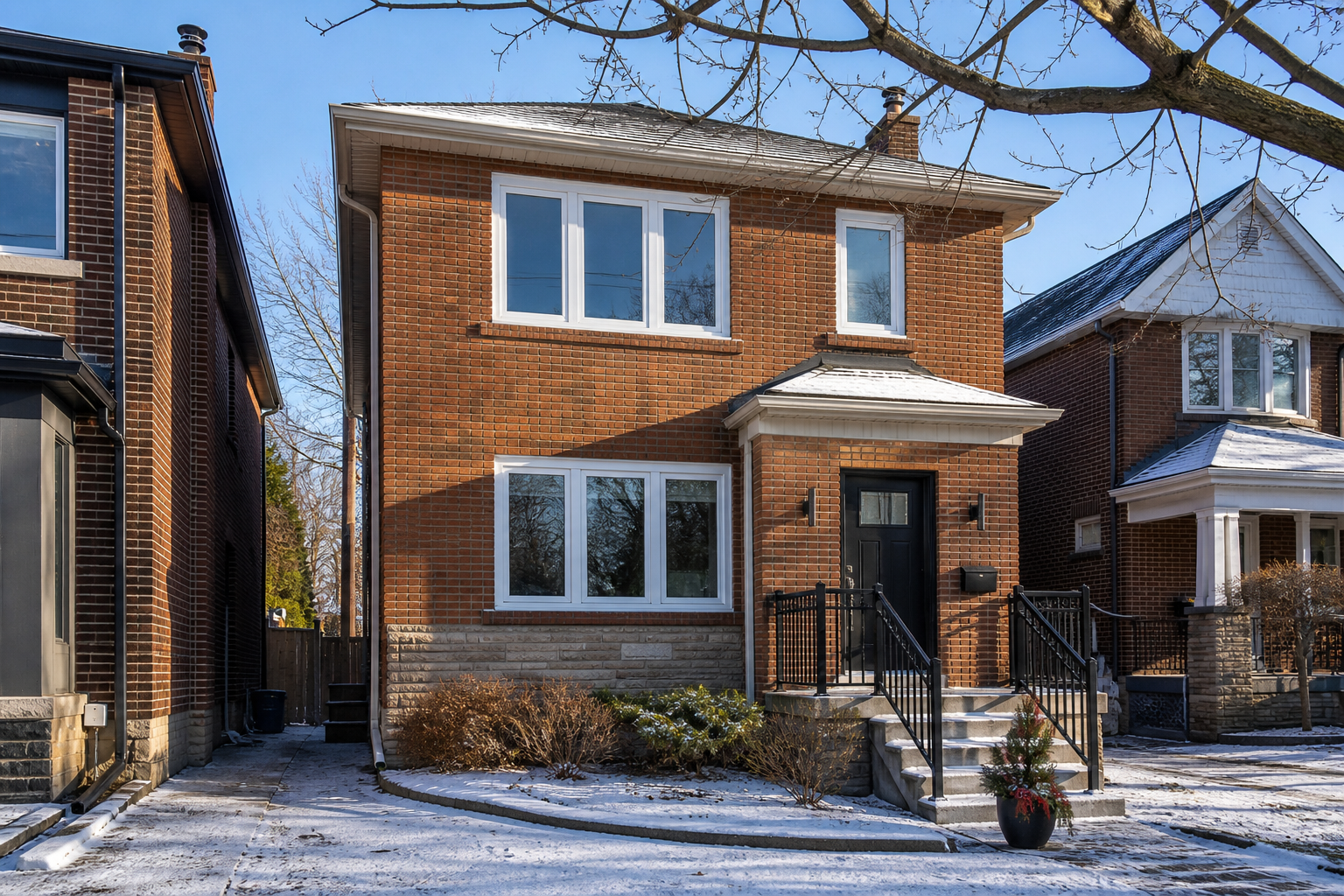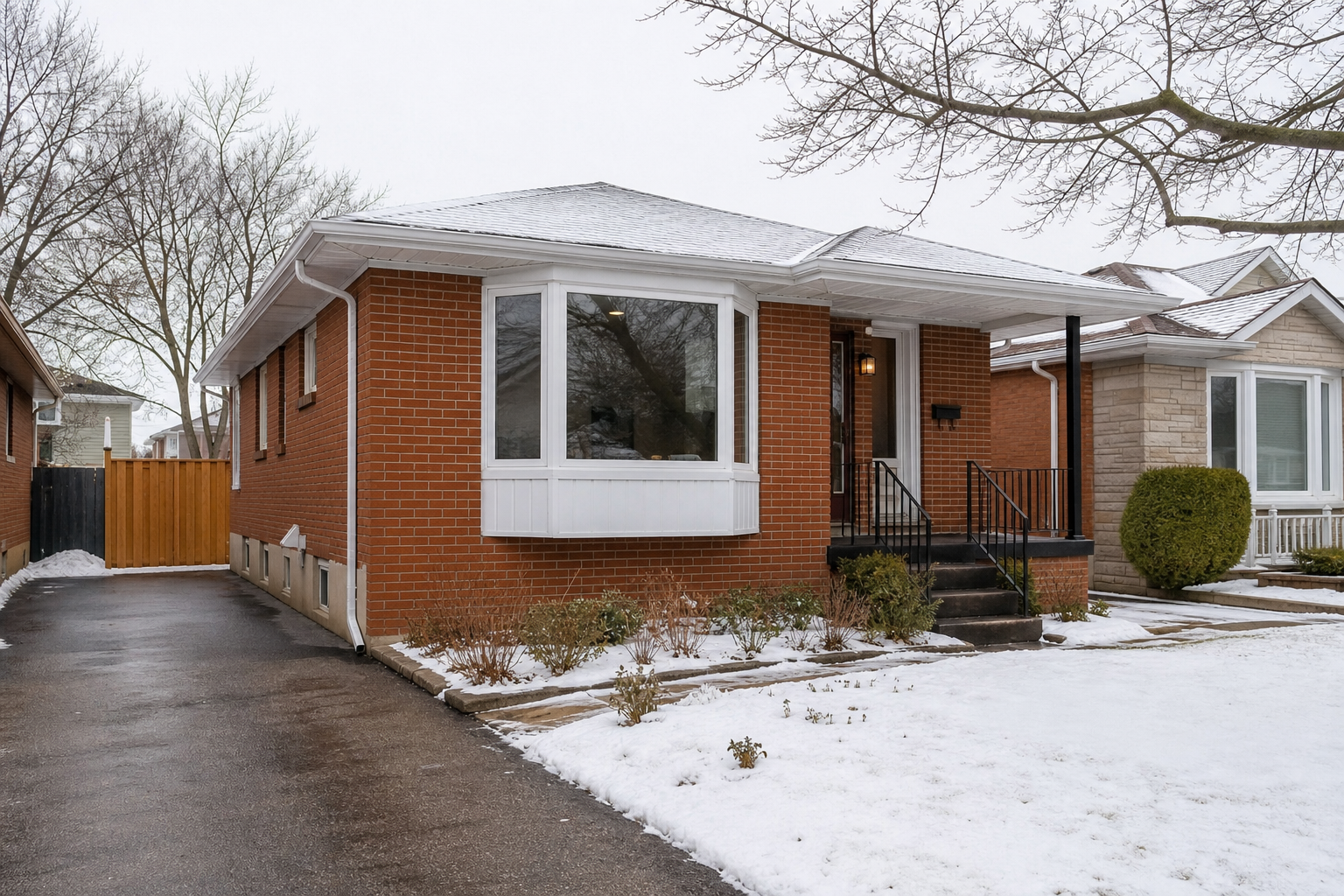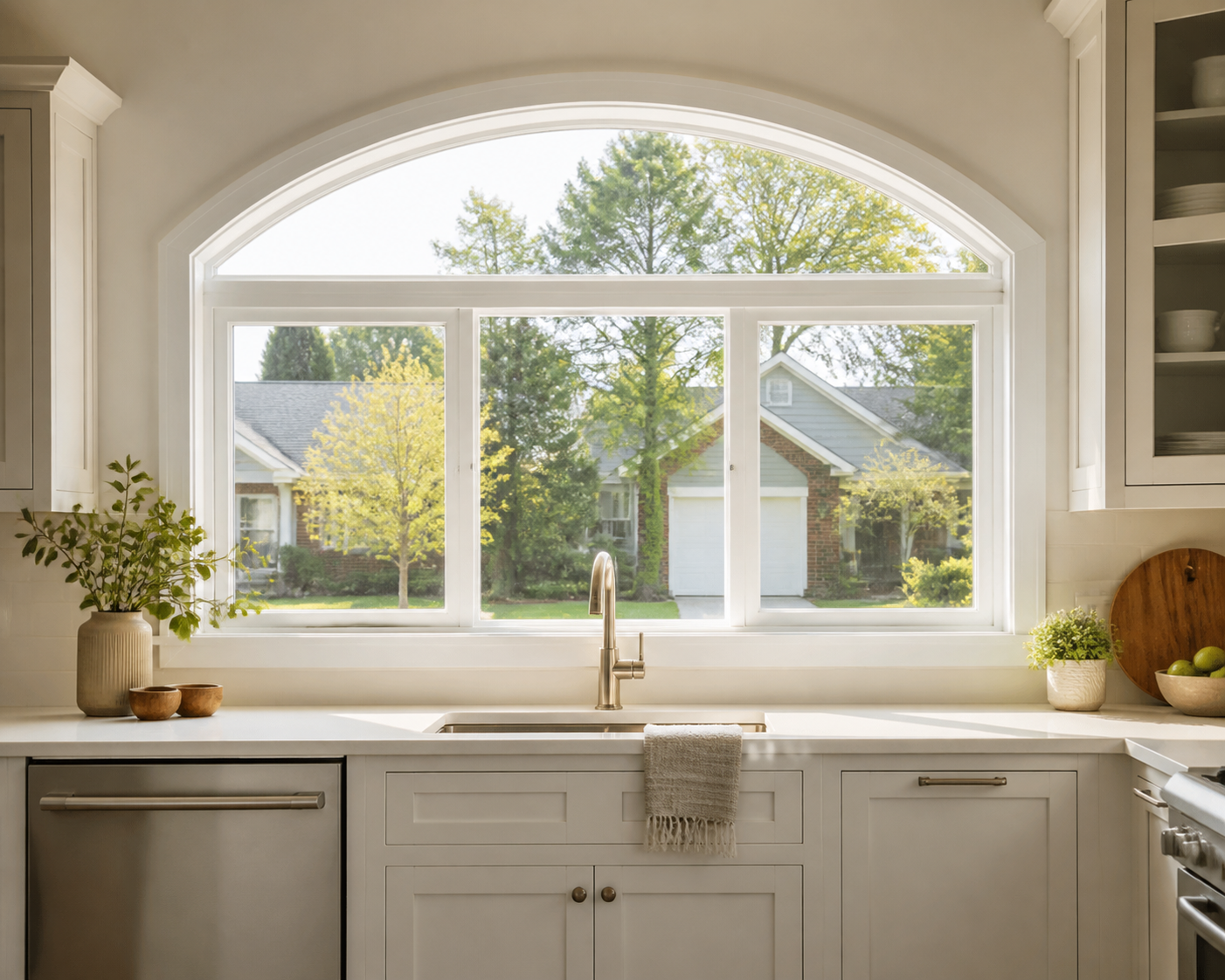
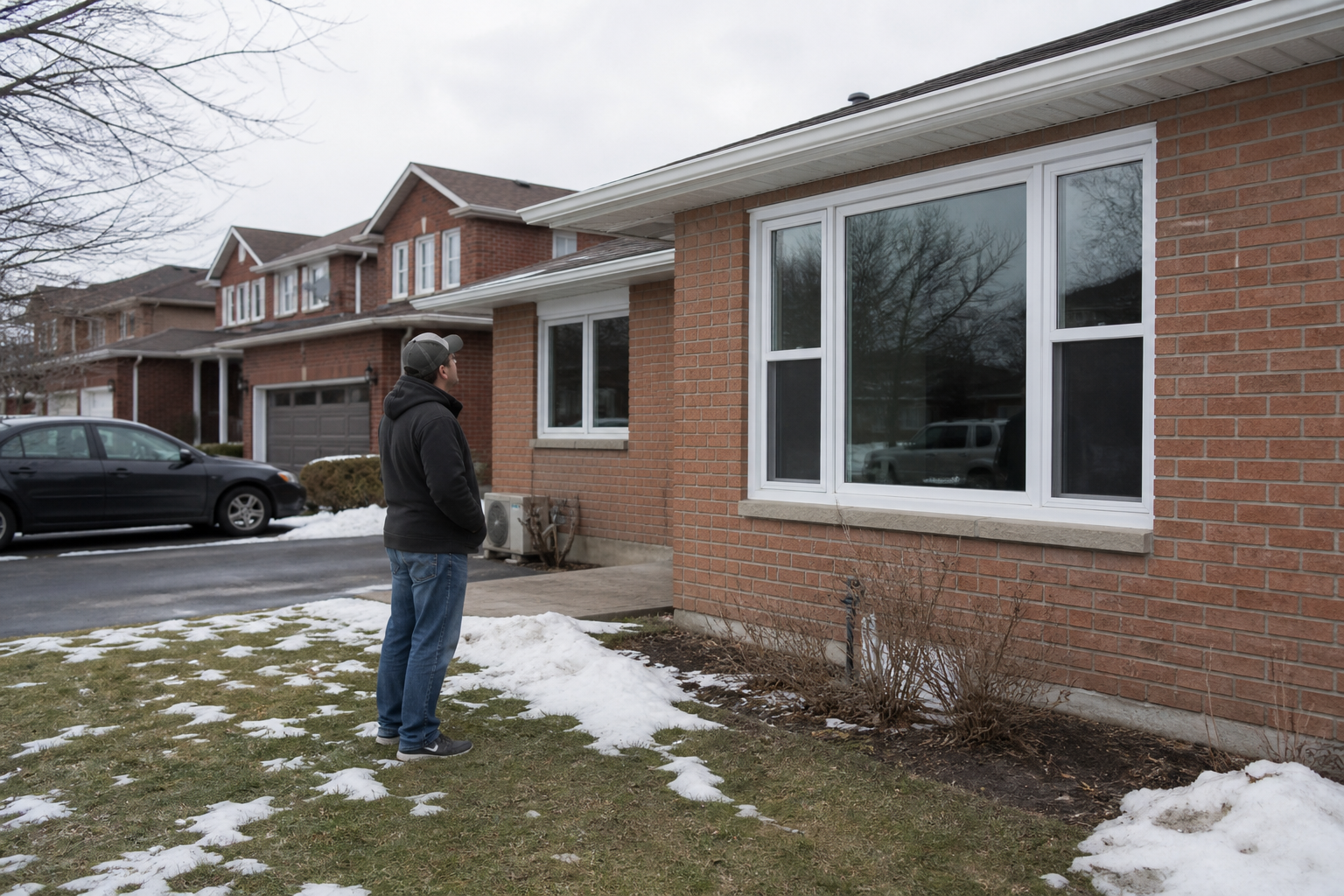
The question usually comes after a cold snap. You’re standing by the living room window in January, feeling that little stream of cold air on your arm, and wondering: what does it actually cost to replace windows in Ontario without getting taken for a ride?
Here’s the honest ballpark. For most homes around Toronto, York Region, and up toward Barrie, the cost to replace windows is often somewhere around $800 to $2,500 per window installed in Canadian dollars. Bigger, more complex units can go higher. Simple ones can land lower. Bay and bow windows are their own category and usually start in the several-thousand range installed.
That’s a wide spread. I know. But there’s a reason for it. A small slider in a bungalow in Scarborough is not priced like a big front-facing bay in Aurora, and neither should be. Size matters. Style matters. The glass package matters. And the install itself can make a cheap-looking quote expensive fast if corners get cut.
What drives the cost to replace windows?
Homeowners often assume the brand name is the big thing. Honestly, it usually isn’t. In my experience, four things move the number the most: size, style, glass package, and installation work. Then there’s one more factor people forget — how many you’re doing at once.
1) Size: more window, more money
This part is pretty simple. A larger opening needs more vinyl, more glass, heavier hardware, and usually more labour. A big bedroom window in a 1980s Markham home can cost quite a bit more than a small bathroom unit, even if they look similar from the curb.
2) Style: some windows are just more work
A fixed window that doesn’t open is usually simpler than one with moving parts. A crank-open window — a casement window — needs hardware, hinges, locks, and tighter weather seals. Bay and bow windows cost much more because they project out from the house and involve structure, roof or seat details, and a lot more finishing.
3) Glass package: where comfort lives
This is the part most people can’t see, but you’ll feel it every winter. Better glass can mean two panes with the gas between them, plus the coating that reflects heat back inside — that heat-reflecting layer is called Low-E. In Ontario, especially with January wind and humid July afternoons, a better glass package is often money well spent. Triple pane can help in some homes, but not every room needs the top package. I’d rather see you put the budget where the exposure is worst than overspend everywhere.
4) Install complexity: the quote is not just for the window
Here’s where bargain quotes can get slippery. Replacing a ground-floor window with lots of space around it is one thing. Replacing a second-storey unit over a steep roof in East York is another. Brick-to-brick replacement — where more of the old frame comes out — can cost more than an insert install, but sometimes it’s the right call if the old frame is tired or drafty. There isn’t one best method every time.
5) How many at once
Doing several windows together usually gives better value than replacing one today, two next year, and three after that. The crew, travel, setup, disposal, and trim work are spread across the project. It doesn’t mean every extra window gets dirt cheap. But the per-window installed cost often improves.
Quick tip: if your budget is tight, replace the worst windows first — the drafty north side bedrooms, the big living room unit over the sofa, the one with failed seals. Don’t choose based only on what the front of the house looks like.
Typical installed price by window style
These are honest installed ranges, not fake too-precise numbers. Actual pricing depends on size, colour, glass, trim, access, and the home itself. But if you want a real starting point for the cost to replace windows by style, this is the kind of range I’d tell you in a living room, not just on a website.
| Window style | Typical installed range | What affects price |
|---|---|---|
| Casement | $900–$1,700 | size, hardware, screens |
| Awning | $850–$1,500 | width, glass, location |
| Slider | $800–$1,400 | size, meeting rail, colour |
| Single/Double Hung | $900–$1,800 | balance system, size |
| Picture | $800–$1,600 | glass size, trim |
| Bay & Bow | $4,000–$10,000+ | structure, roof, finishing |
A couple of notes. Sliders are often one of the more budget-friendly choices, especially in basements or wider openings. Hung windows can cost more than people expect because the moving parts are more involved. Picture windows can look simple, and they are simple mechanically, but once they get large the glass itself pushes the price up. And bay and bow windows are in a different league because you’re buying shape, projection, and much more labour.
A real example: we did a job in Newmarket not long ago on a 1990s two-storey where the homeowner thought the front living room picture window would be cheaper than the two bedroom casements upstairs because it didn’t open. It wasn’t. The glass area was huge, access was trickier, and the interior trim work took time. Windows love to break our assumptions.
Value vs price: where spending more helps, and where it doesn’t
Not every upgrade is worth it for every house. That’s the part some salespeople skip. I won’t.
- Worth spending on: better glass for cold, windy exposures and big living areas where you sit near the window.
- Worth spending on: good installation and proper insulation around the frame. Bad install ruins a good window fast.
- Worth spending on: stronger hardware on windows you open all the time.
- Maybe worth it: black or custom-colour exteriors if curb appeal matters to you. Nice, but it adds cost.
- Maybe not worth it: upgrading every small basement or utility window to the highest-end glass package.
- Usually not the best use of money: choosing a fancier style just because it sounds premium, if a simpler one fits the room better.
If your house gets hammered by wind off open areas in Simcoe County, or you’ve got an older home in Toronto with rooms that run cold, I’ll usually steer you toward comfort first. Better seals. Better glass. Good install. Fancy extras can wait.
And okay, one mild opinion: paying extra for a style you find annoying to clean is a strange hobby. Think about how you actually live, not just how the showroom sample looks.
How to save money without cutting corners
There are smart ways to lower the cost to replace windows. And then there are expensive mistakes disguised as savings.
- Replace several windows at once if you can. Better overall value.
- Keep shapes and sizes simple where possible. Custom work costs more.
- Choose the right style for the opening instead of the most expensive style.
- Spend on glass where the house needs it most, not automatically everywhere.
- Ask what type of install is being quoted — insert or full frame/brick-to-brick.
- Compare quotes line by line, not just by bottom number.
I’ve seen this more than once: a homeowner in Vaughan gets one quote that is way lower than the others, feels pretty good for about ten minutes, then finds out the price didn’t include interior trim touch-ups, exterior capping, disposal, or upgraded glass. Suddenly the “deal” has a lot of small print attached to it. Funny how that happens.
If you’re comparing homes and pricing across Toronto, the GTA and northward, remember labour and access can vary too. Downtown semis, older brick homes, and steep second-storey work can add time that a basic suburban install may not.
What a proper quote should include
A good quote should be clear enough that you can explain it to your spouse over coffee without translating it.
- Window style and rough size for each opening
- Glass package details
- Colour inside and out
- Type of install being done
- Interior and exterior finishing included
- Screens and hardware included
- Removal and disposal of old windows
- Any access or structural issues already noticed
- Taxes clearly shown or clearly explained
You should also know what is not included. That matters just as much. If a quote seems light, ask where the missing cost went. Sometimes there’s a fair reason. Sometimes there really isn’t.
At our place, the in-home quote is free because guessing from one phone photo helps nobody. We measure, look at the condition of the openings, talk about how you use the room, and give you a real range based on the house in front of us. If you want us to take a look, here’s the easy place to start: contact us.
Honestly, replacing windows is one of those jobs where the cheapest number on paper can be the most expensive choice two winters later. I’d rather give you a ballpark that’s real, explain what’s driving it, and let you decide what feels worth it for your home.