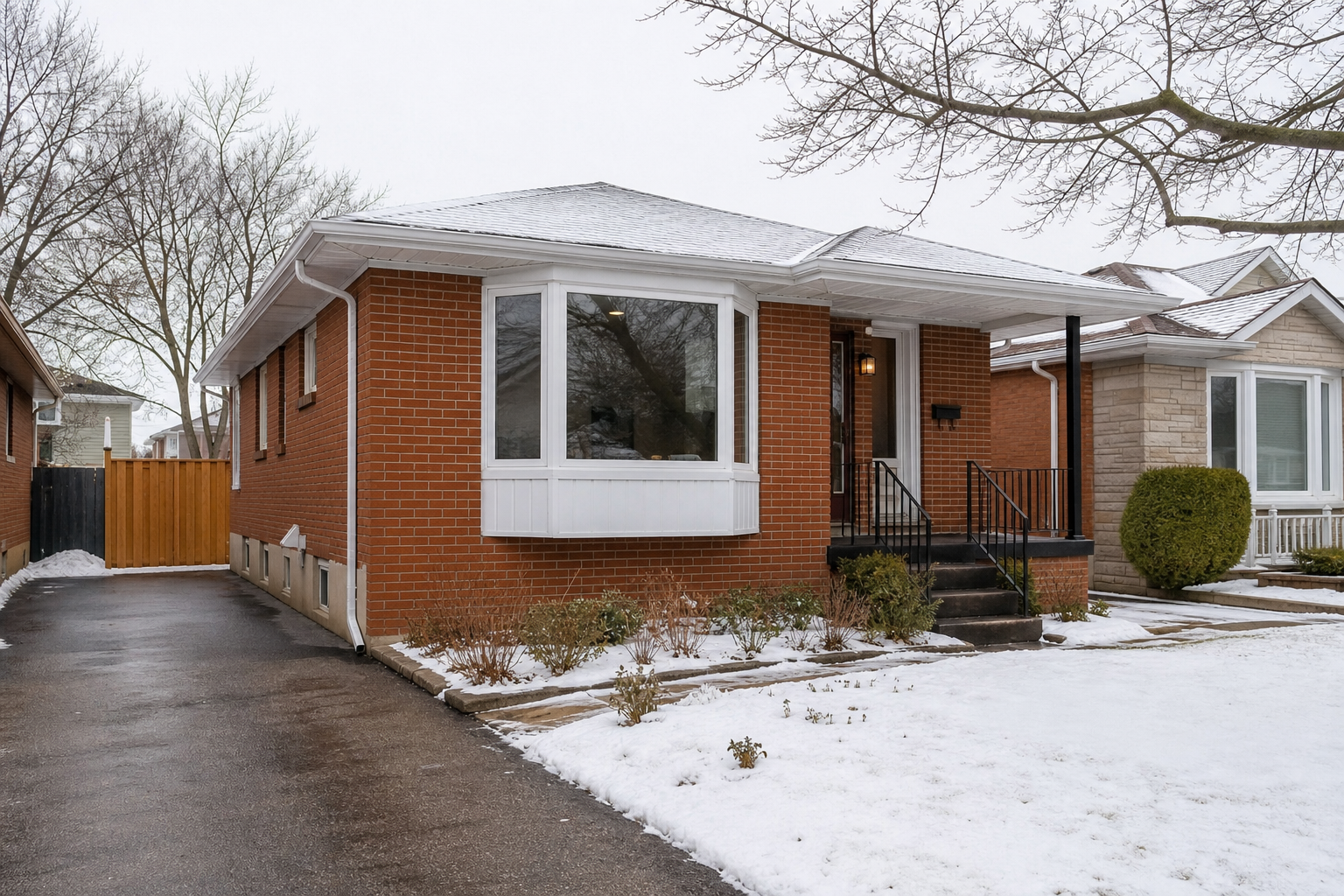
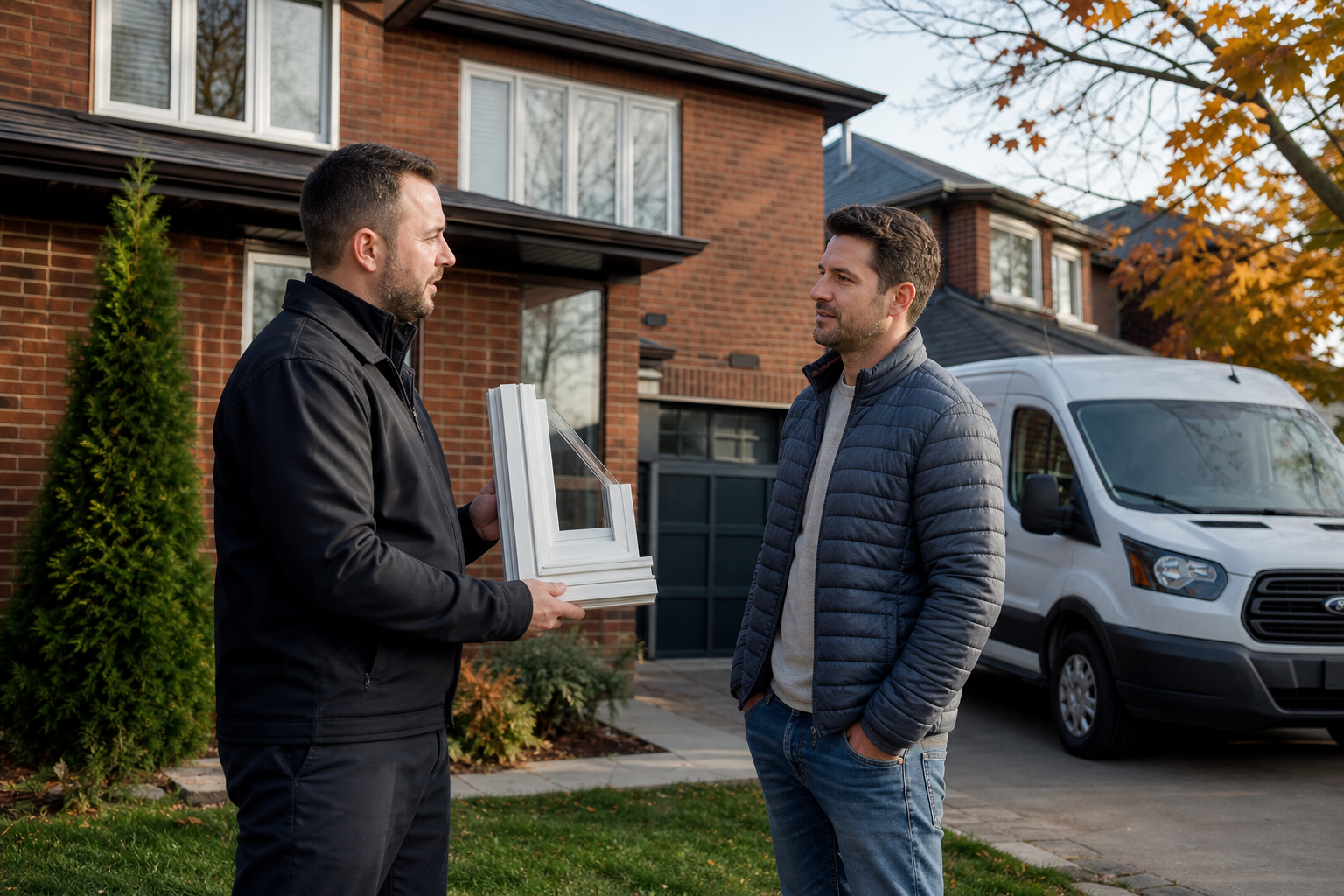
A lot of homeowners think picking windows is the hard part. Honestly, it usually isn’t. Picking the right vinyl window installer is what makes or breaks the whole job.
I’ve seen beautiful new windows perform badly because they were installed in a rush, sealed poorly, or measured wrong by half an inch. Then January hits, the cold snap rolls through Southern Ontario, and suddenly that “great deal” whistles like a tea kettle. If you’re hiring a vinyl window installer in the GTA, York Region, or up toward Barrie, here’s what I’d ask before signing anything.
The window matters. The installation matters more.
Here’s the thing. A decent vinyl window installed well will usually outlast a fancy one installed badly. That’s not marketing talk. That’s years of service calls talking.
One January, we were at a house in East York where the owners had replaced several windows only two winters earlier. Nice-looking units. Clean lines. On paper, they should have been fine. But you could feel cold air rolling off the lower corners from three feet away. The problem wasn’t the vinyl frame. It was poor fitting, weak insulation around the opening, and sloppy sealing on the outside.
A good vinyl window installer is doing a lot more than popping in a new frame. They’re checking the opening, spotting old rot, making sure the window sits level and square, insulating the gap properly, and sealing it so wind-driven rain from an April storm in Markham doesn’t find its way in later.
That last part matters in Ontario. We get humid summers, freeze-thaw swings, and those nasty shoulder-season rains that come in sideways. Installation has to match real weather, not showroom lighting.
Questions to ask a vinyl window installer
You do not need to become a window expert overnight. You just need to ask a few smart questions and listen carefully to how they answer. If the person gets vague, defensive, or weirdly slick, that tells you something.
- Who exactly will install my windows: your own crew or subcontractors?
- Will the installer come measure the openings, or is it only a salesperson?
- How do you handle hidden problems like rotten wood or damaged trim?
- What kind of insulation and exterior sealant do you use around the frame?
- How do you protect floors, furniture, and landscaping during the job?
- What happens if a unit arrives damaged or a measurement is off?
- Can I see photos of your own recent installs on homes like mine?
- Who do I call after the job if something doesn’t feel right?
Notice what’s missing there? I didn’t say, “Ask for the lowest price.” Because the cheapest quote can get expensive fast if the crew cuts corners. A small mistake at install can mean drafts, water leaks, trim problems, or windows that bind when you try to open them.
And ask about homes like yours. A bungalow in Scarborough, a 1980s two-storey in Aurora, and an older place in Barrie with settled openings can all need different approaches. If you’re still deciding on style, this is also a good time to talk about practical options like casement windows or sliders based on ventilation, furniture layout, and how easy they are to clean.
Why in-house crews usually beat subcontractors
Not always. But usually, yes.
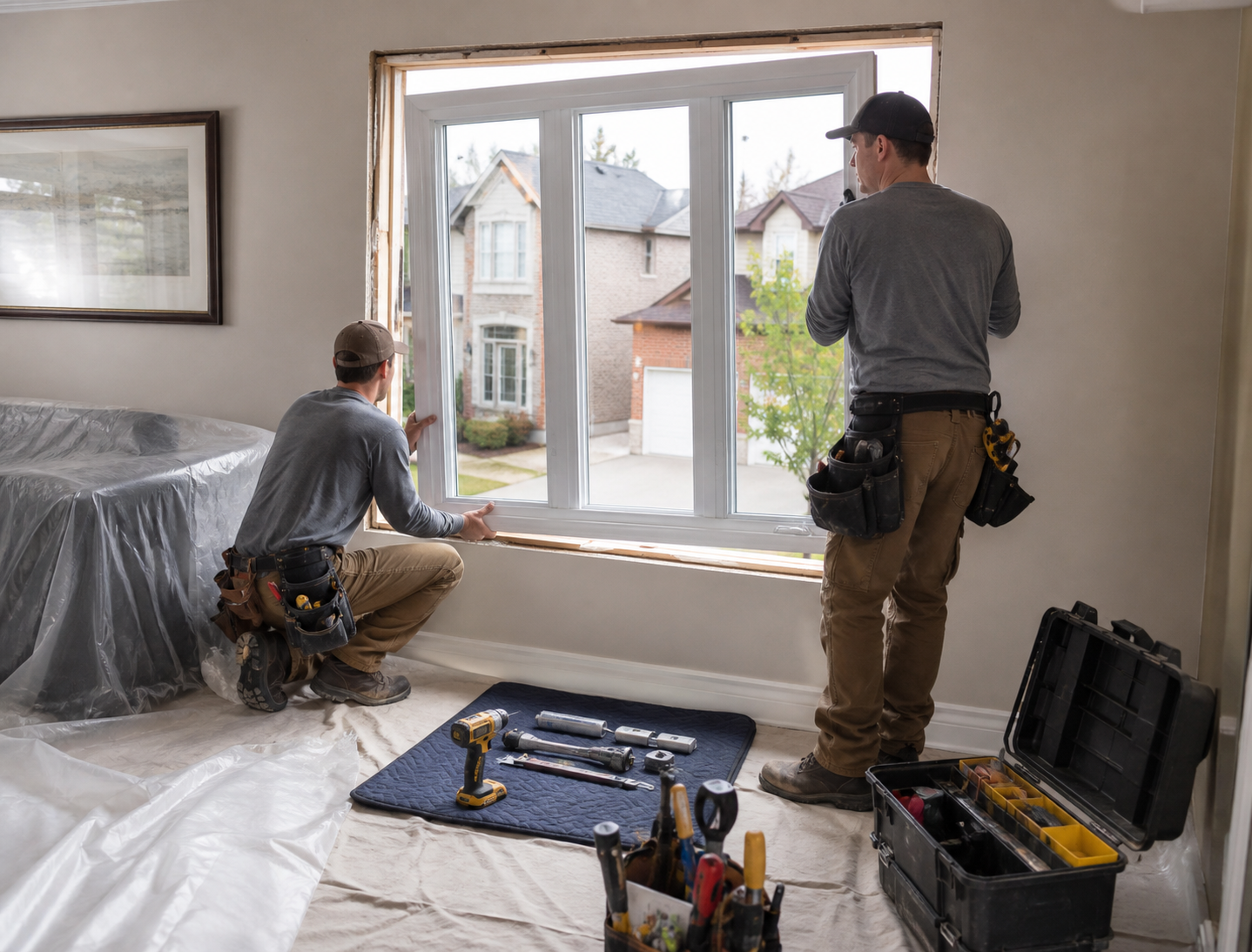
An in-house crew works for the company directly. They wear the mistakes. They follow that company’s methods every day. They know how the products are built, how they’re supposed to be shimmed and insulated, and what the owner expects when the day is done.
Subcontractors can be skilled. Some are very good. But the setup can create gaps. The person who sold the job may never swing a hammer. The crew arriving at your house may not know what was promised. If there’s a problem later, you can end up in that annoying loop where everyone points at someone else. Nobody wants that.
With an in-house team, there’s usually more accountability. If we measure it, order it, install it, and service it, there’s no mystery about who owns the result. That makes life easier for you.
Tip: Ask, “Are your installers employees or subcontractors?” Then ask, “How long have they worked with you?” The second question is where the real answer usually shows up.
I’m a little biased, sure. But I’ve also seen the other side. We’ve been called in after subcontracted jobs where interior trim was rushed, caulking was uneven, and the frame wasn’t insulated enough around the perimeter gap. That hidden gap matters more than most homeowners realize. It’s the space between the new frame and the old opening, and if it isn’t handled properly, you’ll feel it every winter.
Installation red flags that should make you pause
Some warning signs show up before the job. Some show up the day of. Either way, trust your gut.
- The quote is much lower than everyone else, but the details are thin.
- They won’t clearly say who is doing the installation.
- The measuring process feels rushed.
- They promise a one-size-fits-all solution for every window in the house.
- They brush off questions about sealing, insulation, or exterior finishing.
- The crew arrives with no drop sheets, no plan, and no interest in protecting your home.
- Old trim or siding damage gets covered up instead of discussed.
- They tell you condensation between panes is “normal.” It isn’t.
Here’s another one: too much sales pressure. If somebody acts like you must sign today or lose the deal forever, slow down. A good vinyl window installer should be able to explain the work calmly. No magic tricks required.
Watch how they talk about the opening itself. The rough opening — that’s the structural hole in the wall before the finished trim goes on — is where problems hide. If no one seems interested in the condition of that area, I’d worry.
What a good install day actually looks like
Most homeowners have never watched a full window replacement before, so they don’t know what’s normal. Fair enough. You shouldn’t have to do this for fun.
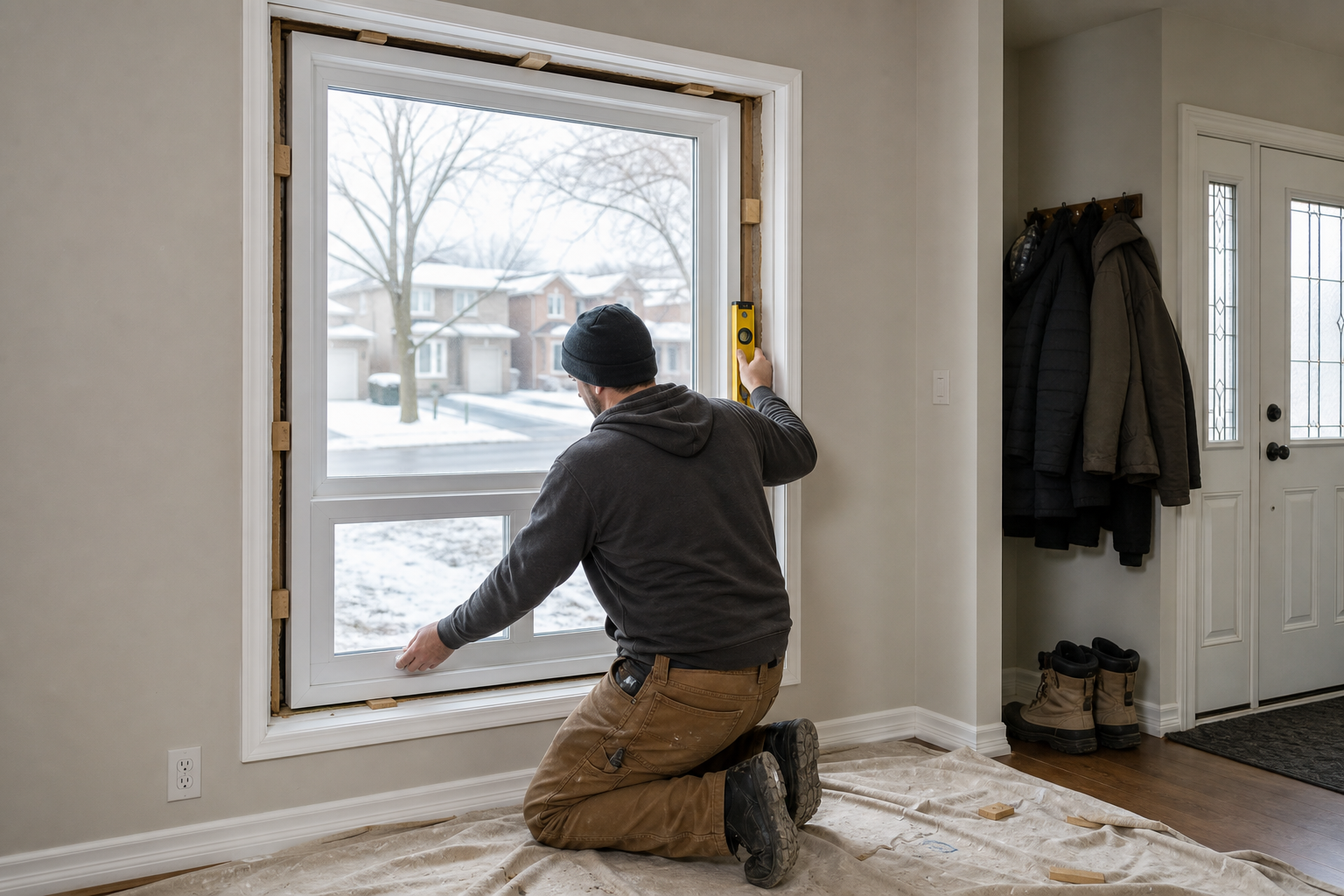
A solid crew shows up on time, walks through the job with you, protects floors and nearby furniture, and removes each old window carefully. They check the opening, make needed repairs if something unexpected shows up, dry-fit the new unit, make sure it’s level and square, then insulate and seal properly before the finishing work.
The window should open smoothly. Locks should line up. Exterior caulking should be neat, not smeared around like a toddler discovered a tube of toothpaste. Inside, trim should look clean and intentional, not like an afterthought.
And the crew should clean up. That sounds basic, but you’d be surprised.
If your home is in Toronto and the GTA or farther north where winter bites harder, I’d also ask how they schedule around weather. Installing in cold months can be done well, but the crew needs a plan to keep openings exposed for as little time as possible.
Price isn’t the whole story
Everybody asks about cost. They should. Windows are a real investment, and nobody wants to overpay.
But a quote is only useful if you know what’s in it. Does it include exterior capping or trim wrapping? Interior finishing? Disposal of old windows? Any repair allowance if the old wood is damaged? The cheaper number isn’t always cheaper once the extras appear.
This is especially true on older homes. In parts of Toronto, Newmarket, and older Barrie neighbourhoods, openings are not always perfectly square after decades of settling. Custom fitting matters. So does patience.
If you want a second set of eyes, talk to the company about the install process itself, not just the product brochure. That tells you a lot. And if you want to learn a bit about who you’re inviting into your home, our about page gives a simple picture of how we work.
One more honest point: not every window in every home needs the top-tier option. Sometimes a simple, well-installed unit is the smarter buy. I’d rather tell you that upfront than sell you something flashy you don’t need.
The best choice is usually the clearest one
If a vinyl window installer answers questions clearly, uses their own trained crew, explains how they handle the opening and the sealing, and doesn’t dodge the awkward stuff, you’re probably on the right track.
If they can’t tell you who’s showing up, how problems get handled, or what happens after the cheque clears, keep looking.
Windows should make your house quieter, warmer, and easier to live in. That’s the goal. Not a stressful project and a callback in February. If you want us to take a look at your place, you can contact us here. No dramatic sales pitch. We’re all tired enough already.