You feel the cold before you see the problem. It’s January, the wind is up, and that one window by the couch is giving off that sneaky little draft that makes the whole room feel cranky.
This is where people get stuck: should you fix the window you have, or stop patching and replace it? I’ve had this conversation in older Toronto semis, Newmarket family homes, and Barrie houses after a hard freeze. And the part most people get wrong comes later — they focus on the glass, when the frame and the moving parts often tell the bigger story.
Why this choice matters more than people think
The wrong call costs you twice. Once now, and again later. If you repair a window that’s near the end, you can end up paying for a temporary fix and then paying for replacement not long after. But if you replace a window that only needed a small hardware or weatherstrip fix, that’s money you didn’t need to spend.
Here’s my rule of thumb: if the problem is with a part, repair makes sense. If the problem is with the window as a system — frame, seal, operation, air leakage, age — replacement usually wins. Think of it like winter boots. A loose lace is a repair. A cracked sole that leaks slush into your sock? Time for new boots.
Quick tip: fog between the panes usually means the sealed glass unit has failed. Wiping the inside or outside won’t fix that.
Window repair: where it earns its keep
Repair is worth looking at when the window is still structurally sound and the issue is limited. Maybe the lock doesn’t catch. Maybe the sash — the moving part of the window — is rubbing. Maybe the weatherstripping, the soft seal that helps block air, is worn out.
I was at a house in Riverdale not long ago, an older home with a couple of windows that were sticking badly. The owners were sure they were done for. But the frames were still decent. The problem was swollen trim, paint buildup, and tired hardware. In a case like that, repair can buy useful time.
Repair is usually the better bet if:
- the window is under roughly 10-15 years old and the frame is still solid
- it opens and closes, but needs adjustment or new hardware
- the draft is coming from worn seals, not a warped frame
- there’s minor damage to a screen, lock, or crank mechanism
- you need a short-term fix before a larger renovation
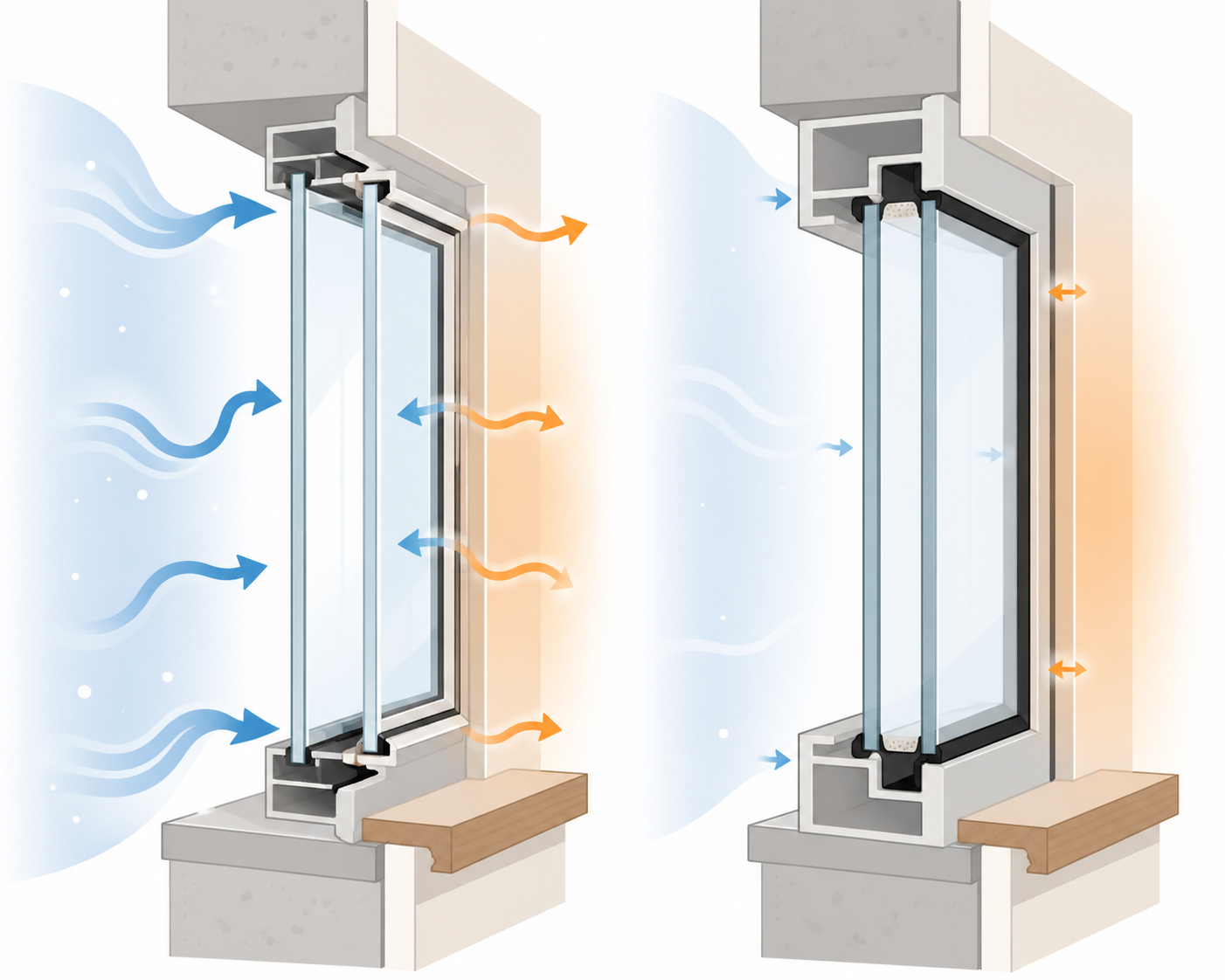
The upside is simple: lower upfront cost, less disruption, and faster turnaround. For one or two windows with a small issue, that can be the smart move. The downside? Repairs don’t turn an older, weaker window into a modern high-performance one. If the frame leaks air on a windy day or the glass unit has lost its seal, you may be polishing a shoe with a hole in it.
One honest note here. We supply and install new windows; we don’t do glass-only repairs. So I’m not going to pretend every problem should lead to a full replacement. Some don’t. But if you’re already noticing cold air, condensation between panes, street noise, and hard operation all at once, that’s usually not a one-part problem.
Window replacement: where it pays off
Window replacement vs repair gets clearer once several symptoms stack up. Drafts. Fog between panes. Rot or soft spots. A frame that has shifted so the sash won’t seal properly. Water staining around the opening. At that point, replacement is less about looks and more about getting your comfort back.

This matters a lot in Ontario. A window can seem "not that bad" in October, then January hits and the cold starts pouring in during a two-week snap. Summer tells on bad windows too. West-facing rooms in Vaughan or Aurora can turn into ovens if the glass and frame aren’t doing their job.
A full replacement gives you a new frame, new moving parts, fresh seals, and modern insulated glass. That sealed glass unit — the two or three panes with gas between them and the coating that reflects heat, called Low-E — does far more than an older window with a patched lock ever will. You also get better noise control, which people near busy roads notice fast.
And operation matters more than people expect. A crank-open casement window that seals tightly can make a room feel completely different from an old loose slider that chatters in the wind. Not every style is right for every opening, but replacement lets you solve the problem instead of nursing it.
Window replacement vs repair: the practical head-to-head
| Factor | Repair | Replacement |
|---|---|---|
| Cost | $ to $$ | $$$ to $$$$ |
| Energy efficiency | Small gain | Big gain |
| Noise | Little change | Noticeable improvement |
| Maintenance | May continue | Lower ongoing |
| Lifespan | Short to medium | Longer reset |
| Best use | Isolated issue | Aging or failed window |
The question people really want answered: am I just delaying the inevitable?
Usually, yes — if the window is older and showing more than one symptom. That’s the honest answer. People ask me this on site all the time, and I get why. Nobody wants to replace windows early. But nobody enjoys paying twice either.
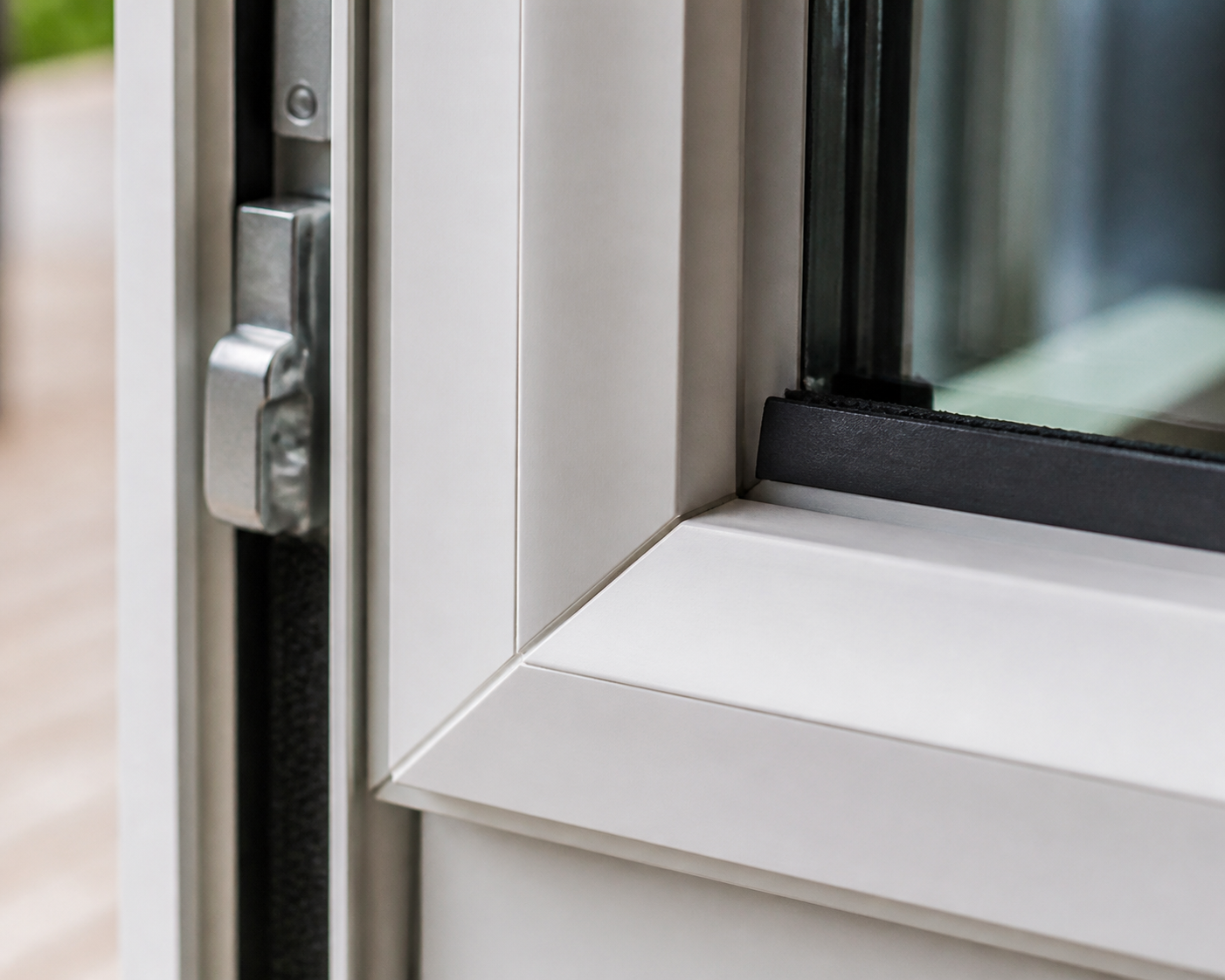
Here’s how I look at it. If you spend on a repair, what do you get? Another season? A few years? Or a real fix? If the sealed glass has failed and the frame leaks air, repairing one piece doesn’t solve the whole problem. You may get less fog but still feel the draft. Or the lock works again but the room is still cold.
On the other hand, if the window is fairly new and one mechanism has gone bad, replacement can be overkill. That’s why blanket advice online is so useless. A 7-year-old vinyl window with a bad crank is one thing. A 25-year-old unit in an exposed opening on the north side of the house is another story.
If your windows are older across the house, it also helps to step back and think bigger. Not because you need to replace everything at once — often you don’t — but because a plan saves money and stress. If you’re in Toronto and the GTA, or farther north where winter bites harder, that planning matters.
So, which should you pick?
Pick repair if the window is still a good window. One issue. Solid frame. Decent age. No fogging between panes. No water damage. No broad comfort problem in the room.
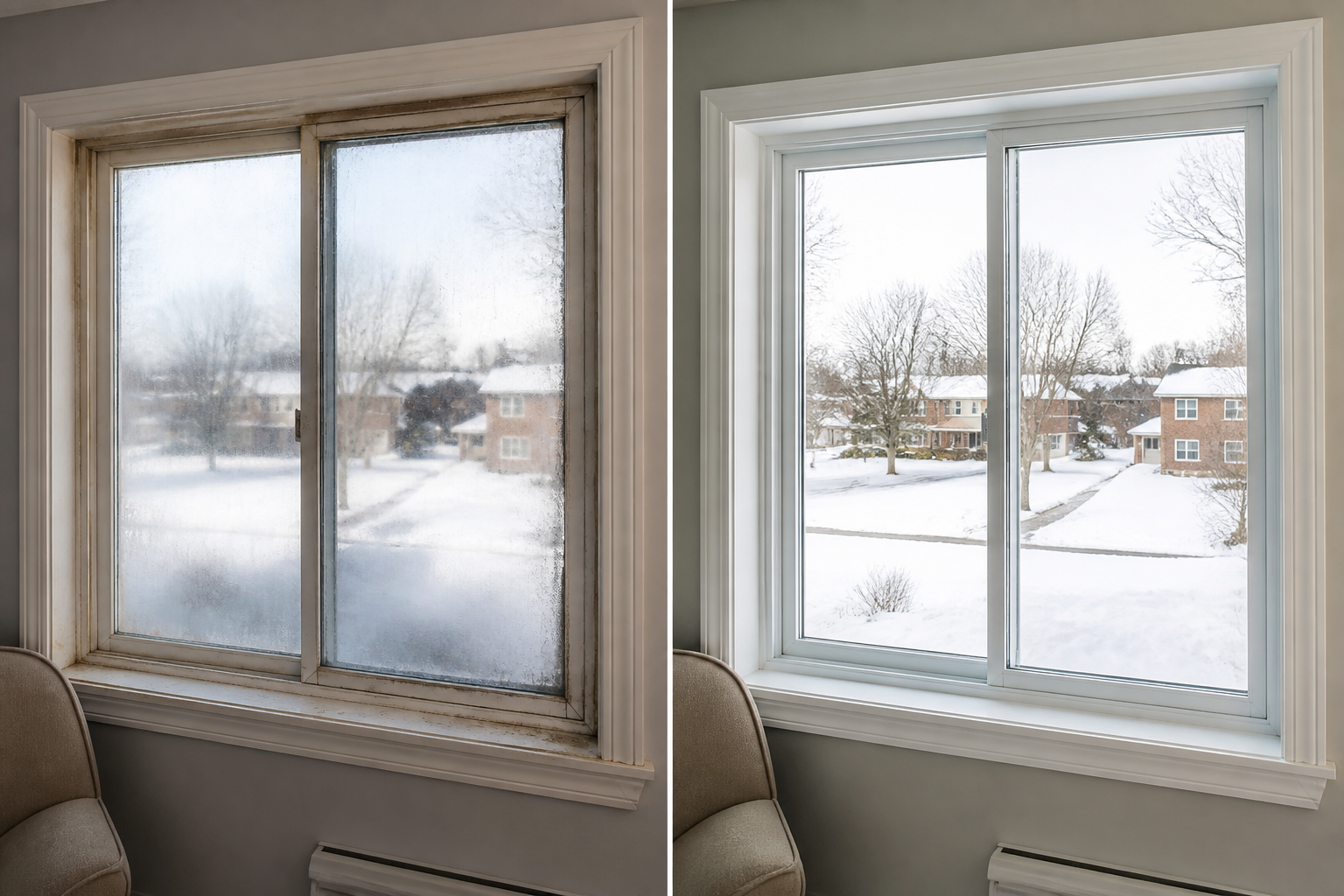
Pick replacement if the window has started failing in layers. Drafty and foggy. Hard to open and noisy. Soft wood, warped frame, or moisture issues. That’s your sign that the whole unit is tired, not just one part.
And if you’re on the fence, look at the room, not just the window. Are you avoiding that chair in winter? Do you keep the blinds shut in summer because the heat pours in? Do you hear every truck that passes? Those are quality-of-life clues, and they matter.
We walk people through that decision all the time, minus the sales script. If you want a plain-English second opinion on what’s worth fixing and what’s worth replacing, you can contact us. I’d rather tell you to wait than push you into the wrong job. Saves awkwardness for both of us.