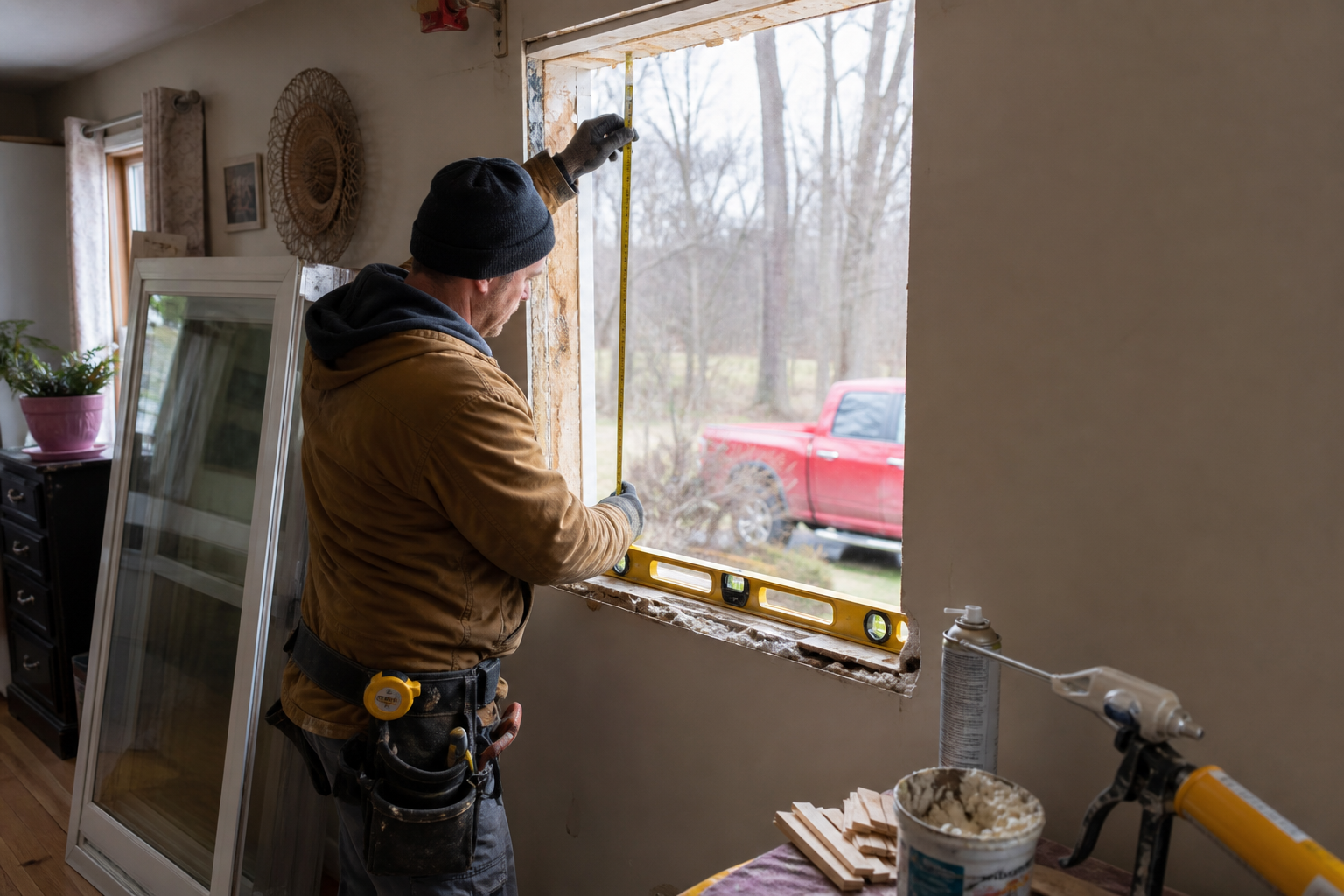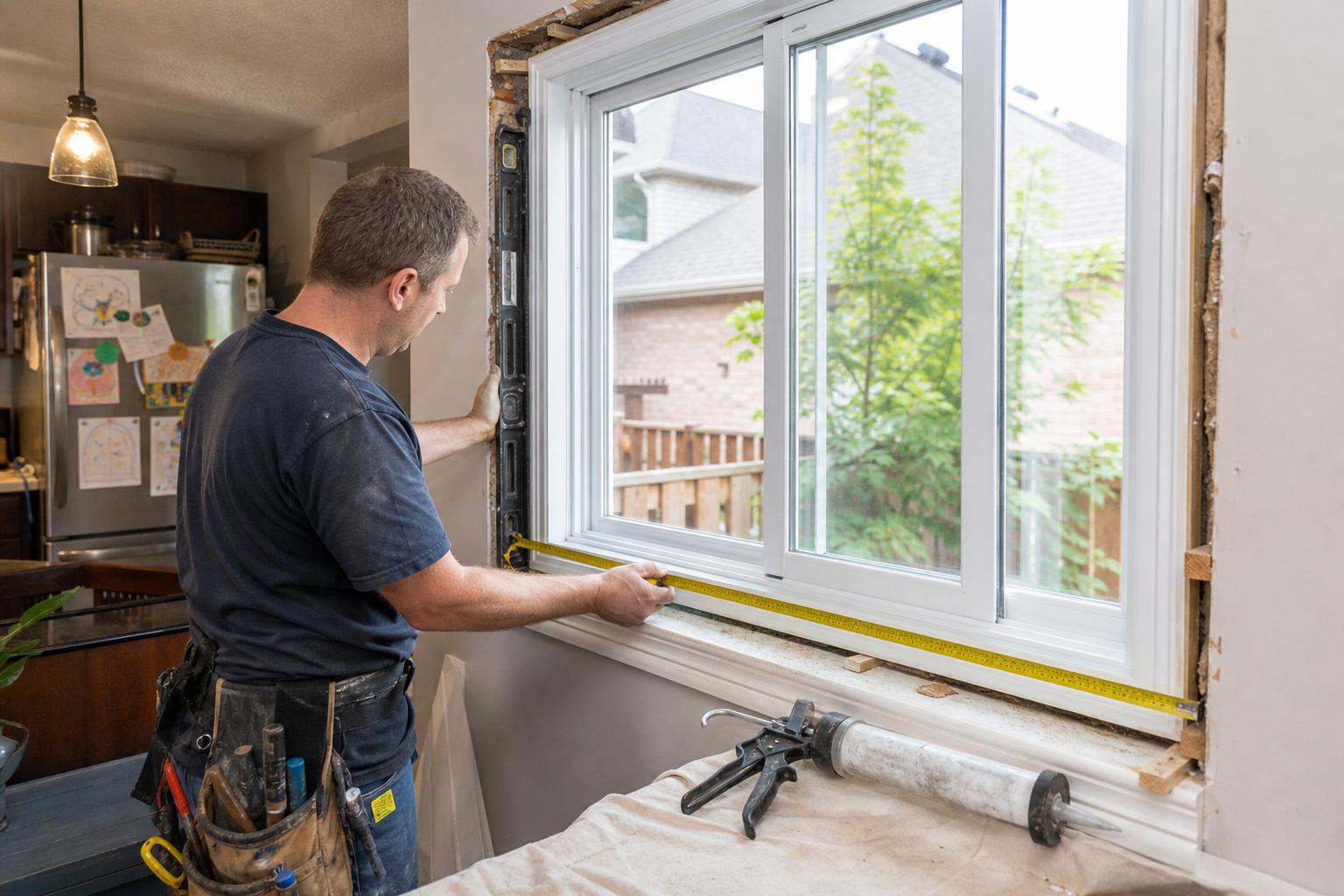
A couple in East York told me their furnace was running so often in January that they started checking the thermostat like it was lying to them. The living room still felt cold. Socks on, throw blanket out, heat bill up. Sound familiar?
Here’s the thing: if you want to reduce home heating bills, windows matter — but they’re only one piece of the puzzle. I’ve been in plenty of Toronto, Newmarket, and Barrie homes where the biggest draft wasn’t the glass at all. It was the gap around the frame, the attic hatch, or a tired old door sweep doing almost nothing.
So this is the useful version. Six ways to cut winter drafts and lower heating bills, in the order I’d think about them if it were my own house.
1. Find the draft before you buy anything
A lot of people assume cold room = bad windows. Sometimes yes. Sometimes not even close.
On a cold day, walk slowly around the room with the back of your hand near the window frame, baseboards, electrical plugs on outside walls, and the patio door. You’re not looking for a hurricane. Just moving cold air. If you want to be a bit more methodical, use a cheap incense stick or smoke pencil and watch for a wobble in the smoke.
One job in Aurora sticks with me. The homeowner was set on replacing three front windows. Fair enough — they were old. But the worst draft was pouring in from the gap where the trim met the wall on one side, plus a leaky attic hatch above the hallway. We fixed the air leaks first. The room felt better right away, before a single new window went in.
Quick tip: test on a windy evening or during a January cold snap. Small leaks that hide in mild weather show themselves fast when it’s -12°C and the wind is doing its usual southern Ontario nonsense.
2. Seal around the window, not just the window
This is where a lot of heat is lost. Not through the middle of the glass, but through the edges, trim joints, and the space between the window frame and the wall.
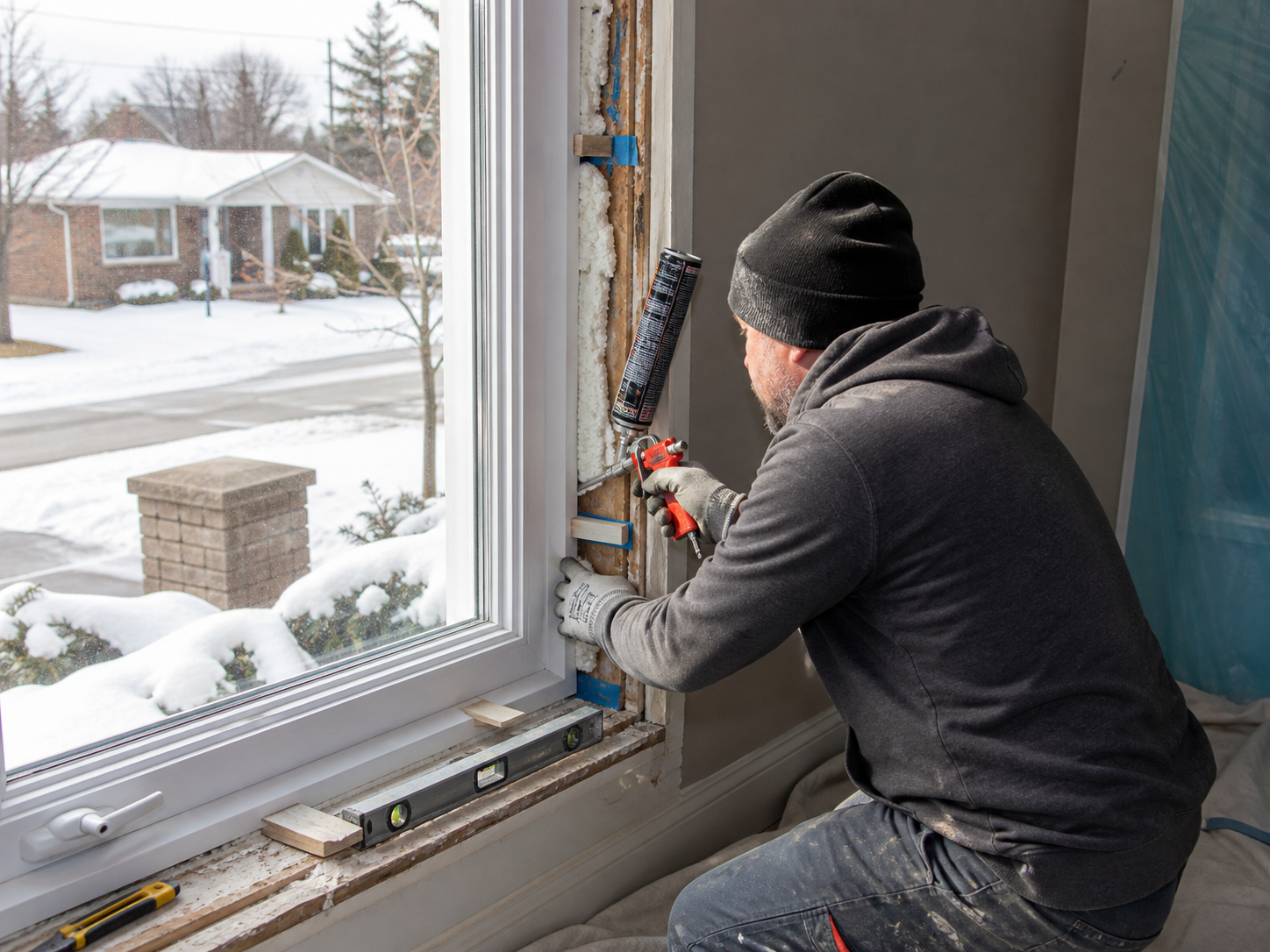
If the caulking outside is cracked, missing, or pulling away, cold air and moisture can get in. Inside, old trim can hide gaps that were never insulated properly. During an install, we seal that perimeter with low-expansion foam — the stuff that fills the gap without bowing the frame — and then finish the interior and exterior seals properly.
You may be able to improve comfort with fresh exterior caulking and small interior air-sealing fixes, especially if your windows are decent but the install from 20 years ago was rushed. It’s not glamorous. It works.
And if you’ve got older operable units, check the little flexible seals where the sash meets the frame. That’s the weatherstripping. If it’s flattened, torn, or missing, you’ll feel it.
3. Know when new windows will help — and when they won’t
If you’re trying to reduce home heating bills with windows, be honest about what shape the current ones are in. If the glass is fogging between panes, the seals have failed. If the sash doesn’t close tight, if the lock barely catches, if you see frost on the inside edge in normal winter weather, those are clues.
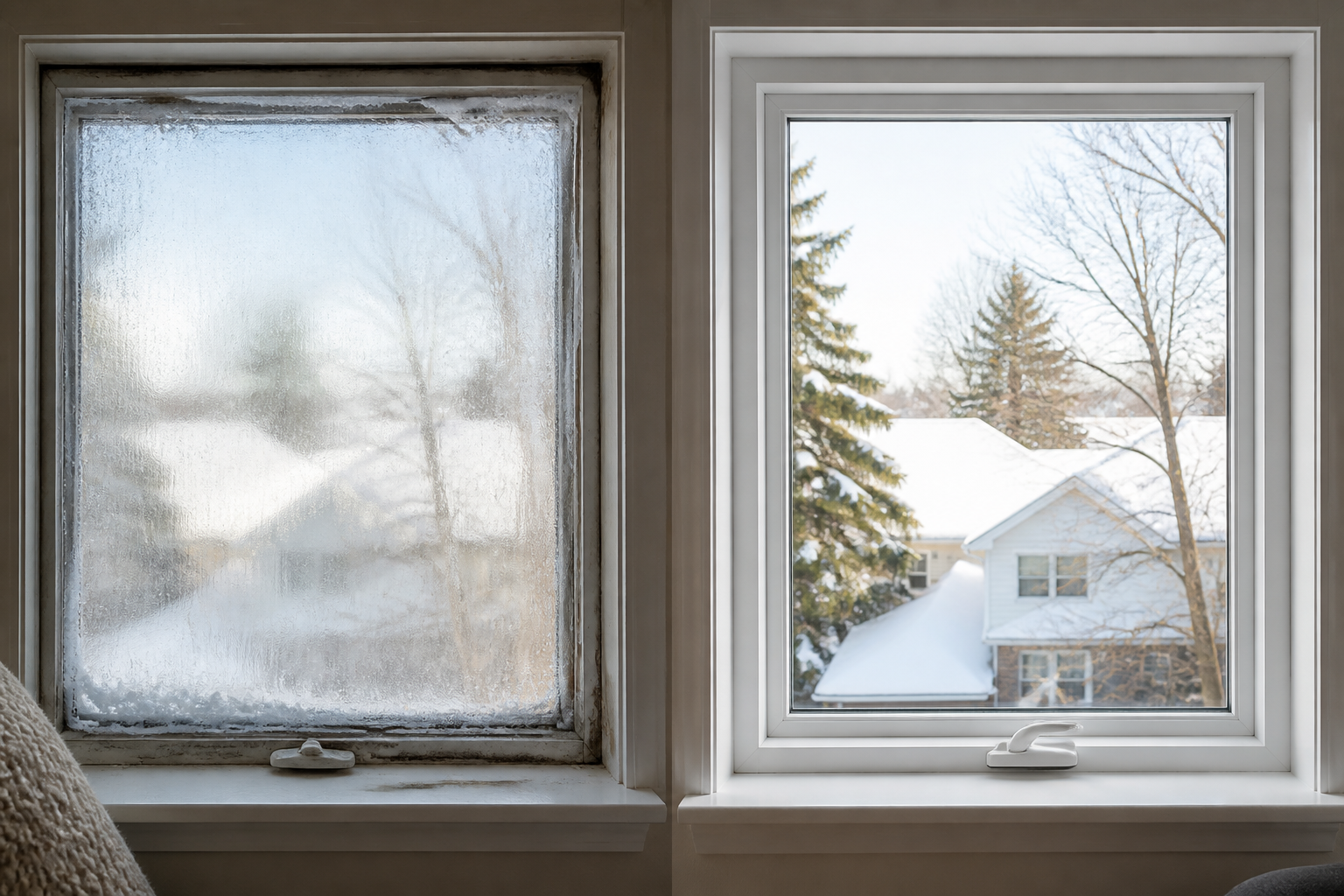
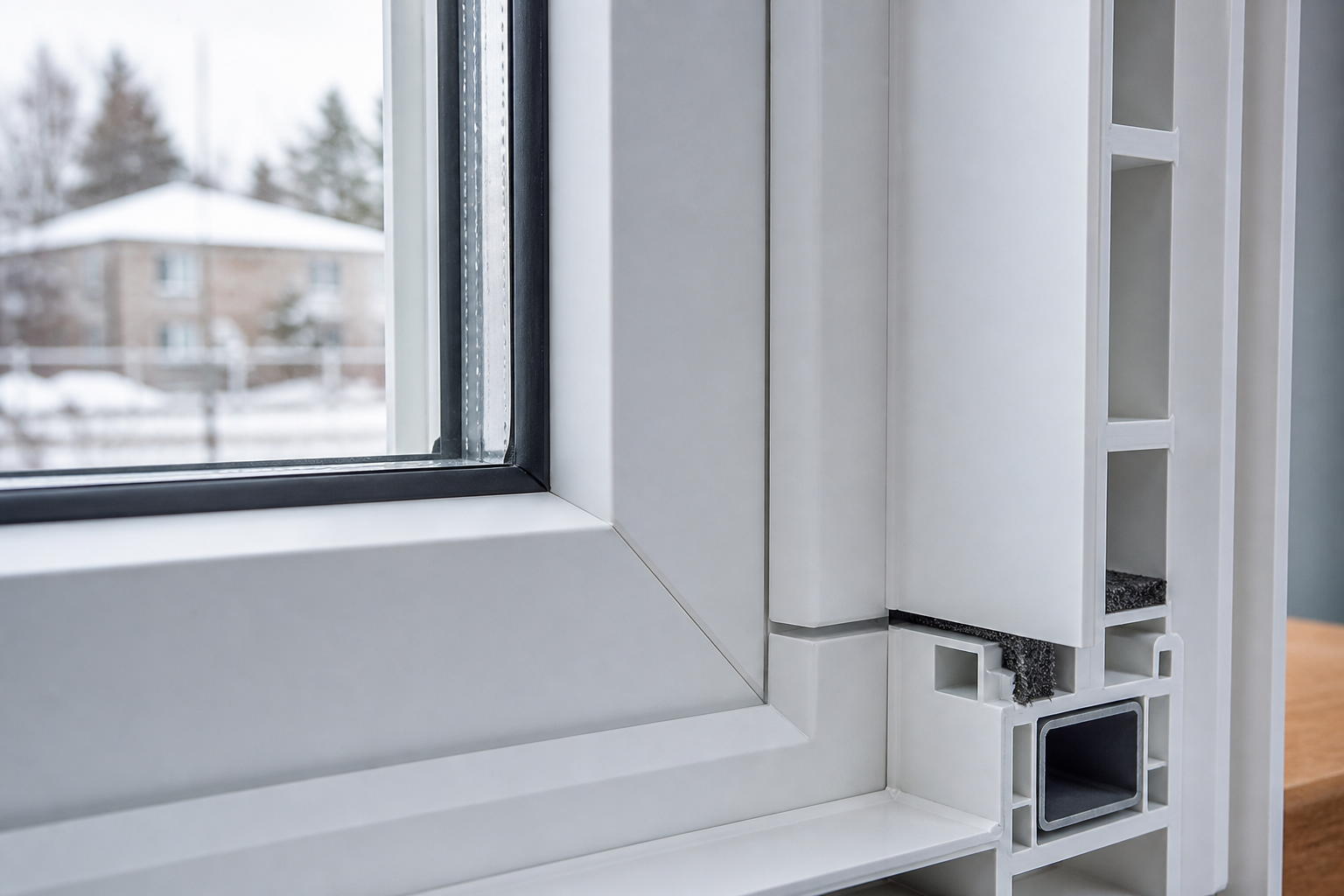
The best upgrades for comfort are usually old aluminum sliders, builder-grade units from the 80s and 90s, or wood windows that have warped enough that they never seal right. New vinyl windows with better glass packages, better spacers at the glass edge, and tighter compression seals can make a big difference in rooms that always feel cold.
But I’ll say this plainly: if your existing windows are fairly modern and in good shape, replacing them only to chase a lower bill may not be the best return. Comfort? Maybe. Looks? Sure. Massive savings? Usually no. That’s why I’d rather you read something honest like 7 clear signs you need new windows — okay, that page is about us and how we think — than get pushed into replacing windows that still have life left.
- Replace if they’re drafty, hard to lock, fogged between panes, or rotting/warped
- Repair or reseal first if the main issue is trim gaps or aging caulk
- Prioritize the worst rooms, not the whole house, if budget is tight
4. Pick window styles that shut tighter
Not all operating windows seal the same way. That matters in winter.
Windows that crank closed pull the sash snug against the frame. That tighter seal is called a compression seal. In plain English: they tend to resist drafts better than styles that slide past each other on tracks. That doesn’t make sliders bad. It just means there’s a trade-off.
If a room is exposed to wind — say a side wall in Barrie or a second-floor bedroom facing open space in Vaughan — I often lean toward casement windows or awning styles because they seal nicely. Sliders can still make sense where you want easy use or where furniture gets in the way. You just want good build quality and a proper install.
This is also where fixed windows shine. A picture window doesn’t open, so there’s no operable sash to leak air through. If you need ventilation, pair a fixed center with opening units on the sides instead of making everything operable.
5. Don’t let the attic, basement, and doors steal the win
I know this article is about reduce home heating bills windows. But if I stop at windows, I’m not doing you any favours.

Heat loss in Ontario homes is often a team effort. Leaky attic hatches. Pot lights under an under-insulated attic. Basement rim joists. Old door weatherstripping that’s gone stiff. A sliding patio door that whistles when the wind comes off the lake. You can put in beautiful new windows and still feel cold if those spots are ignored.
If your upstairs is too warm and the main floor is chilly, or one room over the garage is freezing every winter, that points to insulation and air leakage issues beyond the windows. Same if the furnace runs constantly but some rooms are still uneven.
A simple order of attack often works best: seal obvious leaks, top up attic insulation if needed, fix door seals, then deal with the worst windows. Not as exciting as one magic product. Much better for your wallet.
6. Use low-cost fixes now while you plan bigger upgrades
If replacement windows aren’t in the cards this winter, you’re not stuck.

Heavy curtains can help at night, especially on older north-facing windows. So can closing them at dusk and opening them on sunny days. Temporary interior window film kits are not pretty, but they can cut that icy draft feeling in a pinch. Door sweeps are cheap. Outlet gaskets on exterior walls cost little. Even adjusting the latch on an older window so it pulls in tighter can help.
None of these is a forever fix. But they can buy you a more comfortable winter and lower the sting a bit while you decide what deserves real money.
And if you do get to the point where new windows make sense, get someone to look at the whole opening, not just the brochure. Style, glass, installation method, sealing details — that’s what changes comfort. If you’re in Toronto and the GTA and want a straight answer, or you’re ready to contact us, we’re happy to take a look without the song and dance.
My honest takeaway? Chase drafts, not just products. The warmest houses I see in February aren’t always the fanciest. They’re the ones where the weak spots were found and fixed properly. That’s a lot less sexy than a showroom pitch, but your furnace won’t care.