
A window sticker can make a smart person feel oddly defeated. You’re standing there, reading U-factor, SHGC, ER, air leakage, a climate-zone map of Canada, and somehow the simple question in your head is still: “Okay… but is this window good for my house in Ontario or not?”
I get that call a lot. Usually after someone has collected two or three quotes and noticed that every company circles a different number on the label like it’s the one that matters most. Here’s the thing: none of those ratings means much by itself. The only useful way to read them is together, like clues on the same page.
The one idea that makes the label click
If you remember one thing from this whole piece, make it this: don’t shop by one rating. Not the lowest U-factor. Not the highest ER. Not the shiny ENERGY STAR logo by itself. A good window for your house is a balance of heat loss, winter sun, summer sun, and how much outside air sneaks around the sash.
Think of it like buying a winter coat for Toronto or Barrie. You wouldn’t choose it only because it’s thick. If it lets wind through the zipper, you’ll still freeze. If it’s great in January but awful during a sticky July heat wave, that matters too. Window labels work the same way.
We’ve seen this on real jobs. Last winter, at a brick two-storey in East York, a customer proudly showed me the spec sheet from another quote and said, “This one has the best ER, so it must be the best one, right?” Not quite. The air leakage number was weaker, and on that windy side yard the comfort issue wasn’t just glass performance. It was drafts.
U-factor: the first number I look at
U-factor tells you how quickly heat moves through the whole window. Lower is better. That’s the short version.
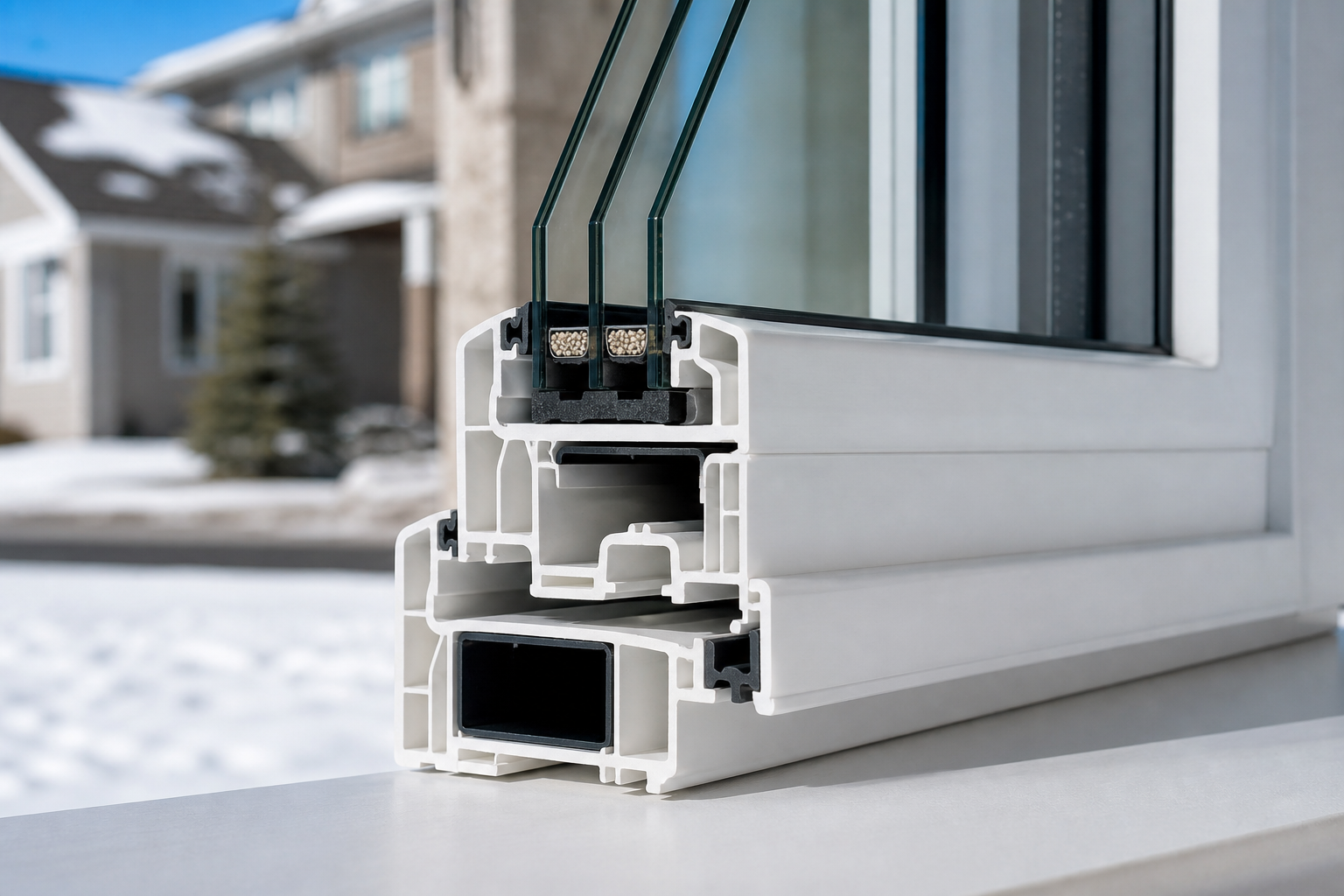
If your house feels chilly beside the glass during a January cold snap, this number matters. It covers the whole unit, not just the centre of the glass, which is why it’s more useful than sales talk about “super efficient glass.” Frame, spacers, sash, glazing package—it all plays a part.
In plain English, a lower U-factor means the window does a better job slowing heat loss from your furnace-heated living room to the -12°C air outside. In window language, U-factor is a thermal transmittance rating.
People often ask us, “What’s a good U-factor for Ontario?” Plain answer: lower is better, but don’t obsess over tiny differences. If one window is 1.22 and another is 1.18, that alone should not decide the whole purchase. Installation quality, air leakage, and how the window is used in that room can matter just as much.
Useful tip: if you’re comparing quotes, make sure the U-factor is for the whole window, not just centre-of-glass performance. Centre-of-glass numbers can look great and still hide a weaker overall unit.
This is also why style matters. A fixed unit like one of our picture windows usually performs better than an operable window of the same size because it has fewer moving parts and fewer places for heat and air to escape.
SHGC: why sun can help you in winter and annoy you in summer
SHGC stands for Solar Heat Gain Coefficient. That’s a mouthful, so here’s the plain version: it tells you how much of the sun’s heat gets through the window. Lower means less solar heat comes in. Higher means more comes in.
And this is where a lot of labels get misread. Lower is not always “better.”
On a west-facing room in Vaughan or Markham that turns into a toaster by 5 p.m. in July, lower SHGC can be your friend. It helps block some of that summer heat. But on a south-facing family room that gets beautiful winter sun, a window with a bit more solar gain can help warm the space naturally on bright cold days.
So, should you chase the lowest SHGC? Usually no. Not across the whole house. Ontario isn’t Phoenix. We have humid summers, yes, but we also have long heating seasons. That’s why reading window energy ratings explained properly means asking where the window faces, how hot that room gets now, and whether you care more about summer cooling or winter comfort there.
- South-facing room that feels cold in winter: don’t assume the lowest SHGC is best.
- West-facing bedroom that overheats before bedtime: lower SHGC often helps.
- North-facing window with little direct sun: SHGC matters less than U-factor and air leakage.
ER: the Canadian rating that confuses people most
ER means Energy Rating. This one is made for Canadian conditions, which is useful. It tries to roll a few things together: heat loss, air leakage, and useful solar gain. Higher is better.
So why do I say it confuses people? Because it sounds like the only number you need. It isn’t.
ER can be helpful for quick comparisons between similar windows. If two windows are close in style, size, and glass package, the higher ER often points to the stronger performer for our climate. But ER can also make a window with higher solar gain look great on paper while telling you less about how that room may feel in midsummer.
That’s why I treat ER as a summary number, not the whole story. Helpful? Yes. Final answer? No.
Honestly, if a salesperson only talks about ER and skips the rest, I’d keep asking questions. A lot of them.
Air leakage: the rating that feels most real in your house
If you’ve ever sat by a window in January and felt a faint cold wash on your neck, you already understand air leakage. This rating measures how much air passes through cracks in the window assembly under test conditions. Lower is better.
And for day-to-day comfort, this one can be huge. Maybe bigger than people expect.
A window can have decent glass numbers and still feel disappointing if too much air sneaks around the operating parts. That’s one reason fixed windows usually test tighter than sliders or hung windows. Moving parts are handy, but they do create more paths for air. It doesn’t mean avoid those styles. It just means compare them honestly.
We talk about this a lot with people choosing between slider windows and crank-open styles. Sliders are practical and often suit certain rooms well, but if your top priority is the tightest seal against winter drafts, a casement or awning type often has an edge because the sash pulls in against the weatherstripping when locked.
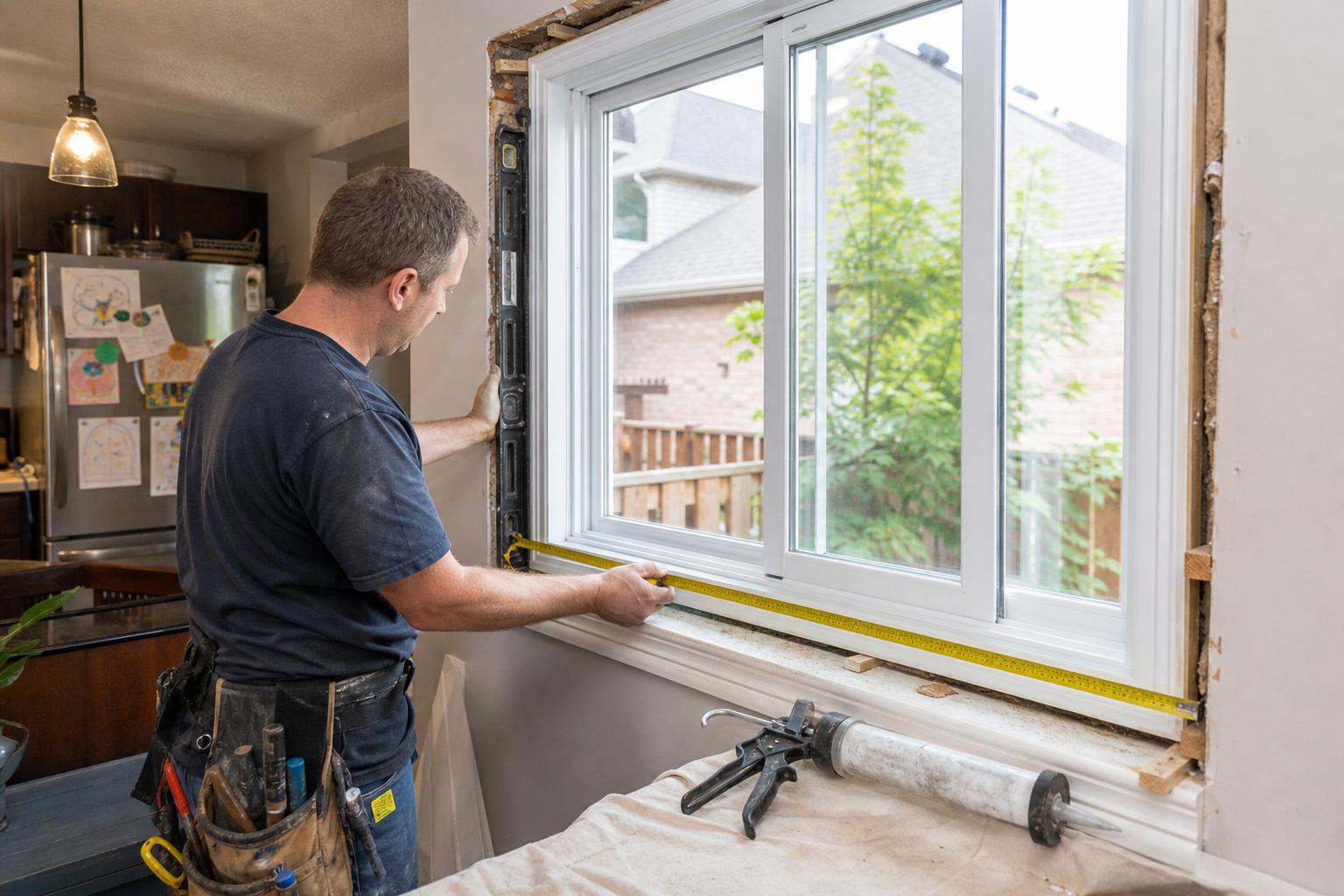
One more thing. A low air leakage rating on paper only pays off if the installation is tight too. Bad shimming, poor insulation around the frame, sloppy caulking—those can wipe out the benefit fast. The best label in the world can’t save a lazy install.
How to use the ENERGY STAR climate-zone map for Canada
This is the part many people skip, and they shouldn’t. ENERGY STAR for windows uses climate zones because a window that makes sense in Vancouver may not be the best match for a house north of Toronto.
Sample U-Factor Comparison
For most of the Greater Toronto Area, York Region, Barrie, and Simcoe County, you’re looking at labels meant for colder Canadian climates than the mild west coast. That matters because the standard tries to match products to the heating and cooling reality where you live.
The logo is helpful, but here’s the honest part: don’t stop at “it’s ENERGY STAR.” Check which climate zone it meets. A qualifying window for one part of Canada is not automatically the strongest choice for southern Ontario.
On the phone, people often ask us, “If it has ENERGY STAR, am I done?” No. It means the window cleared a bar. Good start. Now look at the actual ratings and ask if they fit your house, that wall, and that room.
If you’re shopping across our Toronto & GTA service area, this matters even within the region. A sheltered downtown semi and an exposed rural house near Bradford don’t feel winter wind the same way.
How I read a window label in about 60 seconds
Here’s my quick order. This is the practical part of window energy ratings explained.
- First, check the climate zone on the label. Is it suited to your part of Canada?
- Then check U-factor. Lower is better for winter heat loss.
- Next, check air leakage. Lower is better for comfort and fewer drafts.
- Then look at SHGC and ask how much sun that room gets.
- After that, use ER as a handy summary number, not a magic answer.
- Last, compare the actual window style and who is installing it.
That last point matters more than brochures admit. Comparing a fixed picture window to a slider or a casement isn’t apples to apples. The design itself changes the ratings. So does size. So does glass package. So if one quote looks “better,” make sure you’re looking at similar products before you crown a winner.
What these ratings won’t tell you
Labels are useful. They are not fortune tellers.
They won’t tell you if the installer is going to rush the foam and leave gaps. They won’t show how a dark room might benefit from a bigger glass area. They won’t tell you if your old trim has hidden rot, or if your existing opening is crooked enough to make the job trickier than it looked on quote day.
They also won’t tell you if the upgrade is worth the money for you. Some houses need every bit of performance they can get—windy exposures, large glass areas, long winters near open fields. Other houses are more forgiving, and the smartest choice is a solid mid-range package installed well.
That’s why we try to keep our recommendations boringly honest. Sometimes the top spec is worth it. Sometimes it isn’t. If you want someone to tell you every upgrade is essential, plenty of people will happily do that. I can’t, with a straight face.
The best question to ask before you sign
Ask this: “Can you show me why this window package makes sense for this room?”

That question cuts through a lot. It forces a real answer about orientation, style, comfort, ventilation, and budget. It also makes it harder for anyone to hide behind a single flashy number.
If you want a second set of eyes on labels you’ve been handed, send them over through our contact page. I’m happy to tell you what the ratings say—and what they don’t. Sometimes the smartest move is not the most expensive one. Those are my favourite conversations, honestly.