
A couple in Richmond Hill once told me they wanted double-hung windows everywhere because they were “the better ones.” Ten minutes later, after we walked room to room, they changed half the order. Not because double-hung was bad. Because they were about to pay more for features they’d barely use.
That’s the whole point of single hung vs double hung windows. It isn’t about picking the fancier one. It’s about matching the window to the room, your cleaning habits, and how you live through an Ontario year of sticky July air, shoulder-season breezes, and those January mornings when you can feel cold rolling off old glass from across the room.
Why this choice matters more than people think
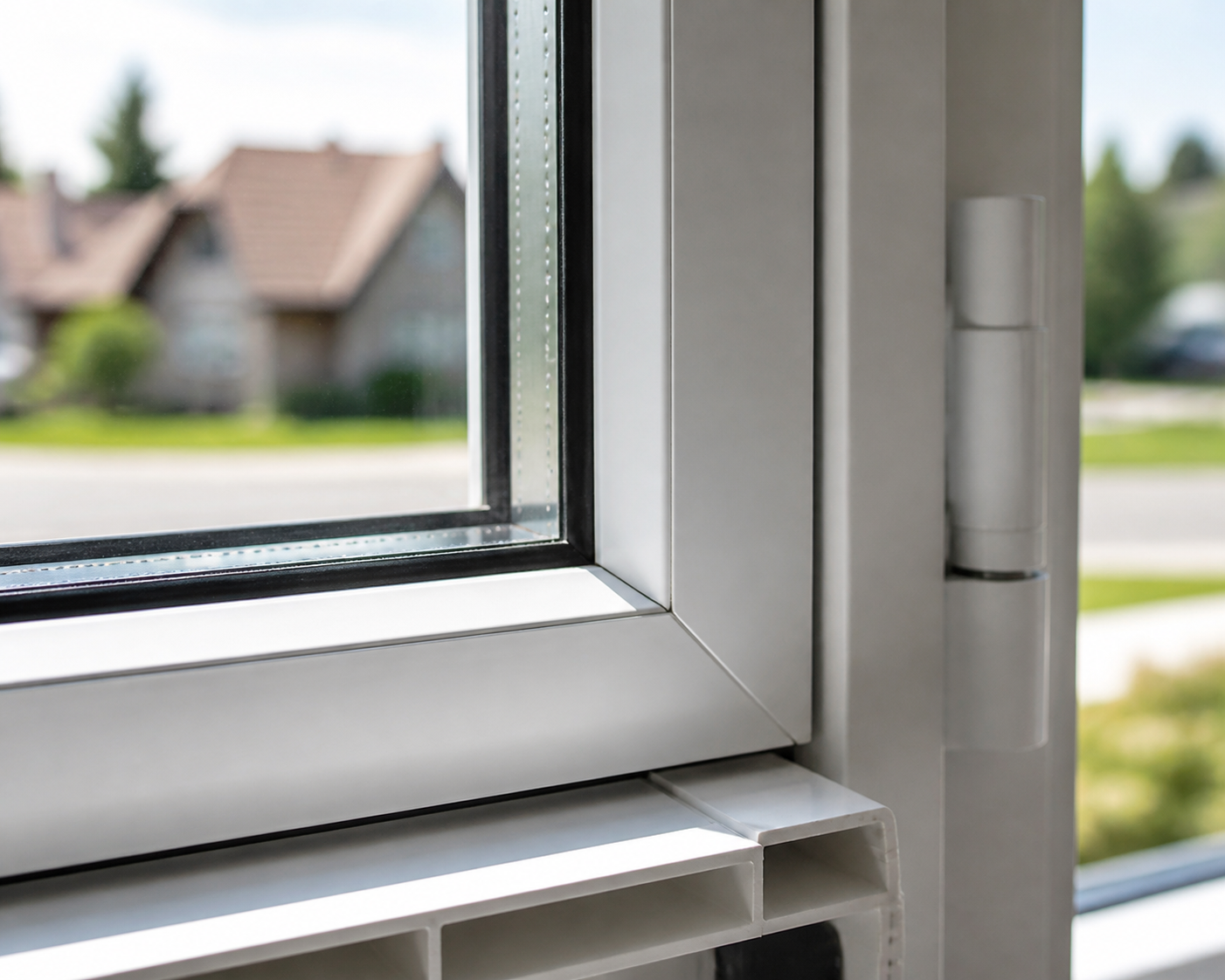
From the street, single-hung and double-hung windows look almost the same. Inside, they can feel different. A single-hung window has a fixed top part and a bottom part that slides up. A double-hung lets both the bottom and top move. Simple enough. But that one difference affects three things you’ll notice for years: how air moves, how easy the window is to clean, and how much you pay.
People often ask us, “Do double-hung windows save more energy?” Plain answer: not by magic. If both are made well, installed well, and have the same glass package, the energy difference is usually small. The bigger difference is function. Think of it like two doors with the same insulation, but one has an extra way to open. Handy? Yes. Automatically worth more in every room? No.
If you want the basic rundown of styles we supply, our hung windows page shows how these units are built. But here’s the useful part: picking the wrong style usually doesn’t ruin your house. It just leaves you annoyed every spring when you try to clean a second-floor bedroom window from a ladder and question your life choices.
Single-hung windows: simpler, lower cost, less to fuss with
Single-hung windows do one thing well: they keep it simple. The top sash stays fixed. The bottom sash moves up for ventilation. Fewer moving parts often means a lower price, and for a lot of homes that’s the whole win.
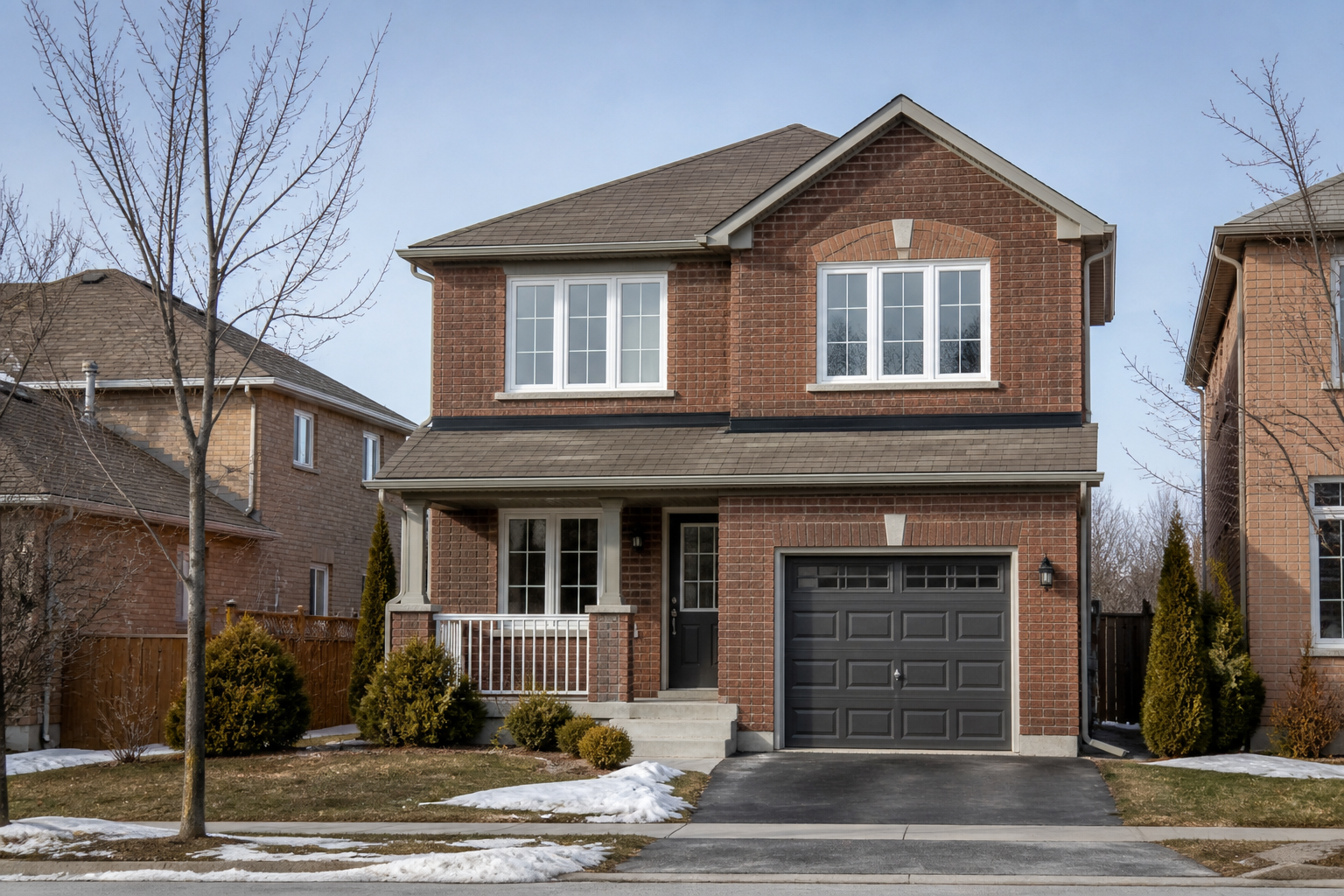
We install plenty of these in places where the window mostly needs to bring in light and open now and then. Main-floor family rooms. Dining rooms. Guest rooms. Stair landings. If the window is easy to reach from outside or you’re not opening it every day, single-hung can make a lot of sense.
Where single-hung shines
- You want to keep the budget under control on a whole-home project
- The room doesn’t need top-and-bottom airflow
- The window is easy to access for cleaning from outside
- You prefer a simple design with fewer moving parts
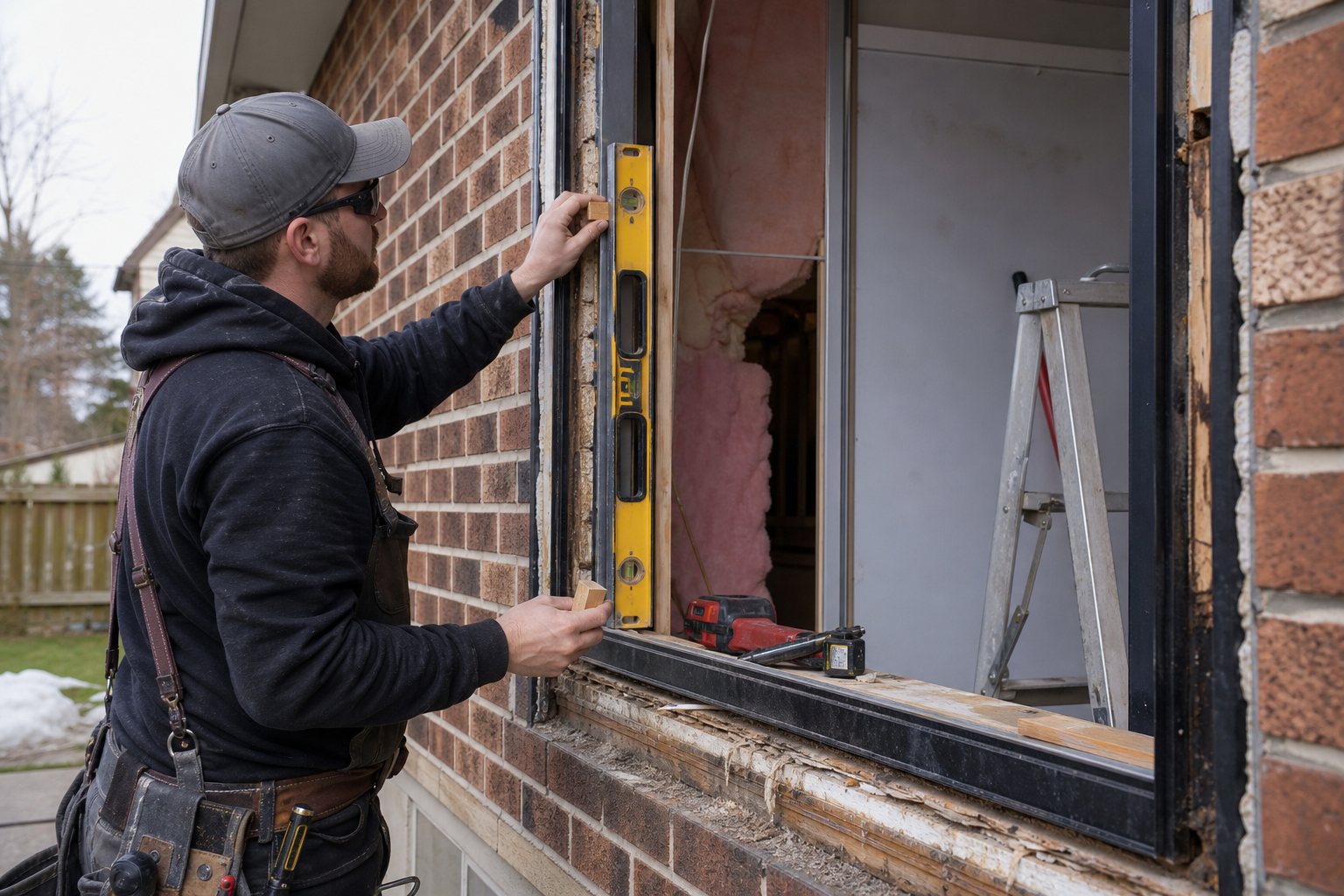
Now the honest downside. Cleaning can be a pain, especially upstairs. On many modern double-hung units, both moving sections can tilt inward for cleaning — that’s called a tilt-in sash. On a single-hung, you usually don’t get the same convenience on both sections because the top sash stays put. If you’ve got a second-floor bedroom over a deckless backyard in Aurora or Barrie, that matters.
Ventilation is the other trade-off. You only get airflow from the bottom opening. That’s fine in many rooms. But in a stuffy second-floor bedroom in August, or a bathroom where warm damp air gathers high up, a single-hung gives you less flexibility.
Tip: If you almost never open a window in a room, don’t pay extra for more operation than you’ll use. Put the money into better glass or a drafty front bedroom instead.
Double-hung windows: better airflow and easier cleaning
Double-hung windows cost more for a reason. Both sashes move. You can open the bottom, the top, or both a bit. That helps with ventilation in a way people notice pretty quickly once warm weather hits.
Hot air rises. So if you crack the top sash and open the bottom a little, you can let stale warm air out while cooler air comes in lower down. In older Toronto houses with bedrooms that get stuffy at night, that setup works better than people expect. It won’t replace air conditioning, obviously, but it helps.
I remember a job in The Beaches where a customer wanted single-hung units in two second-floor kids’ rooms to save money. Fair enough. Then she mentioned she cleaned those windows herself and hated dragging out an extension ladder every season. We switched those two rooms to double-hung and kept single-hung in the dining room and front hall. Smarter spend. Same house, mixed approach.
Where double-hung earns the extra cost
- Second-floor bedrooms where you want easier inside cleaning
- Bathrooms where releasing warm air from the top helps
- Rooms you open often in spring and fall
- Homes with kids or pets where opening the top can feel safer than opening the bottom wide
The downside is straightforward: price. You’re paying for more operating hardware, more moving parts, and a more complex frame. That doesn’t make double-hung fragile, but it does mean there’s more going on than in a simpler single-hung unit.
And here’s a small behind-the-scenes lesson we learned years ago. Early on, we had a job where an upstairs room had heavy curtains and furniture jammed close to the wall. The customer wanted double-hung mainly for easy cleaning, but the room setup made tilting the sash inward awkward. We should’ve pushed harder on that practical point. The window was fine. The room layout wasn’t. Since then, we always ask how the room is used, not just which style sounds best on paper.
Single hung vs double hung windows: side-by-side
| Factor | Single-Hung | Double-Hung |
|---|---|---|
| Cost | $ | $$ |
| Energy efficiency | Usually similar | Usually similar |
| Noise | Usually similar | Usually similar |
| Maintenance | Less hardware | More hardware |
| Lifespan | Often slightly simpler | Good, more parts |
| Best use | Low-use rooms | Bedrooms, baths |
A quick note on noise, because people ask. If traffic noise is your problem — say you back onto a busier road in Vaughan or near a commuter route in Newmarket — the glass package and installation matter more than single-hung vs double-hung. The operating style alone won’t solve that.
Which suits which room?
If you only remember one thing from this article, make it this: choose by room, not by ego. You do not need one answer for the whole house.
Single-hung usually suits rooms where the window is opened now and then, cleaning access isn’t a big issue, and cost matters. Think living rooms, dining rooms, front rooms, or a basement-level space where exterior access is easy. If you’re replacing several windows at once, using single-hung in lower-priority rooms can keep the project from creeping upward in price.
Double-hung usually suits rooms where ventilation and cleaning convenience matter more. Bedrooms are the big one. Bathrooms too. Sometimes second-floor home offices. If you work beside the window every day, you may care more about being able to manage airflow cleanly in spring and fall than you thought.
And if you’re comparing other styles because you want more airflow than either hung option gives, have a look at casement windows. They crank open and can catch side breezes better than a hung window. Different look, different function.
So which should you pick?
If your goal is to spend carefully and still get a solid, good-looking window, single-hung is often enough. No shame in that. I’d rather see you buy the right window for the room than overspend on a feature you won’t use.
Relative Convenience Score
If you want easier cleaning from inside and more flexible ventilation, double-hung is worth a look, especially upstairs. That extra function is the whole reason to buy it. Not because it sounds more premium.
For a lot of homes across Toronto and the GTA, the best answer is mixed: single-hung in some rooms, double-hung in others. That’s usually where the value is. If you’re sorting through options and want a plain-English opinion, you can contact us. We’ll tell you where the upgrade pays off and where I’d keep your money in your pocket.
Honestly, that’s my favourite kind of window advice. Not fancy. Just useful.