One January, I was in a basement in East York where the owner had stuffed a towel along the sill of a tiny old window and still couldn’t stop the cold air. She pointed at it and said, “I don’t even open this thing. Why is it this bad?” Fair question.
The answer wasn’t just that the window was old. It was the wrong kind of window for the space, badly sealed, and awkward to use. A hopper window would’ve made a lot more sense there.
So, what is a hopper window? It’s one of those window styles people see all the time in basements and bathrooms, but the name means nothing until you know how it works. And once you do, it becomes pretty obvious why it fits some rooms beautifully and makes no sense in others.
What is a hopper window, exactly?
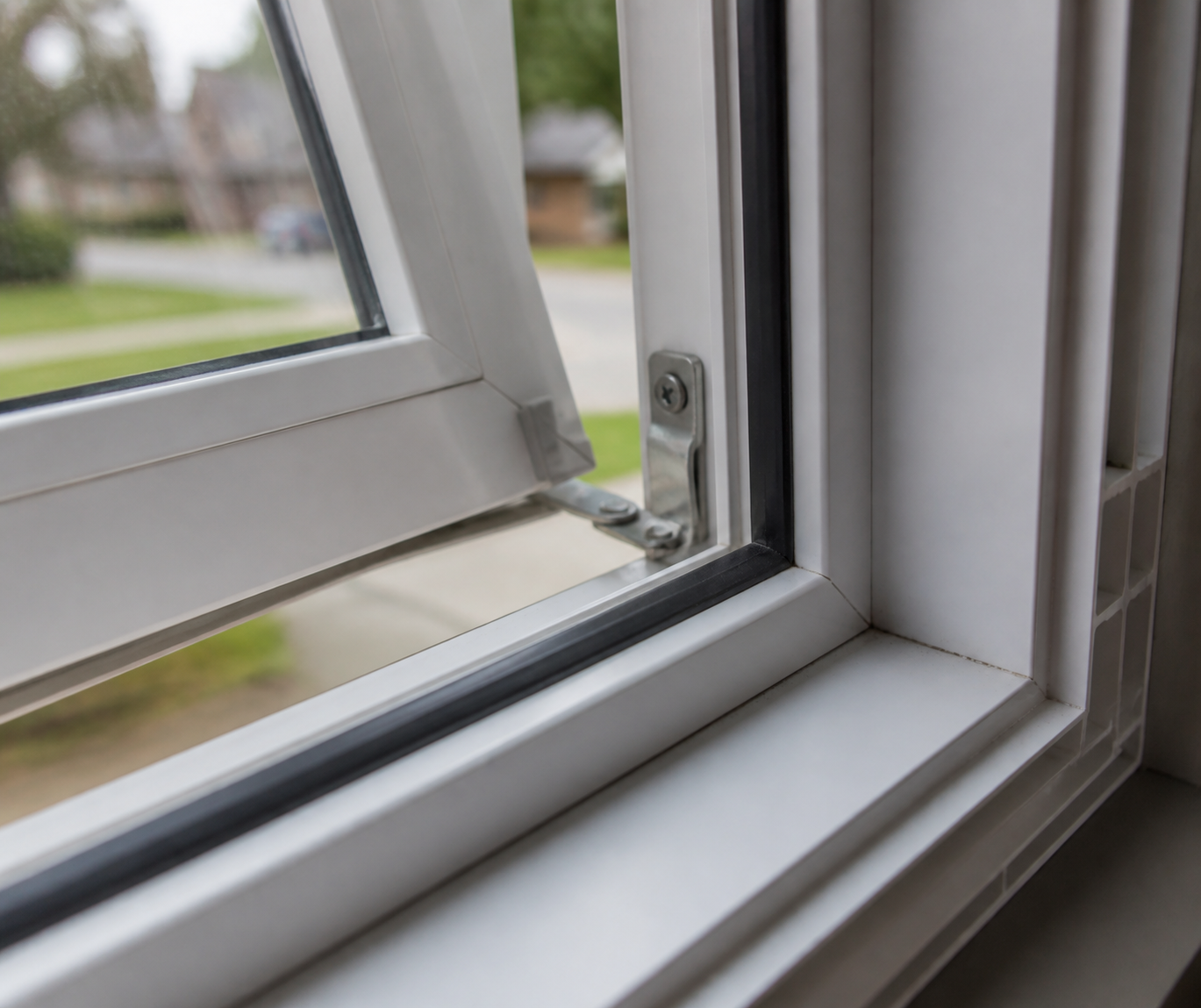
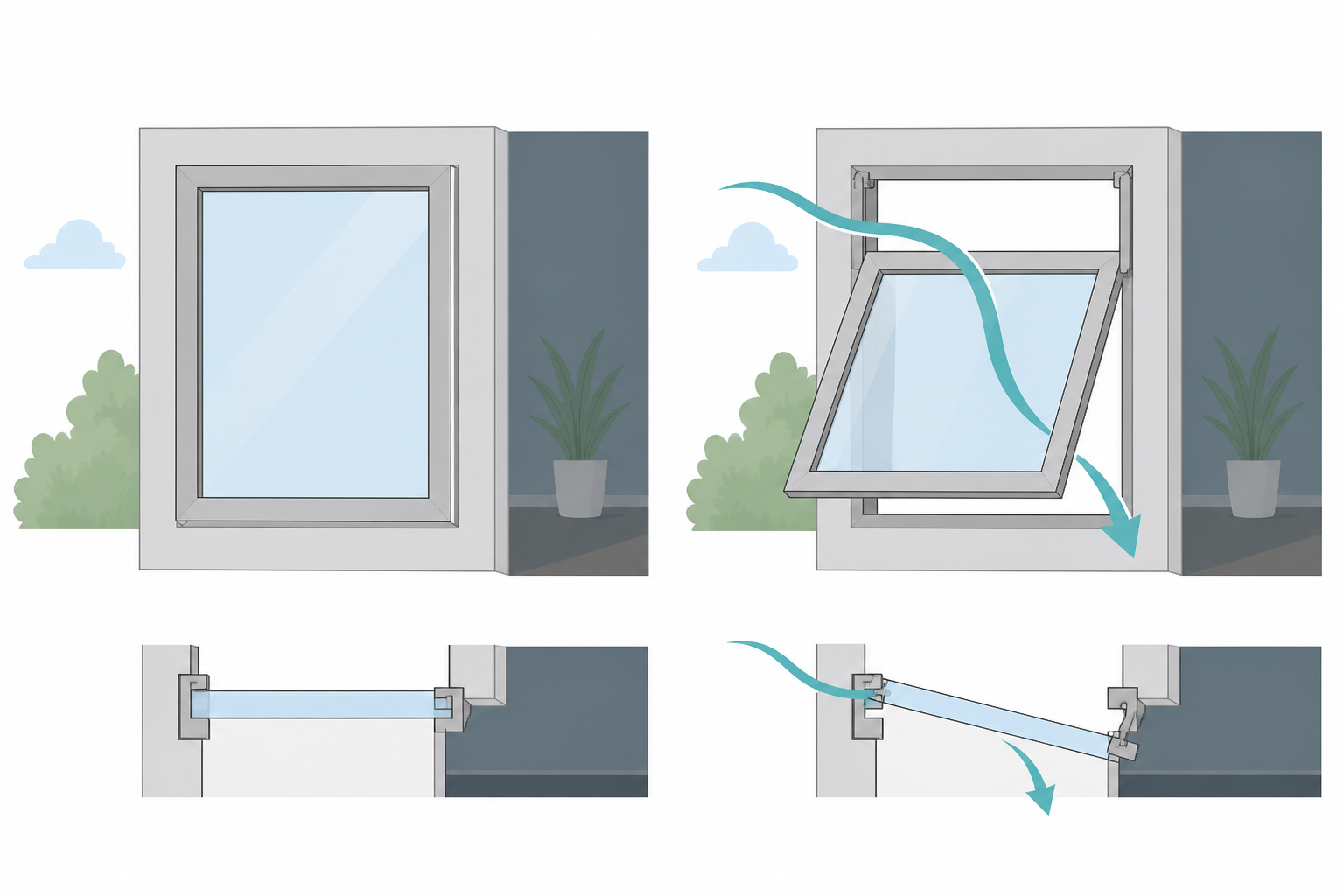
A hopper window is a small window that opens inward from the top. The bottom swings into the room, while the top stays hinged. If you picture the opposite of an awning window, you’ve got it. An awning opens outward from the bottom hinge; a hopper opens inward from a top hinge.
Most hopper windows are wider than they are tall. You’ll usually see them in basements, laundry rooms, or bathrooms where the wall space is limited and you still want fresh air.
They’re often built with a crank or latch system and a tight all-around seal. That tight seal matters. In window talk, that’s a compression seal — the sash presses firmly into weatherstripping when closed instead of just sliding past it. That’s one reason hopper windows can feel less drafty than some older sliding basement windows.
How a hopper window opens — and why that matters
This is the part most people care about more than the name. The opening style changes how the room feels day to day.
Because a hopper opens inward, you can reach it easily from inside. That sounds small. It isn’t. In a basement with a deep window well, or in a bathroom over a toilet tank (not my favourite layout, but we see it), being able to unlock and open the sash from inside without leaning out is useful.
The inward opening also means the sash won’t push out into a walkway outside. That helps in tight side yards in older Toronto neighbourhoods, where you can practically shake hands with the neighbour from the lot line.
But there’s a trade-off. The open sash comes into your room. So if the hopper is above a laundry sink, behind storage shelves, or buried by a treadmill that seemed like a good idea in February, opening it gets annoying fast.
Quick tip: before you choose a hopper window, imagine the sash tipped inward about 6 to 10 inches. If that space is already busy, the window may work on paper but irritate you for years.
Where hopper windows work best
My short answer? Basements first. Bathrooms second. After that, it depends.
- Basements: great for small foundation openings where you want airflow and a better seal than an old slider.
- Bathrooms: useful for privacy, especially if the window is set higher on the wall.
- Laundry or utility rooms: good if the space is clear in front of the window.
- Garages or workshops: sometimes a smart choice for venting stale air without taking up much wall area.
In southern Ontario, basement use is the big one. A lot of homes in Scarborough, Vaughan, Richmond Hill, and Barrie still have those short basement window openings that were never meant for anything fancy. A hopper fits that shape well and gives you controlled airflow during a humid July stretch, when basements can start smelling a bit... basement-y.
Bathrooms are the other common spot because hopper windows can sit high enough for privacy while still letting steam out. If you’ve ever had a bathroom mirror stay fogged for 20 minutes after a shower, you know why this matters.
If you’re comparing styles, a hopper is less common than an awning window, but the logic is similar: compact opening, good seal, useful ventilation. The difference is direction. And that direction changes where it belongs.
The biggest benefit: better basement ventilation
Here’s my main takeaway on hopper windows: they make the most sense when your goal is simple, controlled ventilation in a small space.
That’s why they work so well in basements. Hot air rises, yes, but stale, damp air can still sit low in a lower level, especially after heavy rain or during a muggy August week. A hopper window lets you crack the opening and move that air out without opening a huge section of wall.
And because the opening is angled inward, the air doesn’t just sneak in at one flat plane the way it can with some old sliders. You get a more directed opening. Not magic. Just practical.
A lot of Google results make hopper windows sound like some secret weapon for airflow. I wouldn’t go that far. They ventilate well for their size. That’s the honest version. If you want the maximum breeze possible from the whole window opening, a casement window usually beats it because the sash swings open like a little sail and catches side breezes.
But in a basement, the whole job often isn’t “catch the biggest breeze.” It’s “give me a window that opens, seals tightly, fits the rough opening, and doesn’t make this room feel damp.” Hopper windows do that job well.
Pros of hopper windows
If you’re wondering why people choose them, here’s the plain-English list.
- Good seal when closed. That can mean fewer drafts in winter.
- Compact and space-smart for small wall openings.
- Easy to operate from inside, especially in basements.
- Good airflow for bathrooms, utility rooms, and lower levels.
- Works well high on a wall for privacy.
That first point is the one I care about most in Ontario. January doesn’t forgive bad seals. When a hopper is made properly and installed well, the sash closes tightly against the frame. In plain language: less rattling, less air sneaking around the edges, and less of that cold wash you feel standing nearby.
We see this a lot in older York Region basements where the original metal-frame windows are past their best years by, oh, about 25 years. Replacing them with a modern vinyl hopper can make the room more usable, not just more efficient on paper.
Cons of hopper windows
Now the part some window companies rush past.
- The sash opens into the room, so it can hit shelves, blinds, or whatever else is in the way.
- They’re usually small, so they won’t flood a room with air or light.
- They are not the right answer where you need a large emergency escape opening.
- Cleaning can be awkward if the placement is tight.
- They’re a specialty fit, not a universal fit.
That third point matters. People sometimes ask if a hopper window can work for a basement bedroom. Sometimes no. If you need a legal emergency escape size, that falls under egress rules, and the opening has to meet clear requirements once the window is fully open. A lot of small hopper windows won’t. If that’s your situation, read our guide on egress windows in Ontario before you decide anything.
I’ll add one more mild complaint: bug screens on inward-opening windows can be a bit less intuitive for some people. Not terrible. Just not as simple as every other style. If you like things dead simple, that may bug you more than the bugs.
Are hopper windows energy efficient?
Usually, yes — if the window itself is built well and installed properly.
The opening style helps because of that compression seal I mentioned earlier. But energy performance is still about the whole package: the vinyl frame, the glass, the gas between the panes, the coating that reflects heat (Low-E), and the installation around the frame.
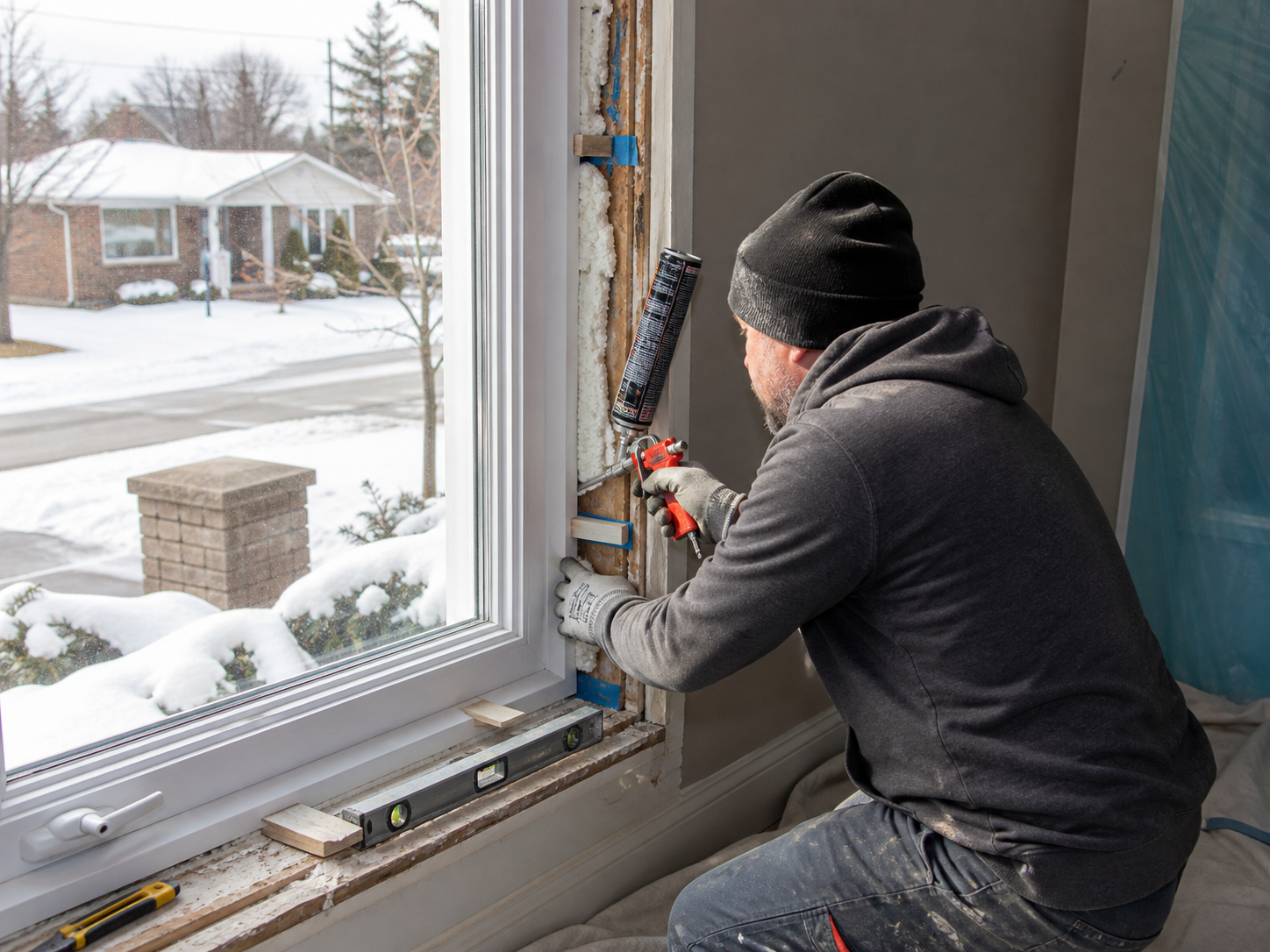
I’ve been in homes where the owner paid for a decent window and still felt drafts because the gap around the frame was poorly insulated and trimmed. That’s not the hopper’s fault. That’s a bad install.
For Ontario weather, especially north of the GTA toward Barrie where the wind can be a bit less polite, I’d rather see a well-made hopper than a flimsy basement slider. Style matters, but build quality matters more.
The question people don’t ask soon enough
Here’s the question I wish more people asked before ordering: what will be in front of this window six months from now?
Not today. Six months from now.
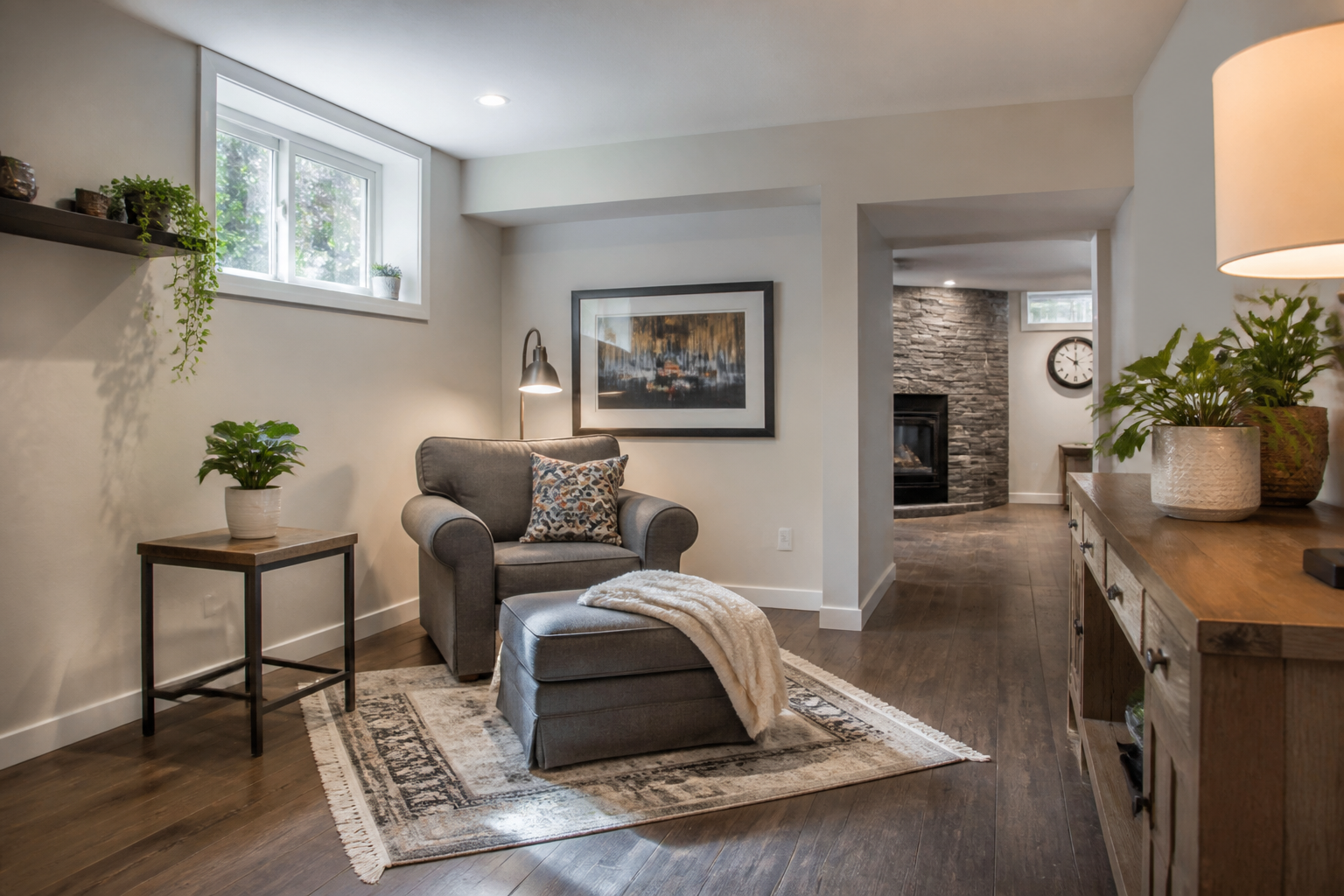
In a finished basement, that answer changes everything. We did a job in Newmarket where the plan looked fine until we got talking about furniture. The owner was putting a sectional under the window and adding built-in storage beside it. A hopper would have opened right into the usable space. We changed course before the order was finalized. That saved a lot of annoyance later.
That’s my slightly contrarian take: hopper windows are good, but only when the room layout respects how they open. People focus on looks and forget movement. Windows are moving parts. You live with that every day.
Is a hopper window right for you?
A hopper window is right for you if your main goal is to ventilate a small space, keep a tight seal in winter, and make smart use of a short wall opening — especially in a basement or bathroom.
It’s probably not right if you need a big opening, you have furniture or shelving tight to the wall, or the window has to do double duty as an emergency exit.
If you’re in the GTA, York Region, or up toward Simcoe County and you want a second opinion on what style makes sense for a tricky basement opening, we’re happy to look at photos or come out and have a proper look. You can reach us through our contact page. No hard sell. I’d rather tell you the truth now than hear later that the window annoys you every spring.
That East York basement I mentioned at the start? We replaced the old drafty unit with a better-fitting vinyl hopper. Nothing dramatic happened after that, which is exactly the point. No towel on the sill. No cold air washing across the floor. Just a basement window doing its job and staying out of your way. I’m a fan of that kind of boring.