
A couple in Aurora once showed me two window quotes at their kitchen table and said, "These both say ENERGY STAR, so they’re the same... right?" Short answer: no. That little rating label can hide a lot, and if you read it wrong, you can spend good money and still end up sitting beside a cold window in January.
If you’re shopping for energy efficient windows ontario homes can handle, the label matters more than the sales pitch. The trick is knowing which numbers deserve your attention, which ones are just supporting actors, and how Ontario weather changes the answer.
The one thing to remember
Here’s the whole article in one sentence: don’t shop by the word "ENERGY STAR" alone — shop by the actual numbers on the label, especially the one that tells you how much heat escapes.
In Ontario, your windows deal with long heating seasons, windy shoulder months, humid summers, and the odd week where January feels personal. So the rating that usually matters most is how well the whole window slows heat loss. That’s the U-factor.
The other ratings still matter. They just matter in a supporting way. If you know how the label works, you can compare two quotes faster, ask sharper questions, and avoid paying extra for features that sound impressive but don’t move the needle in your house.
What that window sticker is trying to tell you
Most new windows come with an energy performance label from a third-party program, often NFRC data paired with ENERGY STAR qualification. You don’t need to memorize the acronym soup. You just need to know this: the label is there so you can compare tested performance, not just marketing claims.
Typical Window U-Factor Comparison
And it tests the whole window unit — frame, sash, spacer, and glass together. That matters. A company can talk all day about fancy glass, but if the frame leaks heat or the edge of the glass performs poorly, your room still feels chilly.
- U-factor: how fast heat escapes through the whole window
- SHGC: how much of the sun’s heat gets through the glass
- R-value: the flip side of U-factor, shown less often on labels
- Air leakage: how much outside air sneaks in around operable parts
If you’re comparing styles too, keep in mind that fixed windows usually test better than operable ones because they don’t have moving seals. That’s one reason picture windows often post stronger energy numbers than sliders of the same size.
U-factor: start here first
Think of U-factor as the speed of heat loss. Lower is better. A lower U-factor means your indoor heat has a harder time getting outside in winter, and outdoor heat has a harder time pushing in during summer.
If you only remember one rule, make it this one: on energy efficient windows ontario buyers are considering, the lower U-factor usually deserves the most weight. Not blind weight. But most weight.
Why? Because in places like Richmond Hill, Barrie, or north-end Toronto, you spend more of the year heating than cooling. That means stopping heat loss is often the main job. On a windy February day, you feel that difference near the glass.
A lower U-factor doesn’t mean the room will suddenly become tropical while snow piles up outside. I wish. But it does mean less heat bleeding away, warmer interior glass, and often less of that cold-radiation feeling when you sit nearby.
Quick tip: if two windows both qualify for ENERGY STAR and one has a meaningfully lower U-factor, that’s usually the better bet for Ontario unless you have a specific reason to chase more solar heat.
SHGC: the sunlight number people misread
SHGC stands for Solar Heat Gain Coefficient. Ignore the clunky name for a second. This number tells you how much of the sun’s heat gets through the window.
Higher SHGC means more solar heat comes in. Lower SHGC means more of that sun heat gets blocked. Neither is automatically better.
This is where generic advice online goes sideways. People read that "more free solar heat" is good in Canada, so they assume higher SHGC is always smarter. I don’t agree. Not for most houses we see.
If you’ve got big south- or west-facing glass in a newer subdivision home in Vaughan or a second-floor bedroom that already bakes in July, too much solar gain can make summer miserable. Your AC pays for it. On the other hand, a shaded north-facing opening under deep eaves may not benefit from chasing SHGC much at all.
So how do I look at it? First U-factor. Then SHGC based on orientation and how the room behaves now. A bright family room with lots of west sun is not the same as a tree-shaded bungalow window in East York.
This is also where glass coatings come in — the thin invisible layer that reflects heat, called Low-E. Different Low-E coatings can change SHGC while still keeping good insulation. Same idea with the gas between panes, usually argon. Useful, yes. Magic, no.
R-value: familiar, but not the best shopping tool
A lot of people know R-value from attic insulation, so they go looking for it on window quotes. Fair enough. R-value tells you resistance to heat flow. Higher is better.

But with windows, U-factor is usually the cleaner number to compare because that’s what most labels lead with. And the two are connected: R-value is basically the inverse of U-factor. So a lower U-factor means a higher R-value.
If math makes your eyes glaze over, skip the formula. The practical takeaway is simple: don’t panic if one quote talks U-factor and another salesperson starts throwing around R-values to sound smart. You can still compare them, but the standard label number to focus on is U-factor.
And please don’t compare a centre-of-glass R-value to a whole-window U-factor. I’ve seen that move more than once. It’s a slick way to make a product look stronger than it is. You live with the whole window, not just the middle of the glass.
How to read the label in 4 steps
1) Check that you’re looking at the whole window
Look for tested whole-unit performance, not just glass specs. If the quote is built around glass features alone, ask for the full window ratings.
2) Compare U-factor first
Lower is better. If one option is clearly lower and the styles are similar, that usually tells you a lot right away.
3) Use SHGC to fine-tune
Think about the room. Too hot in summer? A lower SHGC may help. Cold but sunny room you want to warm up? A moderate or higher SHGC might make sense. It depends on direction, shade, and how you use the space.
4) Ask about air leakage and style trade-offs
An operable window has moving parts, so airtightness matters. In my experience, casement windows often perform better for air sealing than sliders because the sash compresses against the weatherstripping when locked. Sliders are handy and popular, but they’re usually not the top performer for airtightness.
A job where the numbers saved someone from the wrong choice
A while back we were looking at a brick home in Newmarket with a west-facing front room that got hammered by afternoon sun. The owner had two quotes already. One salesperson pushed the higher SHGC package because, hey, more solar heat, Canada, sounds good.
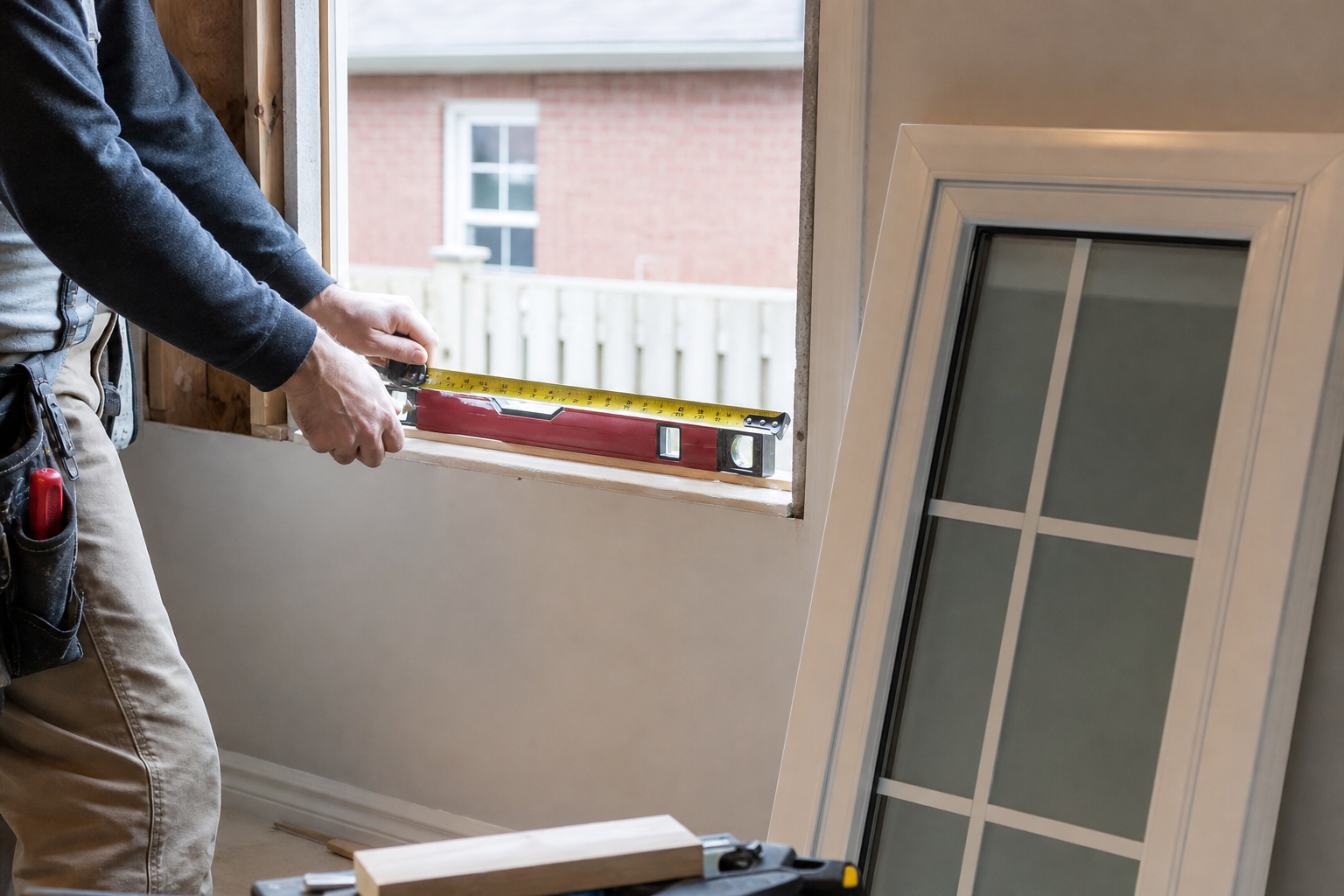
Problem was, that room was already overheating from May into September. The issue wasn’t a lack of winter sun. It was too much summer gain plus older seals that leaked air. So we steered them toward a lower U-factor first, then a glass package with more controlled solar gain.
That was the right call for that room. If we had just chased the most feel-good number, they’d have paid money to make one season better on paper and another season worse in real life. Labels help, but only if you read them in context.
What ENERGY STAR means — and what it doesn’t
ENERGY STAR is useful because it sets a baseline. It tells you the product meets performance criteria for the climate zone. That’s good. You want that.
But it does not mean every qualifying window performs the same. Think of it like saying two winter coats are both warm enough for Ontario. One can still be better made, better sealed, and more comfortable on a windy day.
So if one quote leans hard on the logo and gets fuzzy on the numbers, push a little. Politely. Ask to see the label data. If you’re replacing multiple windows across the house, those small differences add up.
The label matters. Installation still matters just as much.
I’ll be blunt here: a strong-rated window installed poorly can disappoint you fast. Gaps, bad shimming, weak air sealing, sloppy foam work, or a frame that’s out of square can wipe out part of the benefit you paid for.
We’ve had calls to homes where the product itself was decent, but the comfort problem came from installation details, not the sticker. Cold air doesn’t care how pretty the brochure was.
That’s one reason I’d rather see you buy the right mid-to-high option and have it installed properly than stretch for the fanciest glass package with average workmanship. If you want us to look at your project anywhere in Toronto and the GTA or nearby areas, you can always reach out here. No pressure.
The short version to use on your next quote
- Make sure the rating is for the whole window, not just the glass.
- Start with U-factor. Lower is better for most Ontario situations.
- Use SHGC based on room direction and summer overheating risk.
- Treat R-value as a translation tool, not the main number.
- Don’t assume all ENERGY STAR windows are equal.
- Remember style and installation affect real-life comfort.
That’s it. That’s the filter. It won’t turn you into a window nerd overnight (though stranger things have happened), but it will keep you from getting lost in sales language.
If you’re standing in your living room next winter and wondering why the new window still feels cold, the answer usually started with one of two things: the wrong performance number got all the attention, or the install fell short. The label helps you catch the first problem before you sign.